
PUTRAJAYA, Sept 27 — Malaysia initially requested that the search and rescue (SAR) operation involving 55 Malaysians who are still uncontactable in Nepal cover the area from Rasuwagadhi to Syabrubesi, but the national team was only allowed to conduct searches in certain areas.
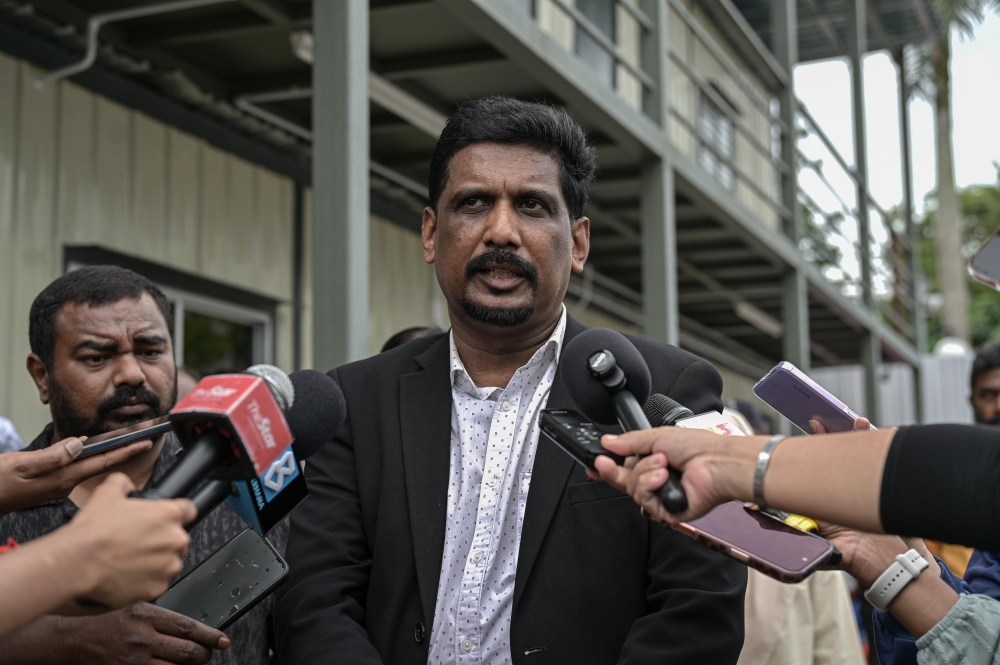
Malaysia Solidarity: Families in Hope (MASFIH) spokesman Dr Manivannan Rethinam said the matter was conveyed to the next of kin during a closed-door meeting with government agencies at Wisma Putra today.
He said the families raised the question of why the Special Malaysia Disaster Assistance and Rescue Team (SMART) operation was not focused on Rasuwagadhi, which is a border area between Nepal and Tibet, believed to be one of the last locations many Malaysians were involved.
According to him, the Chargé d’Affaires ad interim of the Malaysian Embassy in Kathmandu, Mohd Firdaus Azman, explained that Malaysia had requested the Nepalese authorities to extend the search area from Rasuwagadhi to Syabrubesi. However, the permission granted by the Nepalese authorities to the Malaysian team only covers certain areas, including Timure.
“Their (SMART) search area is focused on areas C and D. They cover from Timure to Syabrubesi. That is not the focal area where many Malaysians are missing because we have information on the last known locations and most of them are concentrated in the Rasuwagadhi area, on the Tibet-Nepal border,” he told the media after a nearly four-hour briefing session here today.
Manivannan said the families understand that the SMART operation area is subject to the approval of the Nepalese authorities and that the matter is beyond the team’s control.
He simultaneously expressed appreciation for SMART’s efforts, which also provided explanations to the families about the operations and challenges faced by the team during their time in Nepal.
According to Manivannan, the families also inquired about the possibility of the victims still being found alive.
He said that the SMART commander Senior Fire and Rescue Officer 1 (PgKB 1) Abdul Manaf Che Isa had said that the possibility still exists if there are victims in remote areas or villages in the mountainous region, but the chances are very slim.
“As family members, we still hope for the best. But we also have to move on to the next stage,” he said.
Previously, the SMART Team, consisting of 11 members, was sent to Nepal on September 5 and conducted ground searches and monitoring using drones in areas approved and deemed safe by the Nepalese authorities before returning to Malaysia on September 14.
In addition, Manivannan said the families were informed that Nepal would process the DNA samples from the disaster victims’ bodies to match them with the family’s DNA profiles.
He said the families had previously been informed about the report that Nepal needed assistance to carry out the DNA process due to a lack of expertise.
However, based on today’s briefing, the Nepalese authorities now have sufficient expertise and will carry out the process themselves.
“So far, they are only collecting DNA but it has not been processed yet. Previously, there were media reports in Nepal stating that Nepal needed assistance to process DNA because they lacked expertise. But today, Firdaus from the Malaysian Embassy in Nepal said that Nepal already has enough expertise. They will process it themselves,” he said.
Manivannan said that essentially, the DNA profile obtained from the families will be used for matching with the DNA from the found remains.
According to him, if there is a match, it can help the authorities identify the identity of the body in question.
Commenting on the procedure in the event of a DNA match, Manivannan said based on the explanation received by the families, DNA will be taken from the body before burial.
If a match with family members is later obtained, he said there is a process to retrieve the body to allow the family to conduct a ceremony or bring it home.
However, he emphasised that the families have not yet received official information regarding the entire procedure. — Bernama