
SINGAPORE – The number of drug arrests at the checkpoints have surged, with the authorities saying drug traffickers have been trying new ways to avoid detection.
On Sept 29, the Immigration and Checkpoints Authority (ICA) and Central Narcotics Bureau (CNB) said they made 975 drug-related arrests at the checkpoints in 2025, which is an increase of about 53% compared to 635 in 2024.
The cases were for drug importation, possession and consumption, with the drugs often found hidden within personal belongings or vehicular compartments.
ICA and CNB said the jump is in part due to the 1,417 joint operations held by the Home Team agencies at the checkpoints in 2025, a 34% increase compared to the 1,053 in 2024.
They added it was also due to the evolving drug threat, with traffickers adapting their methods and exploring new ways to evade detection.
In July 2025, over 25kg of cocaine was found hidden inside stuffed toys carried in the luggage belonging to a group of women at Changi Airport Terminal 4’s transit area.
The bust followed the exchange of intelligence between CNB and the Narcotics Bureau of the Hong Kong Police Force, which resulted in five women being arrested.
On Sept 23, ICA officers at Tuas Checkpoint found 9kg of drugs disguised as sealed commercial biscuit packets.
The drugs were found hidden in the storage box of a Malaysia-registered motorcycle, which saw the Malaysian rider getting arrested.
A Singaporean man was arrested that day in relation to the smuggling attempt, after officers found 1.5kg of drugs in a follow-up operation in Tampines.
According to the World Drug Report 2025, drug abuse has reached an all-time high.
But the overall situation in Singapore remains stable, with 3,208 drug abusers arrested here in 2025, and 3,175 in 2024.
Joint operation
ICA and CNB said they combine technology, intelligence and enforcement expertise to safeguard Singapore’s borders.
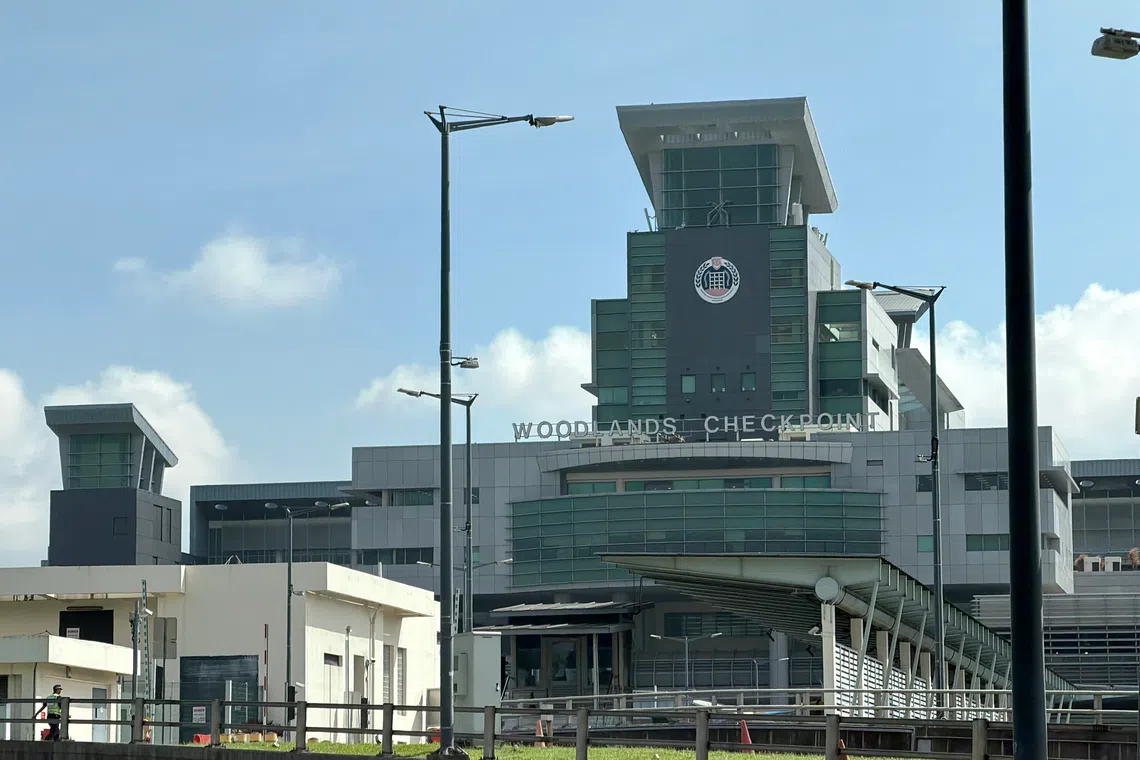
On Sept 29, Checkpoint Inspector Muhamed Salmin Mohamed Sadli, the group leader of an ICA search and examination team at Woodlands Command, spoke to the media after a joint operation at Woodlands Checkpoint .
He said detection efforts involve both profiling by officers on the ground and enhanced targeting by the Integrated Targeting Centre.
The centre, which was set up to support ICA’s New Clearance Concept that was implemented in 2024, has been using information and data analytics to identify higher risk travellers, vehicles and cargo.
Arriving travellers and vehicles are referred for enhanced checks, allowing for a more targeted approach.
Muhamed Salmin said: “We are also trained to identify tell-tale signs, such as travellers’ body language, as well as signs of modifications in vehicles, and sieve them out for further checks.”
Some of the technologies used at the checkpoints include X-ray scanners, explosive and narcotic trace detectors, saliva test kits and drug identification kits that show test results within minutes.
Separately, the New Clearance Concept has allowed ICA officers to be redeployed from manual counter duties to higher-value functions such as profiling and conducting targeted interviews and investigations.
They are trained through role-play, gamification, simulation and small-group discussions.
This is aided by technologies such as 3D renderings of different vehicles, allowing them to more effectively learn about concealment areas and their tell-tale indicators of the different models.
Guo Jingwen, Deputy Commanding Officer of CNB’s Enforcement L Division, said wider drug trafficking activities are disrupted through follow-up action beyond just the checkpoints.
He said: “When a suspected drug case is detected at a checkpoint, CNB will assess and follow up on relevant leads. This may lead to further investigations, arrests and drug seizures inland.
“We remind Singapore citizens and permanent residents that consuming controlled drugs overseas remains an offence under Singapore law.”