
HOW WILL I GET MY REFUND?
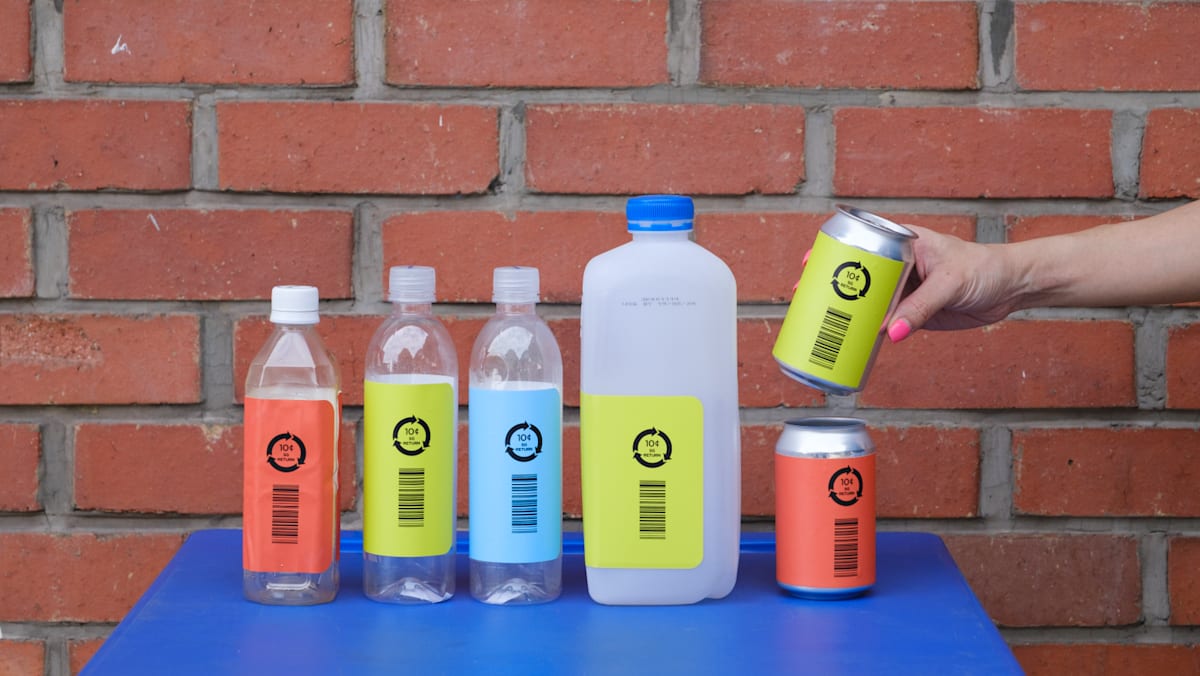
At reverse vending machines, consumers have to place their used containers in the slot one at a time for the machine to verify. After verification, consumers can tap their SimplyGo EZ-Link card or scan a DBS PayLah! QR code to receive the S$0.10 refund, among other accepted methods.
Containers collected daily will be sent to a dedicated facility managed by Cora Environment, where they will be counted, sorted and baled before being sent to recyclers.
The aim is to have 60 per cent of containers returned in the first year, Ms Yip said.
WHY WAS THE SCHEME INTRODUCED?
The BCRS is meant to boost overall recycling rates, which remain low. NEA said packaging waste accounts for one-third of Singapore’s domestic waste.
The scheme was first proposed in 2019 by a Recycle Right Citizens’ Workgroup to boost household recycling rates and reduce contamination in recycling bins. It will cover more than 1 billion beverage containers used each year, with more than 16,000 tonnes of material expected to be recovered annually.
NEA said the scheme will encourage Singaporeans to be more mindful of the packaging they consume.
The BCRS operates under the Extended Producer Responsibility framework, requiring producers to take responsibility for the beverage containers they bring to market and ensure they are collected and recycled.
Zero Waste SG executive director Lionel Durai said public readiness for recycling initiatives like the BCRS has grown, but more education is still needed. Efforts should focus on rebuilding confidence in recycling, explaining why it matters and teaching people how to recycle properly – as many believe they are recycling correctly when they are not, he said.
He added that the BCRS is a starting point towards broader multi-stream recycling, which involves segregating different materials before recycling.
“Now there is a real impetus for individuals to start to think about that specific material … and where does it go to,” he said, adding that growing multi-stream recycling infrastructure around Singapore and better education could make recycling more habitual.