
SINGAPORE – From tightening safeguards to better protect children from abuse to a
new task force to improve support for people with disabilities
, these will be among the key developments in the social service space in 2026.
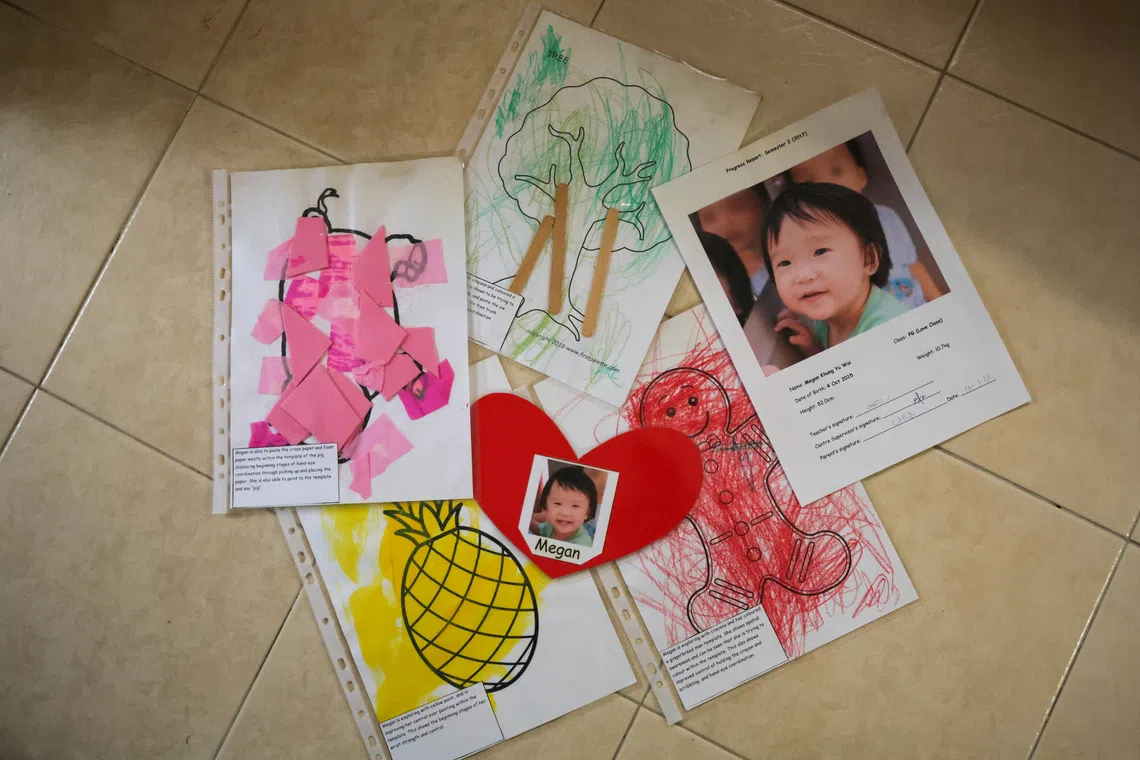
The case of
four-year-old Megan Khung’s death
came under scrutiny in 2025, with the Ministry of Social and Family Development (MSF) announcing measures to improve safeguards in the child protection system.
The Straits Times looks at what to expect in the social sector in 2026, and rounds up the biggest stories in 2025.
Following an independent panel that was convened to review how Megan’s case was handled, MSF said that recommendations to prevent similar incidents
will be implemented progressively by end-2026
.
A new social services coordination centre will be set up to better identify and coordinate child abuse cases from different agencies, like social services, the pre-school community and other sectors. MSF said it will also provide tighter links to police operations.
All deaths of abused children known to social services will also be independently reviewed, and MSF will consult the social service sector on how best to do this, Minister-in-charge of Social Services Integration Desmond Lee had said in November.
Before this, the ministry carried out bilateral reviews of incidents with the relevant social service agency.
By the first quarter of 2026, MSF will set up a triage assessment panel to evaluate which agency is best placed to manage a case.
Triaging refers to the process of assessing and determining the urgency of a case and the appropriate response to safeguarding a child’s safety.
From early 2026, pre-schools will report potential child abuse cases directly to the National Anti-Violence and Sexual Harassment Helpline, instead of through the Early Childhood Development Agency.
The review panel had
found a series of breaches
by agencies in how they handled Megan’s case, including a Child Protective Service officer failing to log calls from the girl’s pre-school seeking help and police officers not following procedures.
The girl died on Feb 22, 2020, after more than a year of abuse by her mother and the woman’s then boyfriend.
A new inter-agency task force will be set up by MSF to strengthen support for people with disabilities and their families across life stages. It will make its recommendations public in 2026.
The Taskforce on Assurance for Families with Persons with Disabilities will study and develop recommendations in three areas: employment, community living and affordability.
These will include supporting those with disabilities in upskilling and reskilling, expanding employment opportunities, and improving access to healthcare, care planning and sustained support.
The task force will also study the financial costs borne by people with disabilities and their families and recommend ways to keep disability support services affordable.
A
Home Support Programme will also be launched
in 2026 to support those with disabilities to continue living in the community, instead of being referred to an institution if they do not have adequate support.
From 2026, subsidies for long-term care services, like disability services such as adult disability homes and day activity centres, will also be increased and extended to more households.
More families will pay lower pre-school fees in 2026, as
more centres join a government-funded scheme
to keep early childhood education affordable.
A total of 380 centres run by 33 operators have been appointed to the new five-year partner operator term that runs from Jan 1, 2026, to Dec 31, 2030. This is up by 49 centres from the current term.
More than 34,000 Singaporean children are expected to benefit from this in 2026, higher than the 27,000 currently.
From January 2026, monthly full-day childcare fee caps will be reduced by $30 to $610 for anchor operator centres and $650 for partner operator centres, excluding goods and services tax.
These pre-school operators receive funding from the Government to keep their fees at a certain cap to ensure affordability.
Fees had also been previously reduced in 2025 for such centres.
The Government will work with anchor operators to add close to 40,000 new infant care and childcare places from 2025 to 2029.
To encourage couples to have more children, the Government introduced a slew of financial benefits and support under
the Large Families Scheme
for those with three or more children.
Prime Minister Lawrence Wong announced the scheme in his Budget speech in February to address the Republic’s resident total fertility rate, which
stayed at a historic low of 0.97 in 2024
.
Under the scheme, baby No. 3, 4 or more who are born from Feb 18 can get $10,000 in the Child Development Account First Step Grant. This can be used to pay for pre-school and healthcare expenses.
Among other benefits, $1,000 in Large Family LifeSG credits will be given each year to the third and subsequent child when the child is between one and six years old. These credits can be used for household expenses, such as groceries and utilities.
Existing large families with at least one child aged six or below – those born between Jan 1, 2019, and Feb 17, 2025 – will also receive the $1,000 each year in Large Family LifeSG Credits, until the child turns six. This applies only for the third and subsequent Singaporean child.
Needy families can get more support to buy their own homes and clear their debt, with the last two of four
ComLink+ scheme packages
to boost social mobility for the lower-income rolled out in 2025.
Under ComLink+, families get financial incentives and other support if they take steps to better their lives in four areas: early education, home ownership, employment and debt clearance.
The Home Ownership package, which helps families save up to buy their own flats, was launched in May. For every dollar that an eligible family voluntarily contributes to the Central Provident Fund (CPF) account, the Government will top up $2.
In June, the package for debt clearance was launched. This is meant to help families settle their debts owed to licensed companies, such as housing arrears and utilities. For every dollar that the family pays to such creditors, the scheme will match with another dollar for repayment of debts of up to $5,000.
The first two packages on pre-school and employment were launched in 2024.
In a report on the progress of the ComLink+ scheme released on Dec 16, MSF said that 16 per cent of these families had cases involving domestic violence or child protection concerns as at December 2024, up from 11 per cent in the year before.
In 2024, 56 per cent of ComLink+ families were considered unstable, up from 54 per cent in 2023.
Meanwhile, the number of lower-income families who got financial aid from a key government financial aid scheme
fell to a five-year low in 2024
, as the economy and job market improved in the years after the Covid-19 pandemic.
There were 20,825 families on the ComCare Short-to-Medium-Term-Assistance scheme in 2024, which gives families temporary financial aid to meet basic living expenses. This is a 9 per cent drop from the 22,960 families in 2023.
A process to help those owed maintenance, or financial support, by former spouses or other family members
started in January
.
Officers in the Ministry of Law’s Maintenance Enforcement Division can obtain the defaulter’s financial information from his banks and government agencies such as the CPF Board and the Inland Revenue Authority of Singapore.
This will help to distinguish between defaulters who genuinely cannot afford to pay maintenance and those who have the financial means but refuse to pay for various reasons, such as to get back at their former spouses.
With accurate information about the defaulter’s financial circumstances, the Family Justice Courts will be able to make more “targeted and effective” enforcement orders to recover maintenance arrears.
Previously, there were no powers for the courts or mediators to obtain such information directly from third parties.
The Maintenance Enforcement Process (MEP) comes as the non-compliance of maintenance orders remained fairly high even after various sanctions against defaulters were introduced over the years.
The first phase of the MEP started in January for eligible repeat maintenance enforcement applications.
The second phase started in October for first-time applications involving maintenance arrears of at least $10,000.
An MSF report on Dec 10 noted that
more cases of family violence were reported in 2024
.
The increase in such cases, where the abuse is often committed by a family member, reflects a growing awareness and greater willingness among victims, families and the public to report the violence. This has enabled more people to seek help earlier, reducing the chances of cases remaining hidden or escalating, the MSF said.
Both lower-risk and high-risk child abuse cases
rose in 2024
.
New high-risk cases increased 14.5 per cent to 2,303 in 2024 from 2,011 in 2023. New lower-risk cases rose 18 per cent to 3,292 from 2,787.
There were 2,136 new spousal abuse cases in 2024, up 6 per cent from 2,008 in 2023.
The number of new elder abuse cases grew from 297 in 2023 to 359 in 2024. Cases of elder abuse include families experiencing high levels of caregiving stress, which may adversely affect the elderly or cause their neglect.