
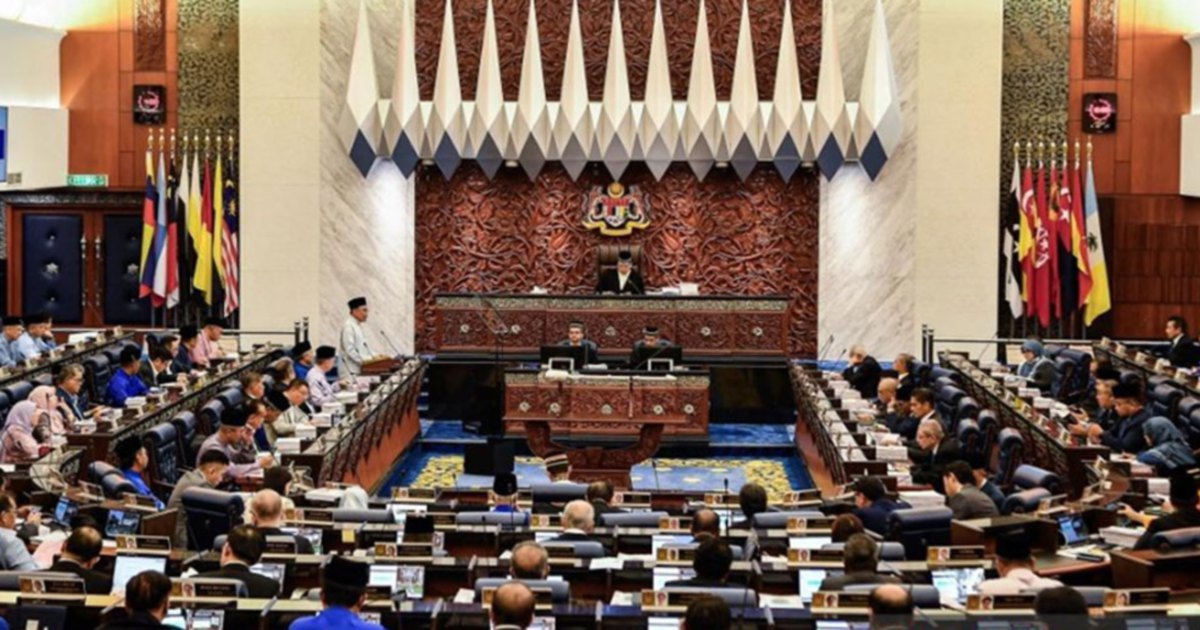
KUALA LUMPUR: Attendance records of members of parliament (MPs), including their reasons for absenteeism, should be made public to ensure greater accountability, an election watchdog said.
Coalition for Clean and Fair Elections (Bersih) chairman Muhammad Faisal Abdul Aziz said Parliament should publish attendance reports before every general election, alongside data on MPs’ participation in debates through the Hansard, and their involvement and contributions in the parliamentary special select committees.
“Those who could not participate due to commitments, for example executive tasks, must have these reasons clearly stated. Public disclosure is important.”
Universiti Malaya socio-political analyst Datuk Prof Dr Awang Azman Awang Pawi said Malaysia needed stricter enforcement mechanisms to ensure MPs attend parliamentary sittings, including making attendance a formal key performance indicator.
“Public trust is fragile. When voters see their MP absent for most of the year, the perception is clear: ‘they do not represent us’. In the social media era, where attendance data is increasingly visible, voters can directly measure who is working and who is missing in action.
“MPs who are frequently absent risk being seen as overpaid and underperforming, reinforcing cynicism towards institutions,” he said.
Awang Azman said the high number of MPs with full attendance reflects a growing sense of professionalism among newer lawmakers, particularly in the opposition, who feel they must earn legitimacy through performance.
“At the same time, it reveals that Malaysia is struggling with a legacy of personality-driven politics, where some senior politicians rely more on reputation than active legislative duty.
“Parliamentary attendance is becoming a key marker of credibility, not merely ceremonial participation. When seasoned leaders consistently skip sittings, it signals a sense of entitlement and detachment from legislative responsibility.
“They were elected to speak, debate and defend their constituents’ interests in the Dewan Rakyat, not to treat the seat as a political trophy.
“Chronic absenteeism conveys that accountability is selective, activated only when political gain is at stake.”
He said while Malaysia has parliamentary attendance rules, these are rarely enforced and carry few meaningful consequences.
Among the reforms he proposed are automatic salary deductions for poor attendance, mandatory quarterly public disclosure and seat-vacating rules for habitual absenteeism, similar to practices in Australia and Ghana.
“Good governance requires the carrot and stick treatment. Now, we have too many carrots.”
International Islamic University Malaysia associate professor of political science Dr Syaza Shukri said Malaysia was a maturing democracy striving to make Parliament the nation’s supreme institution.
She said the strong attendance of opposition MPs was a positive sign of improving parliamentary culture, though much progress was needed.
Syaza said senior leaders often viewed their responsibilities as extending beyond the Dewan Rakyat, whether in national roles or within their own parties.
She said the impact was mixed when it came to whether poor attendance undermined public trust.
“Poor attendance would reduce trust especially since our politicians face a trust deficit. But in Malaysia, where politics is more than just legislating, poor attendance does not affect much. This is because, for voters, trust is when they see these leaders on the ground.”
She said while the job of MPs was centred on Parliament, she questioned whether the average Malaysian understood and cared about this.
She also said absenteeism affected the quality of debate and that greater participation would broaden the range of viewpoints that were essential for a healthy democracy.
Syaza said it was the responsibility of political parties to enforce disciplinary measures against their habitual absentees.
However, she added that as some of the absentees were senior leaders, implementing this was “unthinkable”.
“The best option is to withhold their allowances. Hitting them where it hurts will clearly send a message.
“The best outcome involves people judging for themselves and not re-elect such individuals. But in Malaysia, this is not a major concern for average voters.”
While attendance alone was not a sufficient key performance indicator for lawmakers, Syaza said it remained a basic indicator of commitment.
© New Straits Times Press (M) Bhd