
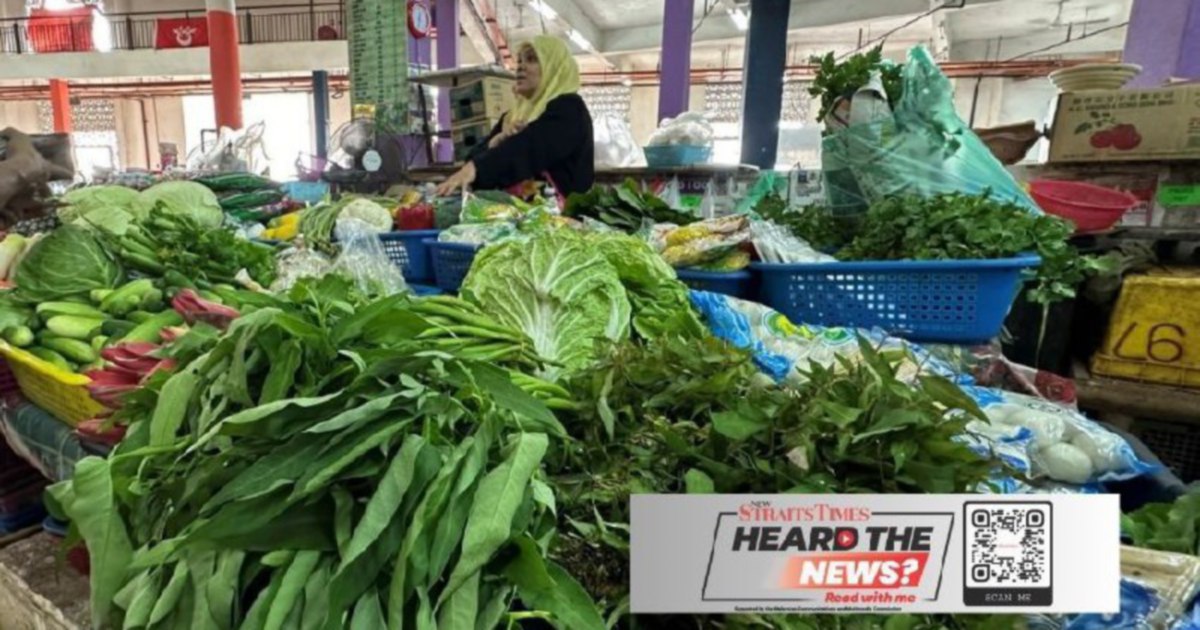
KUALA LUMPUR: Emergency measures have been taken to stabilise vegetable prices amid sharp hikes in several states.
The Agriculture and Food Security Ministry said the rise, threefold in some cases, stemmed from a significant drop in output caused by extreme weather and floods in key farming areas.
It added that the supply disruption was not unique to Malaysia, as major regional producers such as Thailand and Vietnam were also facing reduced yields due to monsoon-related flooding.
The ministry told the New Straits Times that excessive rainfall and inundated farmland had damaged crops, slowed growth cycles and washed away agricultural inputs such as seeds, fertiliser and pesticides, making them less effective.
“Many farmers had also scaled down planting ahead of the northeast monsoon to avoid losses — a pattern mirrored in neighbouring countries experiencing similar weather impacts.
“Leafy vegetables and legumes, including spinach, kangkung, mustard greens, okra and long beans, were the worst affected with estimated yield reductions of between 40 and 50 per cent.
“Major producing areas facing flood damage included Tumpat and Pasir Mas in Kelantan, Lenggeng and Kampung Inas in Negri Sembilan, and several zones in Padang Besar, Perlis.”
Other affected locations included Manjung, Hilir Perak and Bagan Datuk in Perak; Sabak Bernam in Selangor; Kubang Pasu in Kedah; Besut and Marang in Terengganu; Seberang Perai Tengah in Penang; and Raub and Lipis in Pahang.
To cushion the impact, the ministry said the Federal Agricultural Marketing Authority (Fama) had activated its Food Supply Emergency Management Plan through 15 state-level operations centres.
“Under this plan, Fama is preparing selected stockpile commodities, including chicken, pumpkin, carrots, tomatoes, round cabbage and sweet corn.”
Several stabilisation strategies have also been rolled out, including monitoring of daily supplies and prices, activating alternative supply chains from non-affected zones and coordinating with agricultural and logistics agencies to keep produce moving, it added.
It is also running market intervention programmes such as Pasar Tani, MyRakyat and Jualan Agro Madani to offer cheaper options for consumers.
It added that Fama was working with local growers and importers to ensure continuity of supply, especially for weather-sensitive leafy vegetables.
The ministry said the Malaysian Meteorological Department expected the northeast monsoon, which began on Nov 13, to continue until March.
It warned that supply disruptions and elevated prices were likely to persist into early next year, consistent with trends from previous monsoon seasons.
© New Straits Times Press (M) Bhd