
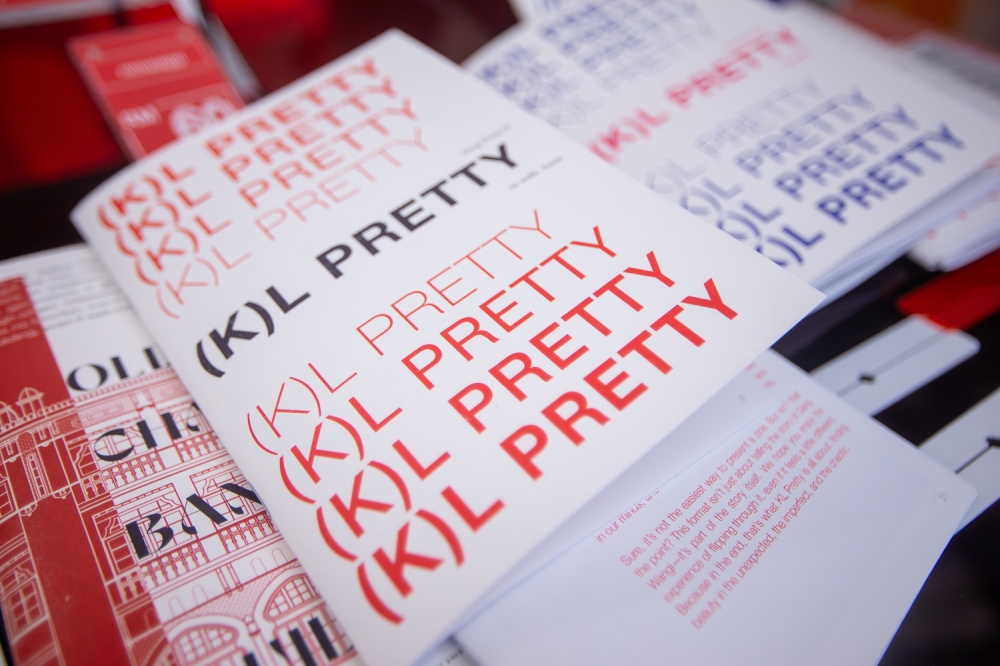
KUALA LUMPUR, Dec 20 — Once the bustling commercial heart of the capital, the Dang Wangi district is slowly losing its old charm and heritage.
While most of us barely stopped to notice the changes, Kuching-born interior architecture lecturer Victor Chin Fung Vui could hardly ignore them.
The 33-year-old has been a regular patron of Dang Wangi since he started working at the Malaysian Institute of Arts in 2017.
So, the architecture buff walked through the nooks and crannies of Dang Wangi, taking pictures of what he felt was wrong and what was left to fight for in the district.
Chin’s legwork resulted in a two-part zine titled KL Pretty, which he wrote under the pen name Vic Wolfe and published at his Sentul-based independent publishing studio, vicwolfe.pdf.
After successfully selling 60 copies of the first part at the Kuala Lumpur Art Book Fair (KLABF) last year, Chin returned to the exhibition with the sequel this year.
“Dang Wangi is the forgotten child that has so much potential and aspirations but because it is not as popular as other parts of KL, people don’t really care about it,” Chin told Malay Mail when met at the 2025 KLABF here recently.
The first KL Pretty zine focused on the area around the Dang Wangi LRT station and Bukit Nanas, while the second part revisited neglected buildings and old shophouses along Jalan Dang Wangi (formerly Campbell Road).
Chin calls the book “a conversation starter” that tells why thoughtful design matters for a city to be truly liveable.
Architectural eyesores
The first KL Pretty starts off with Chin listing down the architectural eyesores in Dang Wangi — from rusty monorail signboards and broken escalators to massive hoardings that affect the Dang Wangi LRT station’s accessibility.
Chin’s beef is not just with the authorities; it is also with citizens lacking civic sense.
For instance, he described how steel bollards with beautiful laser-cut pineapple motifs — aimed to keep bikers off the footpaths — were irresponsibly used as garbage bins.
Neglected heritage gems
The first KL Pretty also featured the historic Bukit Nanas Tunnel, which Chin said now serves as a “secluded spot for rubbish bins”.
The tunnel was part of a defence network developed by the Mandailing people led by Tuanku Raja Asai @ Ja Asai during the battle between Smaller Kings in the Selangor Civil War.
Ja Asai built his fortress and living quarters at Bukit Gombak in 1867 and the Mandailings planted pineapples around the hill, giving rise to the name Bukit Nanas.
The Bukit Nanas Tunnel was accidentally discovered in June 2014 during hill slope repair works after a landslide.
In the second part of KL Pretty, Chin examined the forgotten buildings in Dang Wangi, such as the South Building (formerly the headquarters of South Engineers Ltd), Wisma Dang Wangi and Wisma TKT and the Dang Wangi main intake substation.
He also made a nostalgic recap of how old shophouses along Jalan Dang Wangi — which he described as “the stubborn bones of the old city” — struggle to keep pace with urbanisation.
One example, he said, was how new infrastructure and upgrades elevated the roads, forcing some shop owners to raise their internal floors.
But, that left some shops lower than the others and eventually fractured the pedestrian walkway.
Special mentions: Wilayah Complex and the old Sime Darby building
Chin also devoted an extensive 30-page coverage in the second zine to the once-thriving Wilayah Complex.
The building was designed by DP Architects, the same firm that designed the Ampang Park Shopping Centre.
Now, it mainly houses Indian bars and textile storage spaces, frequented mostly by migrant workers.
Chin also wrote a heartfelt “obituary” in the second zine for the old Sime Darby building, which was torn down recently to make way for a multi-storey car park.
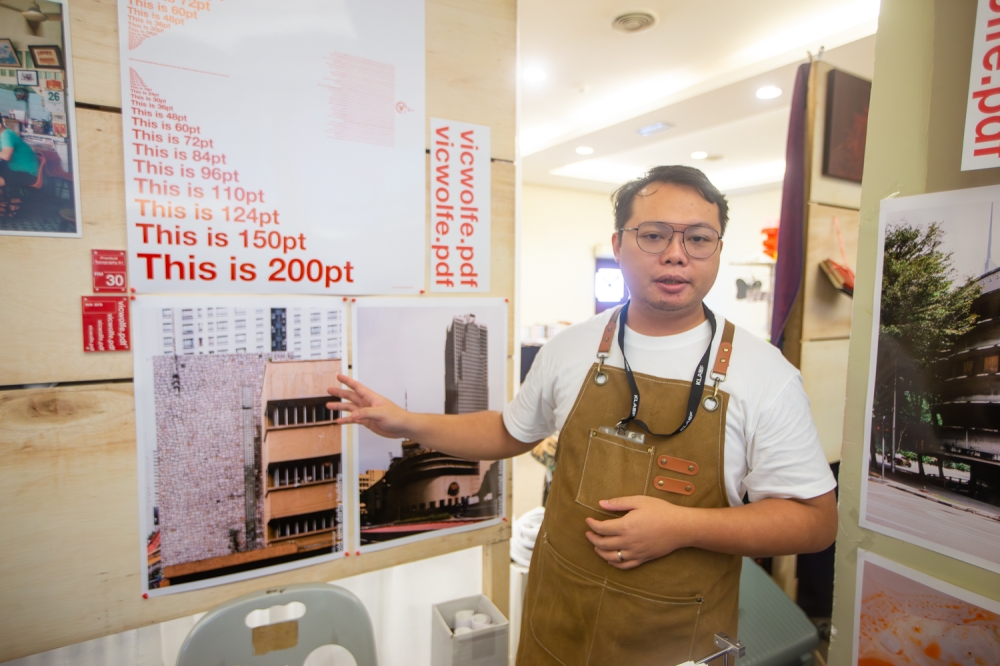
Kuching-born interior architecture lecturer Victor Chin sharing the history of the old Sime Darby building. — Picture by Raymond Manuel
Designed by Booty, Edwards & Partners (BEP Akitek) in 1954, it was one of Malaysia’s first modernist buildings that carried a facade of square snecked rubble masonry with Batu Caves limestones.
The building also once housed Kolej Rima, a private college founded in 1981 to provide affordable education.
After extensively documenting Dang Wangi’s architectural heritage, Chin has set his eyes on Medan Pasar (or the Central Market area) as his next stop.
He also wants more residents to record their frustrations about their streets and neighbourhoods because he believes: “We are used to less, but we deserve more.”