
SINGAPORE – Eye patients who are allergic to penicillin can now have an alternative antibiotic injected into the eye during cataract surgery to prevent infections.
Levofloxacin, a prescription fluoroquinolone (a class of synthetic, broad-spectrum antibiotics used to treat serious bacterial infections) antibiotic was previously used as a spray over the surface of the eye instead as doctors did not know if it could be injected safely.
But a recent study of 50 cataract patients showed that injected levofloxacin was as effective as cefazolin, the antibiotic that is now currently used.
Cefazolin, a cephalosporin antibiotic, cannot be given to patients with penicillin allergy as both drugs are structurally alike.
In the study, researchers from NHG Health Eye Institute injected half of the 50 patients with cefazolin, and the other half with levofloxacin.
The study was conducted at the Ang Mo Kio Specialist Centre between June 2022 and February 2024 and the participating patients undergoing cataract surgery were between 50 and 80 years old.
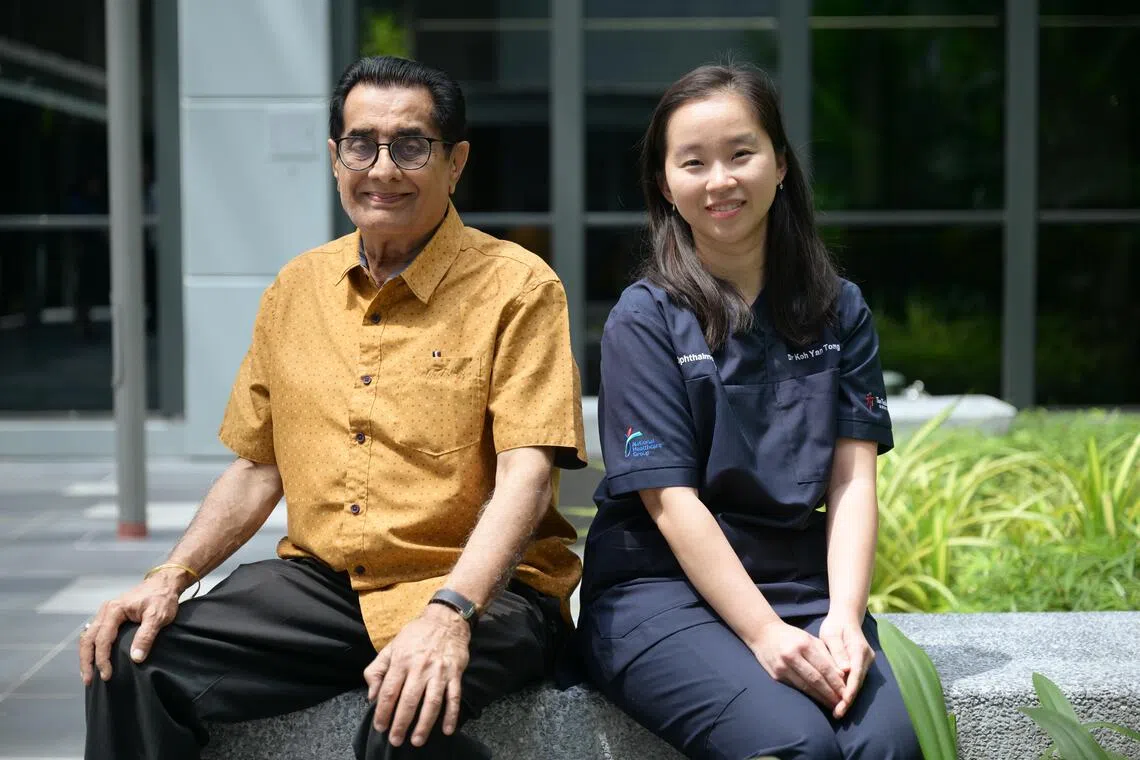
The principal author of the study, Dr Koh Yan Tong, an ophthalmologist with Tan Tock Seng Hospital, said while Singapore eye surgeons use levofloxacin as an external spray for patients allergic to penicillin, studies from the Philippines and surgeons from Malaysia have reported successful outcomes in injecting the drug directly into the eye chamber.
The findings of the study showed that both groups had equally safe outcomes, indicating that the alternative antibiotic is as effective as the current standard, and safe to use in patients with penicillin allergies.
Dr Koh, who heads paediatric ophthalmology and strabismus and who is also the deputy head of primary eye care at NHG Eye Institute, said none of the subjects were allergic to penicillin in order for the double-blind, randomised controlled pilot study to work, “as we could not possibly administer cefazolin to patients with the allergy”.
A little of the antibiotic is usually injected into the eye after the cataract is removed and a clear, artificial lens is permanently implanted, to prevent postoperative endophthalmitis, a severe infection and inflammation inside the eye that affects its inner tissues and fluids.
Dr Koh said such infection, although rare, is the most feared complication of cataract surgery.
According to previous studies, patients who did not receive antibiotics into the eye after a cataract operation had about a five-time higher risk of post-surgery endophthalmitis.
“It has a poor outcome with only 39 per cent of patients recovering more than a visual acuity (VA) of 20/400, even with appropriate treatment,” Dr Koh said.
A VA of 20/400 refers to the biggest letter E at the top of the eye chart.
The study showed that there were no cases of endophthalmitis in both groups and the outcomes were comparable.
Funded by Japanese pharmaceutical company Santen, the manufacturer of levofloxacin, for $100,000, the study was published in the peer-reviewed journal Scientific Reports on Oct 2, 2025.
A participant in the study, retiree Akubal Singh Lal Singh, 78, underwent cataract surgery in his left eye in 2019. He took part in the study for the same surgery in his right eye.
He told reporters that the injection of levofloxacin into his right eye, “felt no difference from the earlier operation”.
Cataracts are common among the elderly population in Singapore, with about four in five having the condition, and nearly 95 per cent affected by age 75 years and above.
With Singapore’s ageing population, a 2023 study projected an estimated 81 per cent increase in cataract cases, reaching 1.3 million by 2040.
According to Dr Koh, nine in 10 Singaporeans with drug allergies are allergic to penicillin or amoxicillin, a prescription penicillin-type antibiotic.
Dr Koh said this alternative antibiotic offers a viable alternative for patients with penicillin allergies, reducing the risk of post-surgeryinfections.
She added that larger, multicentre studies are warranted to confirm these findings and “hopefully it would become the standard of care, beginning at NHG Eye Institute”.