
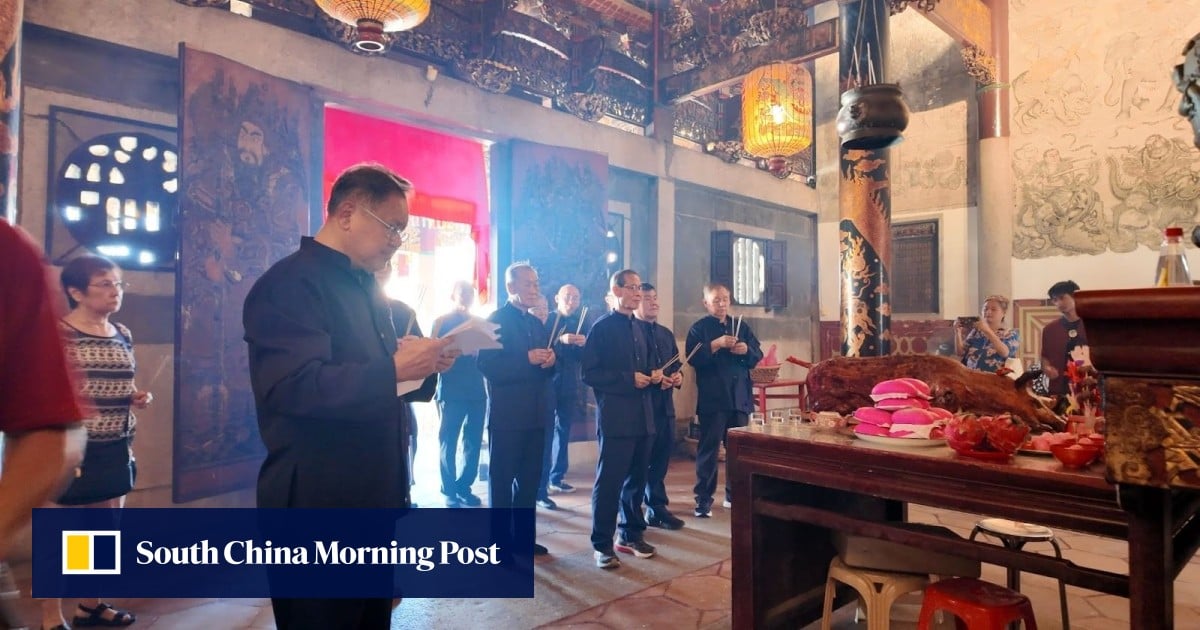
In dark blue suits, the elders of the Khoo clan gathered outside the prayer halls of the Leong San Tong Khoo Kongsi, a grand 190-year-old clanhouse in George Town, the capital of the Malaysian state of Penang.
One by one, they stepped inside for the Tung Chen ceremony, held annually on the first day of the winter solstice, a ritual that draws together members of the Khoo clan, one of the oldest Peranakan communities, from far beyond Penang.
As smoke filled the air, Khoo Kay Hock, a senior trustee, filed into the hall clutching joss sticks. A short prayer and three bows later, he left, his respects paid to the ancestors and deities that have bound Peranakan families across Southeast Asia.
“We were here even before the British,” he told This Week in Asia, referring to the British arrival in Penang in 1786. His seafaring Khoo clansmen are believed to have established roots on the island as early as 1752.
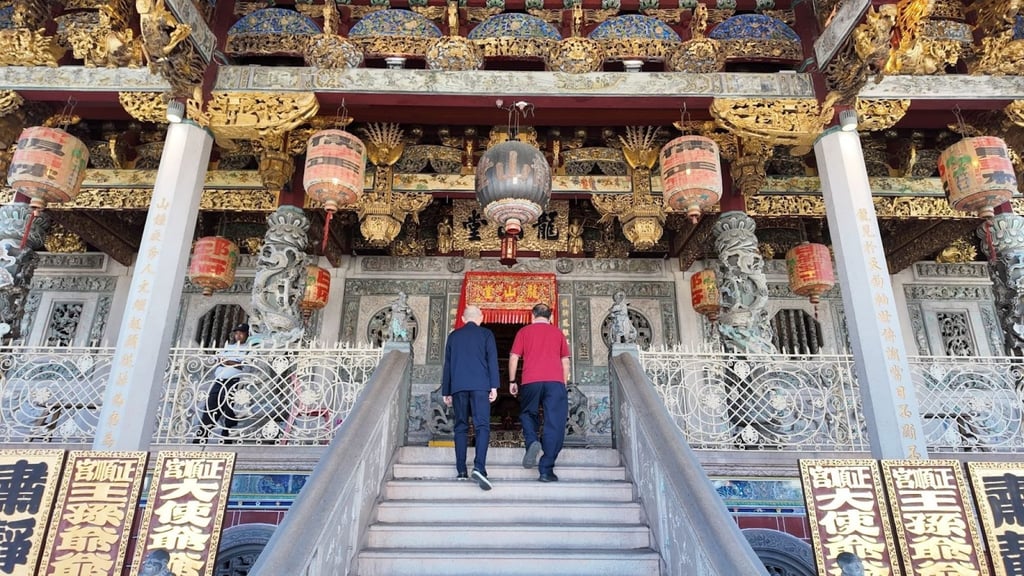
The Tung Chen rites, centred on wooden ancestral tablets inscribed with the names of deceased forebears, have been practised for generations. But the ceremony also gestures towards a much wider cultural narrative.
That story is of a community that originated in China, took shape through migration and intermarriage across Southeast Asia’s port cities, and became one of the region’s most influential and far-reaching Chinese diasporas.