
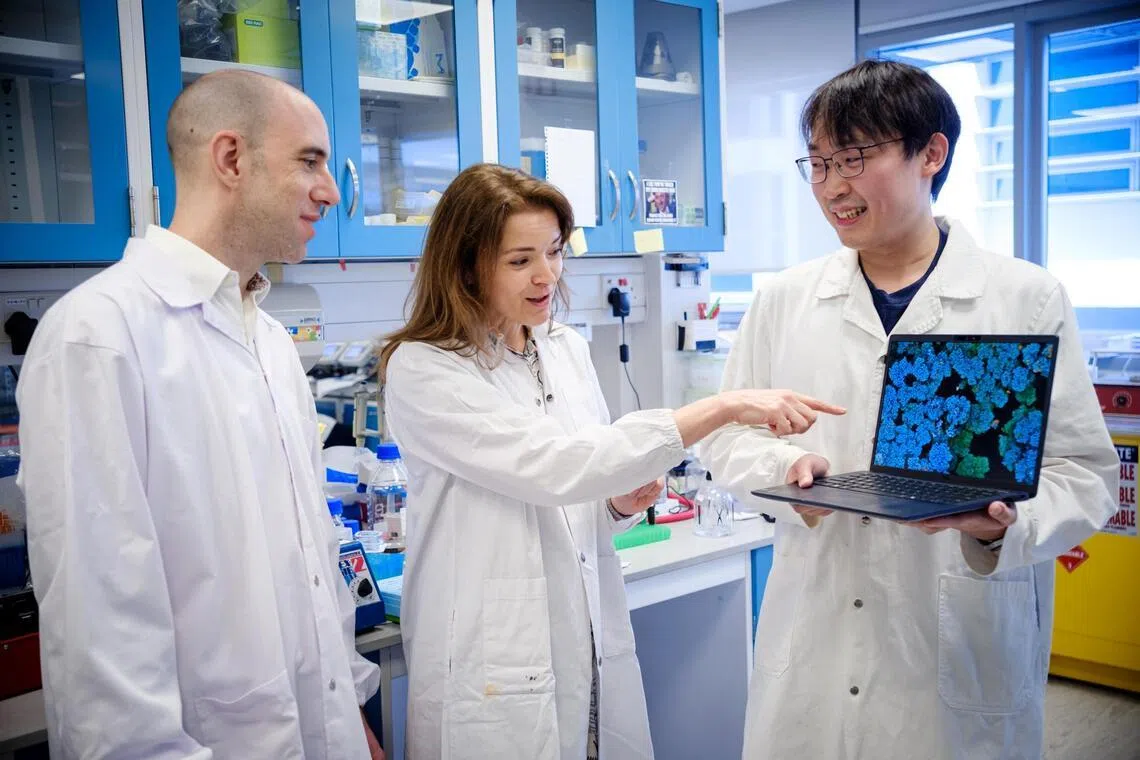
SINGAPORE – Singapore scientists have good news for patients with diabetes, offering new hope for avoiding foot amputations.
The team has discovered a new way to disarm antibiotic-resistant bacteria and speed up the healing of chronic wounds using catalase, a crucial antioxidant enzyme found in nearly all living organisms.
By treating affected skin cells with catalase, the researchers managed to reduce the bacterium’s ability to disrupt skin repair, thereby restoring the cells’ capacity to migrate and heal.
The study, co-led by Associate Professor Guillaume Thibault from the School of Biological Sciences at Nanyang Technological University (NTU) and Professor Kimberly Kline from the University of Geneva, found that a common bacterium, Enterococcus faecalis (E. faecalis), actively prevents wound healing.
The team demonstrated how neutralising this process with the antioxidant catalase can allow skin cells to recover and close wounds.
E. faecalis is “an opportunistic germ” frequently found in chronic infections such as diabetic foot ulcers, making these wounds difficult to treat and often unable to heal.
This is especially so for ulcerated feet, which often lead to lower limb amputations and are frequently complicated by persistent infections that hinder healing.
Another growing concern is E. faecalis’ resistance to antibiotics, especially to several commonly used ones, making certain infections difficult to treat.
According to NTU research fellow, Dr Aaron Tan, E. faecalis uses a metabolic process known as extracellular electron transport, which continuously produces hydrogen peroxide that damages living tissue through oxidative stress.
“Laboratory experiments show that oxidative stress triggers a cellular defence mechanism known as the ‘unfolded protein response’ in skin cells called keratinocytes, which carries out skin repair by slowing down protein production so that the wound can recover.
“However, once activated, the oxidative stress response effectively paralyses the cells, preventing them from moving to close the wound,” he told The Straits Times.
Using a genetically modified strain of E. faecalis that lacked the ability to continuously produce hydrogen peroxide, the researchers found that it was unable to block wound healing.
The team then tested whether neutralising the hydrogen peroxide with the naturally occurring antioxidant enzyme catalase could reverse the damage, finding that it reduced cellular stress and restored the cells’ ability to migrate and heal.
“The findings – that the bacteria’s metabolism itself is the weapon – were a surprise as it was previously unknown to scientists,” said Prof Thibault, who is also the assistant dean of international engagement at the College of Science.
“Instead of focusing on killing the bacteria with antibiotics, which is becoming increasingly difficult and leads to future antibiotic resistance, we can now neutralise them by blocking the harmful products they generate and restoring wound healing,” he added.
The findings were published on Jan 17 in Science Advances, a peer-reviewed multidisciplinary open-access scientific journal established in early 2015 by the American Association for the Advancement of Science.
As the study’s results now offer a potential therapeutic strategy for chronic wounds, the researchers suggest that wound dressings should be infused with catalase to be an effective treatment.
“Because antioxidants like catalase are already widely used and well understood, we believe this strategy could shorten the path from laboratory research to clinical application, compared with developing a new drug,” Dr Tan said.
He added that the study used human skin cells to demonstrate the mechanism, “so the findings are relevant to human physiology and may pave the way for new treatments for patients with non-healing wounds”.
Diabetes is a serious health concern in Singapore, affecting more than 400,000 people, and it is estimated that by 2050, one million adults here will have the disease.
Chronic wounds such as diabetic foot ulcers, pressure injuries and venous leg ulcers are becoming increasingly common, with over 16,000 cases reported annually, particularly among older adults and people with diabetes.

A vascular surgeon (left) and a podiatrist examining a patient with a diabetic foot ulcer.
PHOTO: NATIONAL HEALTHCARE GROUP
Singapore has one of the highest rates of diabetes-related lower limb amputations in the world, with about four occurring daily, primarily due to poor disease management and resulting complications.
In 2021, Singapore’s diabetes-related lower limb amputation rate was 12.1 per 100,000, nearly double the average rate of 6.4 per 100,000 across the Organisation for Economic Co-operation and Development countries.
Adjunct Associate Professor Timothy Barkham, a senior consultant from the Department of Laboratory Medicine at Tan Tock Seng Hospital, said while this basic research does not yet translate into an immediate therapy, it opens a promising new direction for investigation.
“With antibiotic resistance making chronic wound infections increasingly difficult to treat, exploring alternative approaches beyond antibiotics is both timely and necessary. Such novel approaches warrant further follow-ups to determine their safety and effectiveness,” he added.
The NTU team aims to move towards human clinical trials after using ongoing studies in animal models to determine the most effective way of delivering antioxidants.