
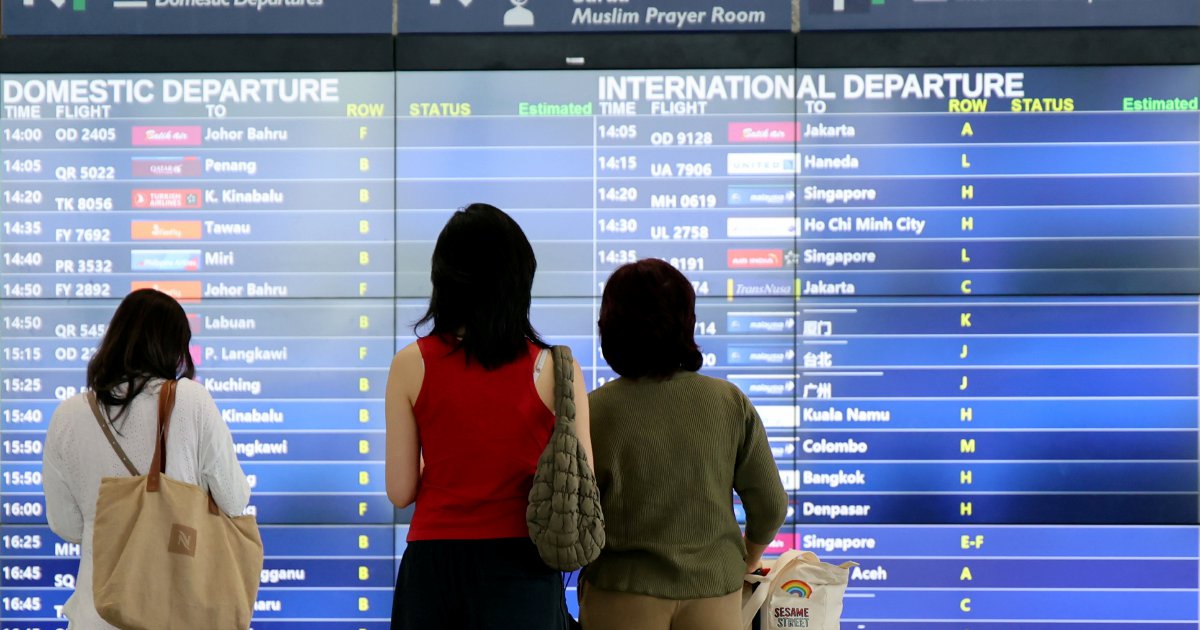
KUALA LUMPUR: Malaysia’s airline industry is expected to gain momentum this year, with mid-single-digit growth in passenger volumes projected, driven largely by robust international demand, Public Investment Bank Bhd (PublicInvest) said.
The firm said the growth outlook is supported by new routes, expanded seat capacity, favourable visa policies, and the upcoming Visit Malaysia Year 2026 (VM2026) campaign.
It noted that the Asia-Pacific region was the fastest-growing aviation market in 2025, having grown by over eight per cent.
“It is likely to continue leading volume growth, with forecast revenue passenger kilometre (RPK) growth of 7.2 per cent in 2026, driven by strong economic growth in China and India and the expansion in international travel.
“Malaysia stands to benefit directly from this trend due to its strategic location, increased intra-Asean travel connectivity, and the further boost from VM 2026 initiatives, which aim to attract 40 million international tourists.
“The country is well-positioned to meet this target, having already welcomed 38.3 million foreign tourist arrivals in the first 11 months of 2025 alone, surpassing the total for all of 2024,” it said in a note.
Looking ahead, the firm said the operating environment is expected to be shaped by a firmer ringgit, supported by consistent macro delivery, investment-related inflows, and external balance resilience.
This appreciation should reduce the local-currency cost of critical USD-denominated expenses, notably jet fuel and aircraft leases.
On the downside, the firm noted that supply chain disruptions remain one of the most significant challenges for the industry.
While deliveries of new aircraft picked up in late 2025 and production is set to rise in 2026, demand for new aircraft and engines will continue to exceed available supply.
“The normalisation of the structural mismatch is unlikely before 2031, due to the supply disruptions over the past five years and an unprecedented order backlog.
“This shortage has pushed the average passenger fleet age to 12.8 years, compared to the pre-pandemic average of seven years.”
It added that maintenance costs are expected to remain elevated due to the ageing fleet and parts availability issues.
The firm kept its “Outperform” call on the sector.
Despite the supply chain challenges, it expects airline profitability to improve, supported by stronger load factors, better cargo yields, steady jet fuel prices and the weaker US dollar.
© New Straits Times Press (M) Bhd