
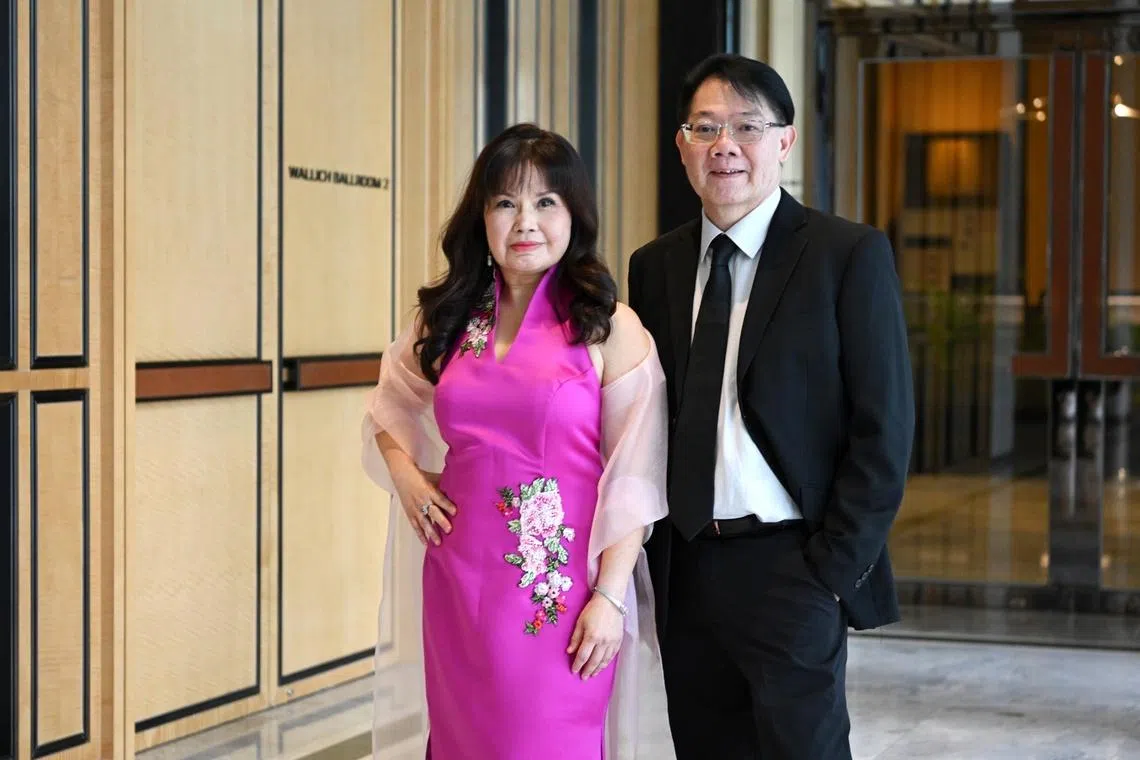
SINGAPORE – Brain tumour patients will soon have a dedicated healthcare professional to follow up with after being discharged from hospital, to help them better cope with side effects they may experience after surgery.
“Dealing with recovery from brain tumours… can sometimes be frightening,” said Ms Melissa Lim, founder and president of the Brain Tumour Society Singapore (BTSS) behind this initiative.
Patients can experience different symptoms, ranging from seizures to blurry vision, she said, sharing that she is herself a survivor who was left with facial palsy after surgery.
Oftentimes, patients send WhatsApp messages to BTSS — which was founded in 2014 to provide support to brain tumour patients, their caregivers and families — asking for advice.
But as the society is a charity and not a medical organisation, Ms Lim, 60, said it would be better for medical personnel to act as touchpoints, as they would have “a ready answer”, while also knowing what to do in an emergency.
The National Neuroscience Institute (NNI) and the National University Cancer Institute, Singapore (NCIS) will each have a clinical care coordinator who will function as a point of contact for recovering patients. NNI covers the Singhealth and National Healthcare Group health clusters, while NCIS covers the National University Health System cluster.
Ms Lim said they will likely begin their work by the middle of the year.
She was speaking to The Straits Times ahead of BTSS’ inaugural gala dinner on Jan 25, which aimed to raise $1 million, with dollar-for-dollar matching by the Tote Board up to $500,000.
The funds raised will provide $100,000 each to NNI and NCIS to support the new initiative.
In a video message to guests, Health Minister Ong Ye Kung said the initiative builds on the hospital-to-home programme in public hospitals.
Launched in 2017, this effort sees healthcare professionals from the respective hospitals work with neighbourhood volunteers to see that the patient’s move back home is smooth, as well as provide continued care from community partners if necessary.
The new clinical care coordinators will support patients’ recoveries at home after procedures such as neurosurgery or radiotherapy, said Mr Ong.
“They will care for and guide patients through an especially vulnerable period where complications may arise, help families make timely decisions, and ease the burden on families.”
NNI deputy chief executive David Low said the initiative will also allow hospitals to study any gaps that currently exist in terms of support for brain tumour patients, acknowledging feedback that current efforts to support these patients are insufficient.
“We recognise that brain tumour patients have a lot of care needs after their surgeries or treatment.
“It’s far more complex than other conditions, and the numbers are small, hence there isn’t a dedicated team looking after this.”
BTSS relies on donations to support brain tumour patients, as well as their caregivers and families, including providing psychosocial and financial aid.
Besides fundraising, the gala dinner also celebrated four individuals who contributed significantly towards improving the conditions of brain tumour patients.
One of them was Mr Peter Koh, 67, who has been a volunteer with BTSS since 2018.
His wife was found to have three brain tumours in June 2017, after she said she had blurry vision.
Her diagnosis prompted Mr Koh to read up on brain tumours, which is how he learnt about BTSS.
Although his wife underwent surgery, her body did not respond well to chemotherapy, and her tumour returned. She died about one and a half years later.
“I told myself I’m not going to stop here and just grieve. Life goes on,” said Mr Koh, who has been facilitating BTSS support group meetings for patients and their caregivers every month.
“I think my wife would be happier that I continue this journey to help others.”