
It’s Budget season in Singapore once again.
For many living here, it is the time we look forward to hearing how much the Government might be giving to its people – whether in cash or credit.
There are wider ramifications to how Singapore’s finances are spent beyond the individual, however.
These include how it supports its ageing population, the infrastructure developments planned and defence spend in light of an increasingly fractured global environment.
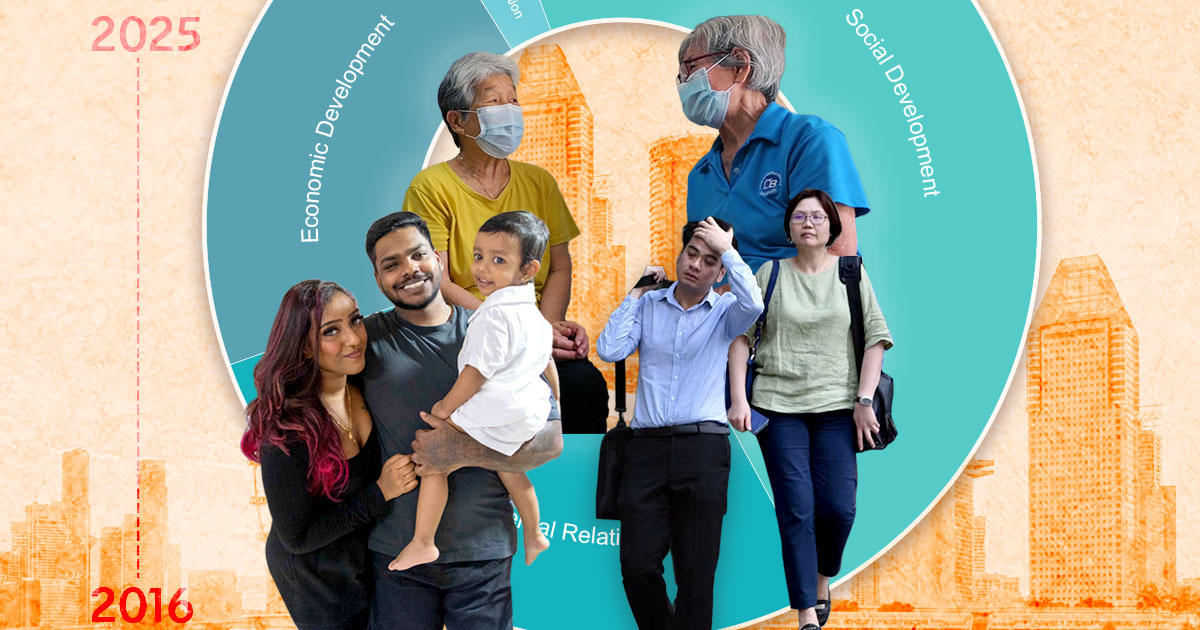
CNA TODAY inspects the past decade’s Budget reports to discern the trends and patterns ahead of this year’s announcement by Prime Minister Lawrence Wong.
Government spending almost doubled over the decade
Every year, a Budget is unveiled to provide an estimate of the government’s planned expenditure for the fiscal year. The estimate is updated and revised a year later, with the actual spending tabulated after two years.
Beyond the macro-level look at overall spend, we zoomed in on key takeaways to see where our taxpayers’ money is going, and how the government is raising the funds needed for the increased expenditure.
%20rotate(-45)%22%2F%3E%0A%20%20%20%20%3C%2Fg%3E%0A%20%20%3C%2Fg%3E%0A%3C%2Fsvg%3E)
More cash handouts to ease cost-of-living pressures
Last year, Mr Wong announced S$2 billion worth of SG60 vouchers, and S$1 billion of further CDC vouchers to alleviate growing cost of living pressures.
The sum of special transfers to households and businesses – which comprise one-off payments such as cash vouchers, utility bill rebates and top-ups to savings accounts among others – increased for three consecutive years, from S$2.7 billion FY2022 to an estimated S$3.8 billion in FY2025.
In the past decade, FY2020 – when the COVID-19 pandemic was at its height – was the year in which the government spent the most on special transfers to households and businesses. The sum totalled S$33.5 billion that year.
The government is likely to continue providing such support in the form of vouchers, experts CNA TODAY spoke to said, but added this doesn’t mean handouts will automatically grow larger or become a permanent spending component in each Budget.
%20rotate(-12.18)%22%2F%3E%0A%20%20%20%20%20%20%20%20%3Cpolygon%20class%3D%22cls-5%22%20points%3D%2229.59%2029.44%2036.1%2034.82%2035.01%2046.92%2035.69%2046.94%2036.7%2034.58%2030%2029.21%2029.59%2029.44%22%2F%3E%0A%20%20%20%20%20%20%20%20%3Cellipse%20class%3D%22cls-5%22%20cx%3D%2235.4%22%20cy%3D%2246.52%22%20rx%3D%221.04%22%20ry%3D%22.75%22%20transform%3D%22translate(-17.18%2072.06)%20rotate(-78.64)%22%2F%3E%0A%20%20%20%20%20%20%20%20%3Cline%20class%3D%22cls-1%22%20x1%3D%2234.89%22%20y1%3D%2247.14%22%20x2%3D%2233.37%22%20y2%3D%2250.32%22%2F%3E%0A%20%20%20%20%20%20%20%20%3Cline%20class%3D%22cls-1%22%20x1%3D%2234.98%22%20y1%3D%2247.42%22%20x2%3D%2234.4%22%20y2%3D%2250.67%22%2F%3E%0A%20%20%20%20%20%20%20%20%3Cline%20class%3D%22cls-1%22%20x1%3D%2235.3%22%20y1%3D%2247.65%22%20x2%3D%2235.64%22%20y2%3D%2250.87%22%2F%3E%0A%20%20%20%20%20%20%20%20%3Cline%20class%3D%22cls-1%22%20x1%3D%2235.75%22%20y1%3D%2247.58%22%20x2%3D%2236.68%22%20y2%3D%2250.51%22%2F%3E%0A%20%20%20%20%20%20%20%20%3Cline%20class%3D%22cls-1%22%20x1%3D%2235.96%22%20y1%3D%2247.2%22%20x2%3D%2237.73%22%20y2%3D%2249.82%22%2F%3E%0A%20%20%20%20%20%20%3C%2Fg%3E%0A%20%20%20%20%20%20%3Ccircle%20class%3D%22cls-8%22%20cx%3D%228.78%22%20cy%3D%2233.48%22%20r%3D%228.28%22%2F%3E%0A%20%20%20%20%20%20%3Cpath%20class%3D%22cls-5%22%20d%3D%22M8.85%2C38.08c-.72%2C0-1.34-.11-1.87-.33s-.94-.55-1.24-.98c-.3-.43-.45-.96-.47-1.6h1.78c.02.3.11.55.27.75.16.2.36.35.62.45s.55.15.88.15.61-.05.86-.14.43-.23.57-.4c.14-.17.2-.37.2-.6%2C0-.2-.06-.38-.18-.51-.12-.14-.3-.26-.53-.36-.23-.1-.51-.19-.83-.26l-.98-.25c-.76-.18-1.35-.47-1.78-.87-.43-.39-.64-.92-.64-1.56%2C0-.54.15-1.01.43-1.42.29-.4.69-.72%2C1.2-.94.51-.22%2C1.08-.34%2C1.73-.34s1.24.11%2C1.73.34c.49.23.88.54%2C1.15.94.28.4.42.87.43%2C1.39h-1.77c-.03-.36-.18-.64-.46-.83-.27-.2-.64-.29-1.1-.29-.31%2C0-.57.04-.79.13-.22.09-.39.21-.5.37-.11.16-.17.33-.17.53%2C0%2C.22.07.4.2.55.13.15.31.26.53.35.22.09.45.16.7.23l.81.2c.38.08.73.2%2C1.05.34s.61.32.85.53c.24.21.43.46.57.75.13.29.2.62.2%2C1%2C0%2C.54-.14%2C1.01-.41%2C1.41-.27.4-.67.71-1.18.93-.52.22-1.14.33-1.86.33ZM8.48%2C39.15v-11.36h.72v11.36h-.72Z%22%2F%3E%0A%20%20%20%20%3C%2Fg%3E%0A%20%20%3C%2Fg%3E%0A%3C%2Fsvg%3E)
Social spending is growing substantially, driven by healthcare
Social spending refers to money spent for the ministries responsible for:
- Health
- Education
- National development
- Social and family development
- Sustainability and the environment
- Culture, community and youth
Some portion of spending from the ministries of Manpower and Digital Development and Information fall under this category too.
Traditionally, social spending accounts for 40 to 50 per cent of the Budget, with a median of about 46.3 per cent since FY2002.
After a peak in FY2020 at 51.5 per cent due to COVID-19, it has remained stable and high – between 49.4 per cent and 49.6 per cent – for five consecutive Budgets, indicating a continued emphasis on social spending.
Given how Singapore’s Budget has almost doubled in the past decade, this means that social spending has also increased accordingly. In FY2015, spending on social development stood at S$31.3 billion.
Ten years on, estimated social spending for FY2025 was almost double that, at S$61.3 billion.
Within this, the largest sum of funds are allocated to the Health Ministry, which is estimated to spend S$20.9 billion in FY2025.
Experts agreed that the key driver underlying this growing spend is the need to care for Singapore’s ageing population.
Recent years have seen large injections of funds that go into national initiatives like Age Well SG, which helps seniors age actively within their communities, and Healthier SG, which focuses on preventative health.

More “proxy wealth taxes”
Singapore’s ageing population will cause some shifts in taxes too.
As the base of working individuals here shrinks, there will be an increased reliance on other forms of revenue, such as taxes on wealth, said Mr Harvey Koenig, partner and co-head of BEPS COE, KPMG in Singapore.
In his Budget 2022 speech, Mr Wong stated that wealth taxes are an important part of our tax system.
On top of generating revenue, such taxes help reduce social inequalities and are needed to build a fairer society, he said.
That year, he introduced measures that could be considered “proxy wealth taxes”, said Mr Ajay Kumar Sanganeria, partner and head of tax at KPMG in Singapore.
These were:
- Higher property tax rate
- Higher individual tax rate for top income earners
- New Additional Registration Fee tier for luxury cars
Budgets 2018 and 2023 also saw a significant increase in stamp duty rates, especially on higher-value residential properties.

Growing productivity investments, with workers as focus
Ten years ago during Budget 2016, then-Finance Minister Heng Swee Keat said productivity growth had remained “relatively flat” since 2013.
“We must keep working on this,” he had said.
Fast forward to 2025 and productivity remained high on the agenda.
Mr Wong said in his Budget last year that increasing productivity, alongside economic growth, is the “best way” to adjust to the impact of rising prices.
He backed up his statement by announcing a S$3 billion top-up into the National Productivity Fund.
Top-ups and transfers into productivity-related funds are not new though, and have continued to grow, especially in recent years.
This pattern is consistent with a policy emphasis on human capital as a central driver of productivity growth, said Assistant Professor Yeow Hwee Chua of Nanyang Technology University.
“Higher spending from skills and lifelong learning funds reflects where implementation is taking place. Workforce transformation is delivered through continuous training and reskilling programmes, which naturally require more regular disbursements,” he said.
%20rotate(-45)%22%2F%3E%0A%20%20%20%20%3C%2Fg%3E%0A%20%20%3C%2Fg%3E%0A%3C%2Fsvg%3E)
Doubling down on sustainability
The government has sharpened its focus on the country’s green transition by pushing for net-zero initiatives, raising the carbon tax and investing in climate-resilient infrastructure, noted KPMG’s Mr Sanganeria.
In fact, Singapore was the first Southeast Asian country to introduce a carbon tax in 2019.
That came after then-Prime Minister Lee Hsien Loong stressed the importance of the issue by calling climate change defences “life and death matters”.

Singapore subsequently announced a new coastal and flood protection fund to guard against rising sea levels in Budget 2020.
This fund was further expanded in 2025 with an additional S$5 billion top-up.
Additionally, in Budget 2022, the Government announced that it would issue S$35 billion in public sector green bonds by 2030 to fund core projects like water and waste treatment.
These measures are important as Singapore is particularly vulnerable to rising sea levels and other impacts of climate change, said Mr Koenig of KPMG.
He also said the government would do well to include progressive carbon taxes to reward decarbonisation, and establish performance-based pathways for large emitters, for example.
“It is crucial for the country to strengthen measures that promote climate resilience and advance the green transition.”