
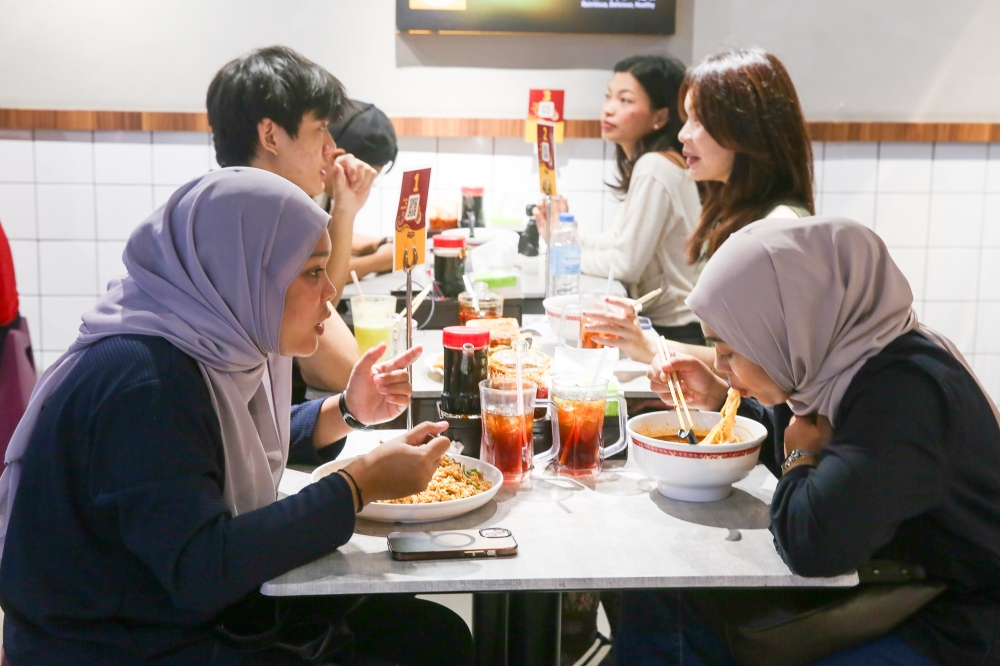
KUALA LUMPUR, Feb 18 — On any given evening, the crowds flocking to Chinese and Chinese Muslim eateries tell a larger story about Malaysia’s shifting palate — one that has caught the attention of Chinese restaurant operators eyeing South-east Asia for expansion.
Fuelling that interest is a new generation of Malaysian diners who have developed a taste for stronger flavours, pushing Chinese and Chinese Muslim brands to lean into bolder profiles, modern branding and accessible price points.
Less than a decade ago, when Chinese operators first introduced hotpot concepts in Malaysia, diners often requested less oil, less spice and less heat — sometimes removing the oil entirely.
But tastes have shifted. While Malaysia has long favoured lighter cooking styles, the bolder seasoning typical of Chinese cuisine — especially chili and Sichuan peppercorn — now resonates strongly with younger consumers, said Malaysia Chinese Restaurant Association president Gao Haoyun.
“In China, it’s the opposite where 70 per cent to 80 per cent of the pot is oil, with spice and heat forming the core flavour profile.
“Chinese flavours, especially chili and Sichuan peppercorn, are highly stimulating, but once young consumers’ taste buds are ‘opened’, they tend to remember that flavour and experience.
“That’s why Chinese restaurants in Malaysia are expanding so quickly because their core clientele today are largely aged between 18 to 40. As this generation matures, their demand for bold flavours only grows,” he said in a recent interview with Malay Mail.
Spurred by the China–Malaysia visa-exemption agreement and a surge in tourism, Gao said well-travelled consumers often return home seeking the same tastes that left an impression during their trips.
“That is not to say Malaysian food is not good because Nyonya cuisine and Cantonese dishes here are excellent, often better than in China I dare say because Malaysia emphasises original flavours,” he said.
As a result, he said, more than 90 per cent of Chinese restaurants in Malaysia now serve highly authentic offerings that appeal to both Muslim and non-Muslim diners.
“Times have indeed changed,” he said.
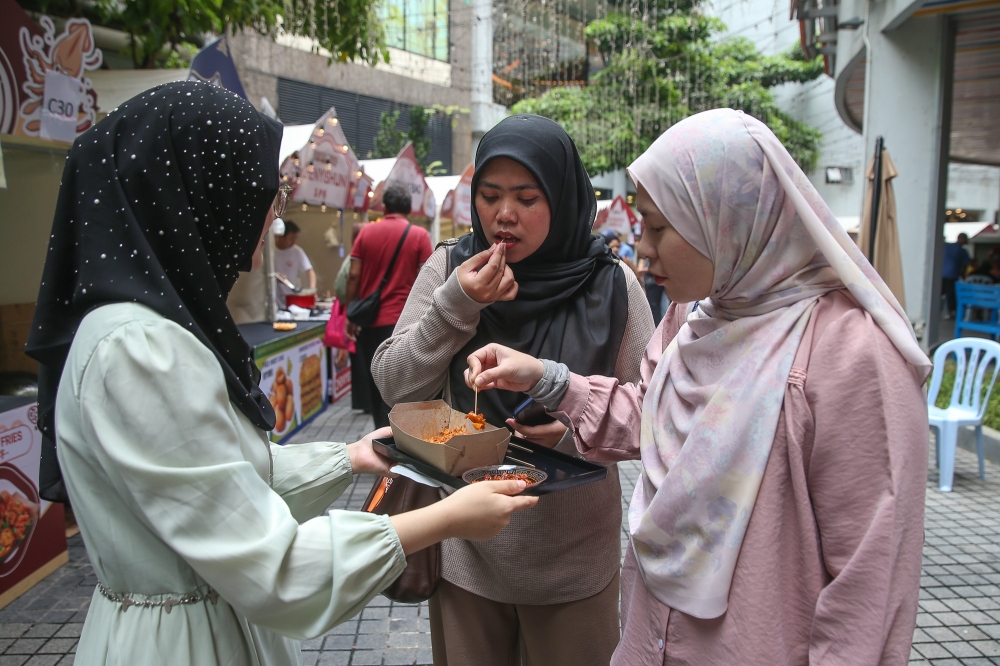
Visitors sampling Chinese Muslim street snacks at the Third Chinese Muslim Food & Tourism Festival at 1 Utama Shopping Centre in Petaling Jaya recently. — Picture by Yusof Isa
A new generation shaping Malaysia’s appetite
Gao said one key driver behind the growth of Chinese Muslim cuisine in Malaysia is the quality of ingredients.
He noted that the local cattle and livestock industry remains underdeveloped, with much of the country’s beef and lamb still imported from India and Australia.
“Local cattle and sheep breeds, on top of climate, feed and genetic factors, also do not deliver the same texture and differ significantly from Chinese livestock.
“If you try a Ningxia-style hand-torn mutton at a Chinese Muslim restaurant, you will immediately notice the difference — tender and melts-in-the-mouth.
“But many Malaysians grew up associating lamb with toughness and strong odour, so this comes as a revelation,” he said.
He added that Malaysia’s Muslim food sector has historically been fairly uniform, relying heavily on fried and sweet items, with limited exploration of diverse cooking methods or seasoning styles.

Malaysia Chinese Restaurant Association president Gao Haoyun during an interview with Malay Mail. — Picture by Raymond Manuel
Why Chinese Muslim flavours resonate
With ingredients like mala seasoning, chili oil and Sichuan pepper oil now entering the market, Gao said even small additions can create entirely new sensory experiences, gradually winning over consumers and fostering loyalty.
Combined, he said these factors give Chinese Muslim operators a distinct edge — pairing superior ingredients with shared religious beliefs that build trust among Muslim diners.
Pricing is another major factor, with Chinese Muslim food seen as affordable and highly accessible.
“Chinese restaurateurs usually operate on a high volume, low margin business model where gross margins rarely fall below 65 per cent as compared to China where margins are already under 60 per cent.
“Here in Malaysia, operators can still maintain margins of between 65 per cent to 75 per cent to be profitable and sustainable,” he said.
Market white space has also played a role.
“When a brand is the sole provider of a product like Chinese beef meat pie (commonly known as beef roti here), demand will be concentrated on them.
“As the business grows and its brand becomes established, operators benefit from first-mover advantages — and prices may even drop as the market expands with others entering the market,” he said.
A five-year gap with China — and closing fast
According to Gao, Malaysia’s food and beverage sector is currently about five years behind China — a gap that has narrowed significantly since the pandemic, when it was closer to a decade.
He attributed the persisting difference partly to Malaysia’s relatively conservative F&B sector.
“Many businesses here are family-run, passed down from father to son, generation to generation.”
But with borders reopened and international exposure rising, he said Malaysia’s F&B industry is modernising rapidly, marked by the rise of centralised procurement, chain kitchens, unified management and expanding chain-store operations.
“From China’s perspective, Malaysia represents a market with strong potential for structured upgrading and that’s the first key factor of why Chinese Muslim cuisines have the market potential here.”
Gao added that most Chinese and Chinese Muslim restaurants in Malaysia are not run exclusively by mainland Chinese operators. About 85 per cent are joint ventures that combine local and Chinese expertise.
“This is partly due to Malaysian regulations, which require local equity participation in certain sectors and in many cases, locals also participate through franchising arrangements,” he said.
Post-Covid travel trends have also influenced the industry. Many Malaysians now travel to China for leisure, often combining their trips with informal market observation. The discovery, Gao said, is often eye-opening.
In China, even a single dish — noodles, fish or a particular speciality — can be scaled into thousands, sometimes tens of thousands, of outlets.
“That level of specialisation and branding hasn’t been widely replicated in Malaysia yet, aside from coffee chains,” he said.
Still, Gao said even coffee chains would eventually hit a growth ceiling, pointing to the lack of systematic management as a key limitation.
“This is not about Malaysia being weaker, it’s about management models because Malaysia’s F&B management practices today resemble China’s from about five years ago,” he said.