
SINGAPORE – Drug offenders who spend the tail end of their sentences in a halfway house are less likely to reoffend than the general drug offender inmate population, the Singapore Prison Service (SPS) told The Straits Times.
The two-year recidivism rate for the 2019 to 2023 release cohort for inmates with drug antecedents who went through the halfway house programme was generally lower than the overall recidivism rates for those with drug antecedents, it said.
Drug antecedents refer to inmates with at least one prior drug offence, which includes consumption, possession and trafficking.
In 2022, the two-year recidivism rate for penal and Drug Rehabilitation Centre (DRC) inmates with drug antecedents who underwent the halfway house programme was 23.5 per cent, lower than the 29.7 per cent of the overall group.
On average, about 600 DRC inmates are placed on community-based programmes a year, where they serve the tail end of their detention either in a halfway house, at home, or at a work release camp where they are allowed to leave for work and return afterwards.
The
number of new drug abusers arrested in 2025 increased by 17 per cent
from the year before to 1,165 according to annual statistics from the Central Narcotics Bureau.
Inmates with drug antecedents are about three times more likely to reoffend than those without drug antecedents, said SPS.
SPS said the halfway house programme benefits these inmates who may lack family support, have no homes to return to, or whose family environment may not be conducive for their desistance from drug addiction.
“The most difficult challenge in desisting from drugs and crime arises when they complete their detention or sentence in the drug rehabilitation centre or in prison and return to society, and there is no longer a structured and enforced discipline to their daily lives,” SPS told ST.
Therefore, having a structured environment to support the inmates’ reintegration back into society and a strong network of support in the community are critical for their successful reintegration, it added.

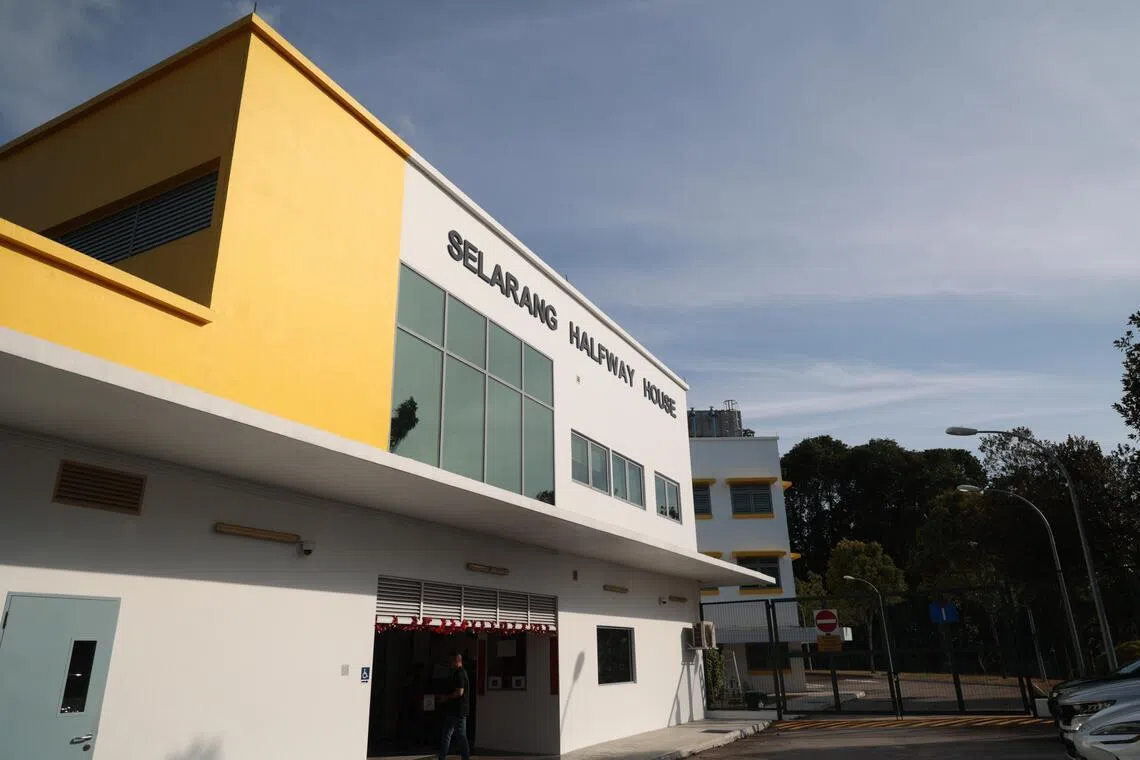
Each living unit at Selarang Halfway House accommodates up to 16 residents. It is the biggest of the halfway houses in Singapore that work with SPS, and receives about 700 to 800 residents a year.
PHOTO: LIANHE ZAOBAO
There are 11 halfway houses in Singapore that are supported by SPS, with a total capacity of 800 residents at any one time.
The halfway house service model was enhanced in January 2025, increasing the number of halfway house partners from nine to 11.
The enhancements also spanned upgrading the houses to improve accessibility for elderly residents and those with limited mobility, and upskilling halfway house staff.
Selarang House is the biggest of the halfway houses in Singapore that work with SPS, with the capacity to house 576 residents. It receives about 700 to 800 residents a year.
Each living unit accommodates up to 16 residents and is equipped with basic amenities like a refrigerator, microwave, washing machine and water dispenser. Groceries, including items like noodles and sandwich spreads, are provided every two weeks, while fresh bread is supplied every two days.
Residents typically stay for about six to 12 months, and receive help with getting employed and securing housing. They also go through sessions on regulating their emotions, managing trauma, and desisting.
Executive director of Selarang Halfway House Freddy Low said the less custodial environment of a halfway house, as compared to a prison, provides residents greater empowerment to make independent decisions and build self-confidence.
“I see a lot progression in my residents. For instance, someone who initially has many questions about what the community has to offer gradually becomes more informed and confident in utilising these resources. When residents leave us, they are better prepared to reintegrate and more likely to contribute to a lasting resistance in the community,” he said.
For 36-year-old Eman (not his real name), getting to see his son more often as a resident of a halfway house has helped motivate him. Eman started taking drugs at 17, and has been incarcerated four times since 2012.
“When I was inside (prison), I could only communicate with my son through e-letters and when my family comes to visit. Now in the halfway house, I get to see him weekly when he visits and talk to him every day on the phone. It really helps a lot for me to not relapse again.”
Senior assistant director for community corrections (halfway house/home detention) Mohamed Nizaar Md Ibrahim told ST that the lower recidivism rate for those who have undergone the halfway house programme proves that a step-down approach is needed when it comes to higher-risk groups rejoining society.
“The first few months (after release) is the most vulnerable for them, because their finances may not be steady, they may have broken relationships with loved ones, they have no job, or no proper place to stay. The chances of reoffending may be high.”

Residents at Selarang Halfway House receive help with securing employment and housing, and attend sessions on regulating their emotions, managing trauma, and desisting.
PHOTO: LIANHE ZAOBAO
Support rendered at halfway houses, which spans from helping inmates with accommodation, jobs, and peer support, aims to build their individual motivation to stay away from drugs, he said.
For Amir (not his real name), who has been incarcerated four times since 2015 for drug charges, spending time in a halfway house this time has helped him stay motivated to desist. He did not enter a halfway house during this previous three incarcerations.
The 33-year-old said: “It really helps me. My life is more structured and I learned how to stay disciplined and confident. They help me with finding a job, and support me in becoming financially stable.”
He is currently employed as an aerospace technician, and aims to maintain this job and grow financially stable while gaining the trust of his family again.