
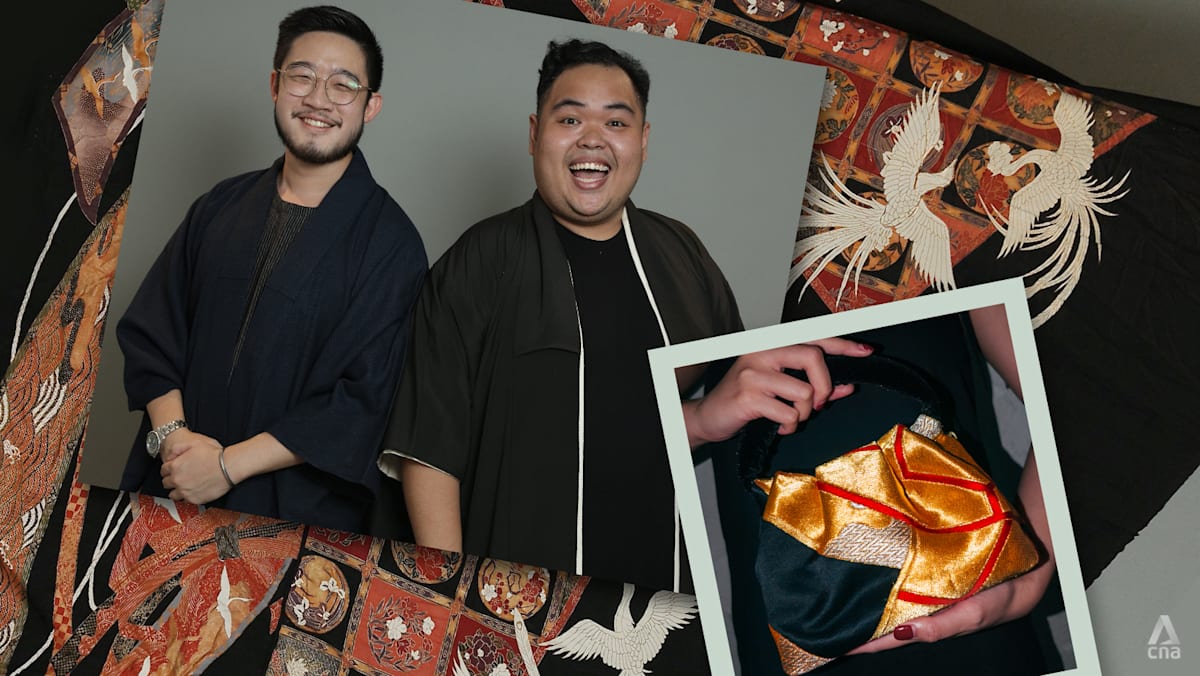
The traditional kimono’s straight-line construction is, in itself, a model of sustainable design. “It’s made from six pieces of fabric that are identical in width, cut horizontally from a bolt of cloth. This means there are no offcuts or fabric wastage,” he explained.
This panel-based construction also makes kimonos easy to dismantle, making them ideal for repurposing – whether into restored garments or entirely new creations.
However, as contemporary fashion overtook traditional dress in Japan, the kimono’s everyday relevance declined. Its perceived impracticality for modern wear has led to large volumes being discarded.
Yet this excess has also created opportunity. Numerous brands, both in Japan and abroad, have begun upcycling vintage kimono fabric into shoes, clothing, bags and accessories that resonate with younger consumers – proving that heritage textiles can still feel relevant and desirable.
The duo was also drawn to working on kimonos out of their personal appreciation for the traditional garment. “I’d been collecting vintage kimonos for a long time. They are something I always connected with – I loved how detailed and interesting each kimono felt, and how each piece held a specific story and memory. It’s an extremely versatile garment that I love layering with, and I wanted to share that style of fashion with more people through restoring these pieces,” said Suffian.
Chua developed an interest in the culture and history behind kimonos as he started adding them to his own wardrobe. “I used to be into streetwear and always wanted to find ways to incorporate Asian styles into that genre of fashion. Kimonos were the one style of clothing that perfectly fit that box for me,” he shared.