
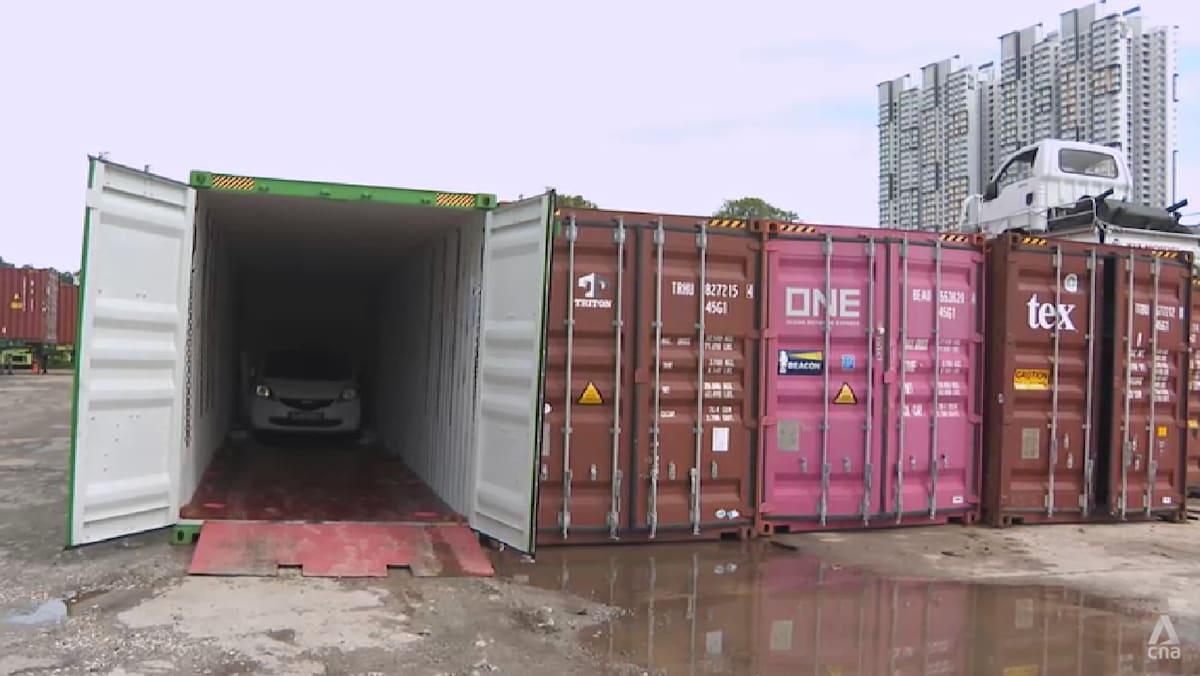
For now, the firm is trying to split the additional costs with its customers while exploring alternative options.
“We have quite a bit of cargo going to the Middle East, so stopping cargo going to the Middle East will affect our warehousing costs, because we have to hold the cargo longer in our warehouse,” said Mr Jeremy Lam, business development manager at Hermes Logistics.
He added that payment cycles have also been disrupted.
“Our clients cannot move their cargo, so their payment will be stalled, because money is not going to them, and therefore not going to us,” he said.
Other freight forwarders warn that the ripple effects extend beyond stalled shipments.
Penanshin Air Express said a key concern is rising fuel and electricity costs, which could push overall transport and warehousing expenses up by as much as 50 per cent.
Its executive director, Mr Bernard Chan, is considering the possibility of diverting cargo to Egypt before transporting them overland to Dubai.
He noted that the current disruption differs from the COVID-19 pandemic as cargo has completely stopped moving.
Surcharges of up to over S$2,000 have also been implemented on alternative routes.
“We are very dependent on the shipping lines and airlines, so there’s really nothing much we can do,” said Mr Chan.
“This war will not only affect the Middle East. It also affected us as Singaporeans. So right now we are seeing that even at our local petrol stations, the fuel price has really increased.”