
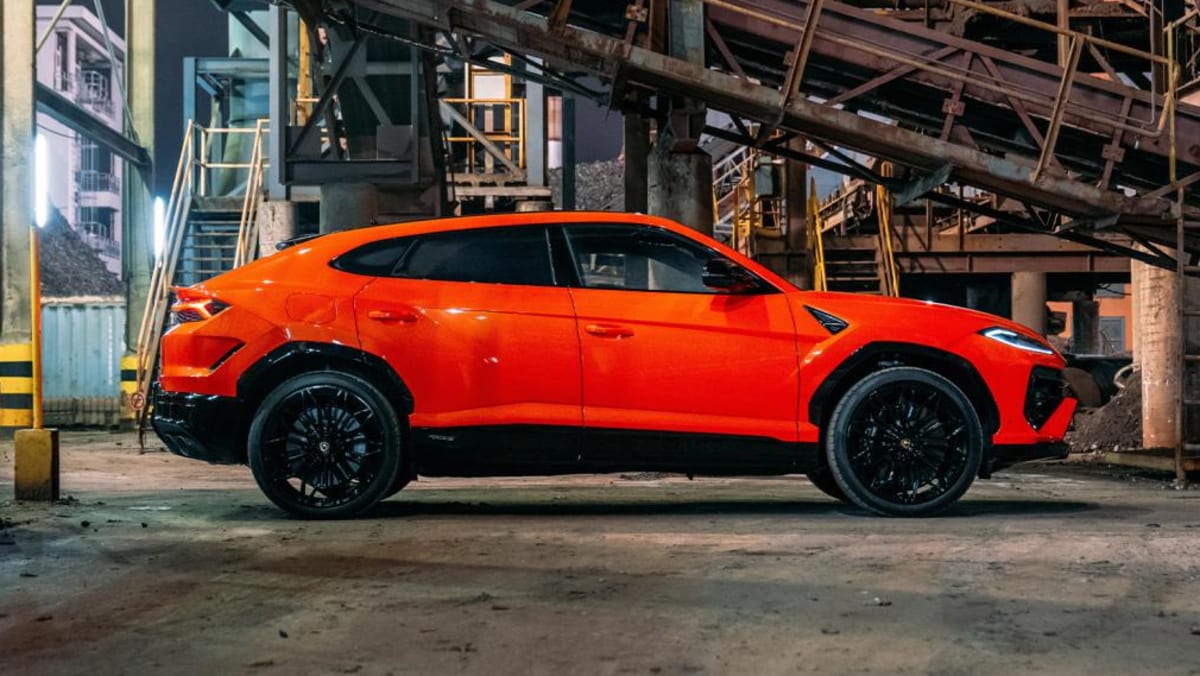
In 2024, Lamborghini debuted the Urus SE, its first plug-in hybrid ‘super SUV’, as part of its ‘Direzione Cor Tauri’ programme. The initiative aims to decarbonise the company’s value chain by hybridising its full product range, and to reduce total enterprise emissions by 40 per cent ‘per car’ by 2030.
The Urus’ success also follows a mould-breaking blueprint Porsche laid down – and the way the Cayenne, then the Macan, transformed its business. In fact, Lamborghini posted record results in 2025, delivering 10,747 vehicles, driven heavily by the Urus SE. Of those, 2,750 went to the Asia Pacific region, including Singapore.
GOOD VIBRATIONS
You really have to drive it to understand the Urus’ allure. And to the naysayers who lament that it runs on the same Volkswagen Group architecture as luxury SUVs from Audi, Bentley and Porsche, we know by now this isn’t a rebadging exercise, as cynics once claimed.
That ‘super SUV’ label? It’s not just PR spin. Performance-wise, the Urus SE really does outclass the competition because the Volkswagen Group’s MLB Evo platform has been heavily modified and dynamically tuned to feel unmistakably Lamborghini.
The numbers confirm it: The 4-litre twin-turbo V8 makes 620 CV, while the electric motor adds another 180 CV. That’s 800 CV in total at 6,000 rpm – exceptional, elite-level performance that isn’t exactly necessary for the daily grind.
So what’s all that power good for? Setting new benchmarks. The Urus SE is Lamborghini’s most powerful SUV yet, besting even Ferrari’s Purosangue and Aston Martin’s DBX 707.
That translates to a 0–100 km/h time of 3.4 seconds. Zero to 200 km/h? Only 11.2 seconds, plus a top speed of 312 km/h. Staggering figures – though it’s not likely any Urus SE will be used as a getaway vehicle in Singapore.