
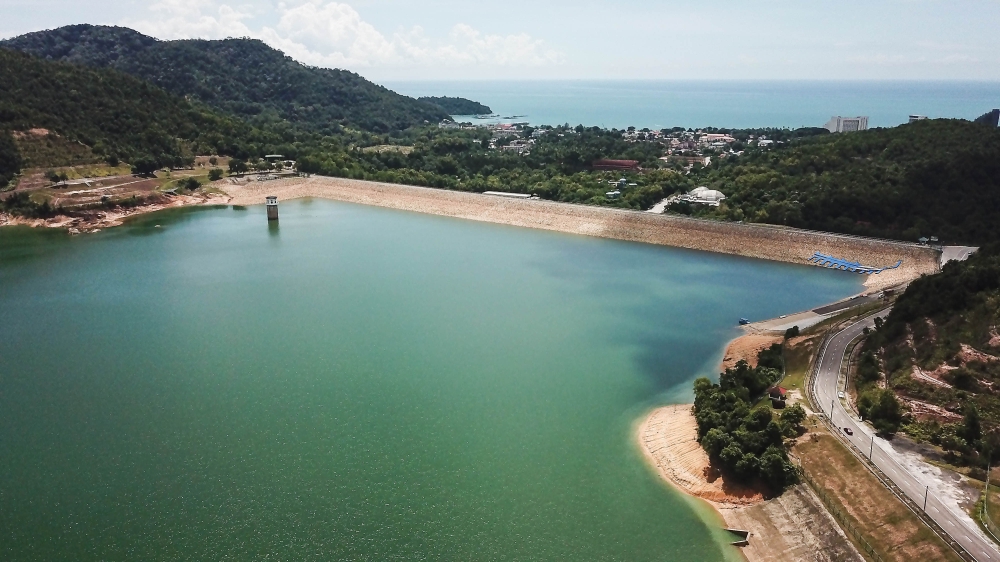
UALA LUMPUR, March 22 — Malaysia is used to treating water shortages as temporary disruptions. A few dry months, a pollution incident, a treatment plant shutdown – and the system eventually recovers.
But what if the shocks stop being temporary?
In January 2026, the United Nations University’s Institute for Water, Environment and Health (UNU-INWEH) warned the world was entering an era of “global water bankruptcy”. This is where droughts, shortages and pollution incidents stop behaving like temporary crises and begin to harden into chronic conditions.
Malaysia may not be in “water bankruptcy” yet, but the report warns that repeated shocks and long-term overuse are pushing many water systems beyond recovery. Understanding the concept offers a useful lens on how rising demand, recurring disruptions and shrinking buffers can quietly build long-term water risk.
What is ‘water bankruptcy’?
The UNU-INWEH uses “water bankruptcy” to describe a stage beyond the usual language of “water stress” or a “water crisis”. Those terms suggest a temporary squeeze – a bad season, an emergency, then recovery.
Kaveh Madani, Director of the UNU-INWEH, told Garasi Bernama the idea can be understood through a simple financial analogy: surface water systems are like a checking account renewed by nature each year, while groundwater acts as a savings account.
“Water bankruptcy happens when you not only exhaust your checking account, but also drain the savings account because for too long your expenditure or water consumption is way more than the available water,” he said.
Madani, who is also the lead author of the report, said the issue must be framed correctly.
“Bankruptcy is not about how rich or poor you are. It’s about how you manage your assets,” he said, stressing that rainfall alone does not guarantee water security if water use and planning are out of balance.
He added that natural abundance can be misleading.
“If your region is very green, that also means the environment has a high share of water resources. Not every drop of water that falls in a green area belongs to humans,” he said.
“Nature also has a high share, which people often forget.”
It is this imbalance between use and limits that underpins what the report describes as water bankruptcy.
Madani found water bankruptcy to be marked by two linked failures: insolvency and irreversibility.
“Insolvency is when your water consumption and needs exceed what is sustainably available. Irreversibility is when you hurt the environment and ecosystem in a way that there is no way back,” he said.
He describes water stress as excess pressure while a crisis is a more intense, but still temporary, disruption from normal conditions.
“Bankruptcy, however, is a post-crisis state – when the problem becomes chronic and is no longer temporary. You cannot really go back to what you were.”
This matters because it shifts attention away from short-term disruptions and towards protecting the buffers that make recovery possible.
Globally, the report points to worsening physical signs, including major water losses in large lakes and the long-term decline of natural wetlands.
For Malaysia, the same framework helps explain why water security is increasingly shaped not only by supply, but also by demand, water quality, system reliability and losses within the network.
Malaysia’s rising water demand
Demand pressures are rising alongside existing constraints. According to the National Water Services Commission (SPAN), total raw water extraction in peninsular Malaysia and Labuan increased from 14,560 million litres per day (MLD) in 2015 to 17,299 MLD in 2024.
Over the same period, domestic water consumption rose from 5,585 MLD to 6,269 MLD, while non-domestic consumption increased from 3,469 MLD to 4,344 MLD.
S. Piarapakaran, who is the President of Malaysia’s Association of Water and Energy Research (Awer, said household demand is likely to remain relatively stable, but industrial use is expected to rise.
Reducing water waste at home is key to managing long-term supply challenges. — AFP pic
“Household water use will remain somewhat controlled as population growth is limited. We foresee that industrial water use will increase due to operational demand and agricultural water use may decline as plantation approaches are advancing,” he said.
Another indicator is reserve margin, or the buffer between system capacity and demand. SPAN recommends a minimum reserve margin of 15 per cent for operational stability.
SPAN’s figures for peninsular Malaysia and Labuan show the reserve margin slipped from 15.4 per cent in 2023 to 14.9 per cent in 2024.
As of 2024, several states had already fallen below the recommended minimum reserve margin.
Selangor – which also supplies Kuala Lumpur and Putrajaya – stood at 12.1 per cent, followed by Malacca at 5.2 per cent, Perlis at 5.0 per cent, Kelantan at 4.4 per cent and Kedah at zero per cent. Kedah, in fact, recorded no reserve margin for five consecutive years, from 2020 to 2024.
Thinner reserves mean less buffer against sudden demand spikes or supply shocks.
Pollution and disruption
In Malaysia, raw-water pollution is a major pressure point because it can quickly disrupt treatment and supply. The Ministry of Natural Resources and Environmental Sustainability told the Parliament in January 2026 that 33 of the 672 rivers monitored were classified as polluted in 2025, citing monitoring data from the Department of Environment.
Piarapakaran said water quality remains central to day-to-day reliability because treatment plants must monitor raw water closely.
“Water quality is still the main driver as all treatment plants are required to have higher frequency of raw water testing daily,” he said. “Some treatment plants are operating with real time monitoring and specific chemical testing that are high risk for particular locations.”
Pollution can also become more disruptive during dry periods, when rivers have less water to dilute contaminants.
“Due to lesser water present, even though the pollutant is the same amount, ammonia concentration increases above the allowable limit,” he said.
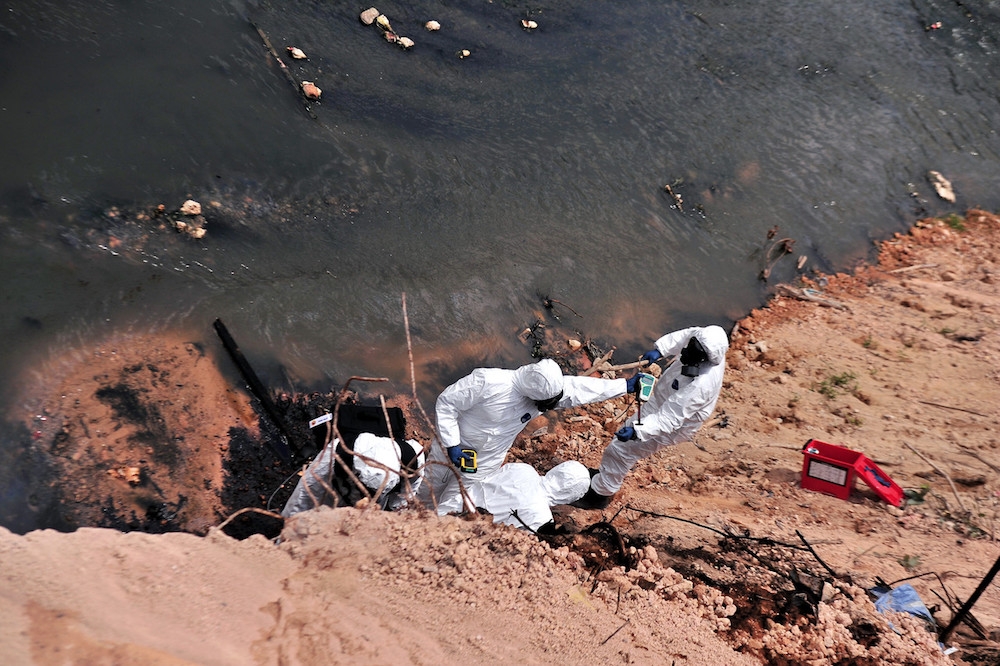
Industrial discharge can contaminate raw water sources, forcing treatment plants to halt operations. — Bernama file pic
Air Selangor says treatment plants may have to temporarily stop operations when pollution levels exceed safe treatment limits. In July 2024, for example, four plants in Selangor were shut down after a chemical leak from an industrial area in Rawang polluted Sungai Selangor and caused odour contamination.
These pressures are often felt through supply reliability. When disruptions occur, the effects can spread quickly across large service areas, especially when a major river is a dominant source for a dense service area.
One such incident happened in October 2025 in Johor, when severe pollution in Sungai Johor caused unscheduled water disruptions in Kota Tinggi, Johor Bahru, Kulai and Pontian, affecting about 1.17 million residents.
The pollution was traced to a burst sediment pond belonging to a local sand-mining company upstream. Sediment levels in the raw water, measured as turbidity, spiked to 37,400 Nephelometric Turbidity Units (NTU), far above the normal level of around 400 NTU.
Disruptions can also carry a high economic cost. A 2023 study on the total economic impact of water supply disruptions from the Selangor River in 2020 estimated losses in Selangor at RM461,094 million, combining property value at risk and business losses.
Beyond pollution-linked disruptions, another structural risk is water lost within the distribution network itself.
Malaysia’s NRW woes
Non-revenue water (NRW), treated water that is produced but lost before it reaches users, reduces the volume available to households and businesses. SPAN data showed NRW losses in peninsular Malaysia and Labuan rose from 4,721 MLD in 2017 to 5,541 MLD in 2024.
Piarapakaran, who has been involved in NRW discussions with the government for around 16 years, said NRW is not only lost volume, but also lost capacity and avoidable cost.
“From a water security point of view, this treated water that is lost can actually be used to meet rising demand without the need to build new treatment plants,” he said. “Furthermore, we are paying for the chemical, infrastructure, energy and human capital cost for the lost volume in our water bills as well.”
By state, SPAN’s figures show NRW remained highest in several states. From 2017 to 2024, Perlis recorded the highest losses, consistently above 60 per cent. In 2024, Kelantan and Kedah were above 50 per cent, while Pahang and Terengganu were above 40 per cent.
Piarapakaran linked persistently high NRW in some states to delayed restructuring under the Water Services Industry Act 2006 (WSIA).
“The states that record high NRW are also states that were very late to restructure under the WSIA model. Terengganu, for example, has not restructured under the WSIA model,” he said.
“Upon restructuring, Pengurusan Aset Air Berhad, a body regulated under SPAN, can provide long-term loans for new infrastructure as well as upgrades.”
He noted that Selangor’s NRW levels had previously exceeded 30 per cent before undergoing restructuring.
Under the 12th Malaysia Plan, the government set a target to reduce NRW to 31 per cent by 2025, with a further reduction to 25 per cent by 2030.
However, during a Parliament session on Feb 24, 2026, Deputy Prime Minister Datuk Seri Fadillah Yusof, who is also Minister of Energy Transition and Water Transformation, said Malaysia had been unable to meet its NRW targets.
He cited the weak financial position of some water operators and tariffs that do not reflect actual operating costs as key constraints. He also pointed to disruptions caused by the COVID-19 pandemic in 2020 and 2021, which delayed planned NRW reduction programmes.
The government has since revised its target, aiming to bring NRW down to 28.8 per cent by 2030.
The financial burden of NRW remains substantial.. A BIMB Securities research note published in May 2025 estimated that water operators in Malaysia lose about RM2 billion annually due to NRW – funds that could otherwise be used to upgrade ageing infrastructure. It added that every 1 per cent reduction requires RM800 million to RM1 billion in investment, straining already tight state budgets.
The climate impact
Climate stress can further amplify these risks over time. A 2020 study by the National Water Research Institute of Malaysia assessed the Klang Valley’s water stress under climate change scenarios and reported high to extremely high water stress in its assessment.
El Nino events can further strain the system, bringing hotter and drier conditions that reduce rainfall in catchment areas while driving up demand. Piarapakaran noted that river conditions tend to tighten during the dry season as base flows drop.
“A simple indicator is base flow during the dry season. Over the last few decades, base flows in rivers have continued to decline,” he said. “Base flow is sustained by groundwater, so this points to a tightening of conditions.”
During the strong 1997-98 El Nino, drought conditions were linked to the 1998 Klang Valley water crisis, when reservoir levels fell and water rationing was imposed for about 150 days, affecting around 1.8 million residents.
Climate projections in Malaysia’s National Climate Change Policy 2.0 also indicate that the country’s average annual temperature could rise by about 1.1 to 1.5 degrees Celsius by 2050, and around 1.7 to 2.1 degrees Celsius by 2100, likely increasing heat stress and water demand.
What can Malaysia do?
Preventing water problems from becoming more entrenched will require action on several fronts, from better planning and pollution control to reducing losses and improving transparency.
Madani said a clear diagnosis is essential, as water risks differ across locations.
“I think the first thing is to evaluate and understand what’s going on across the system,” he said.
“Even within Malaysia, there is diversity. The nature of water problems differ from one place to another.”
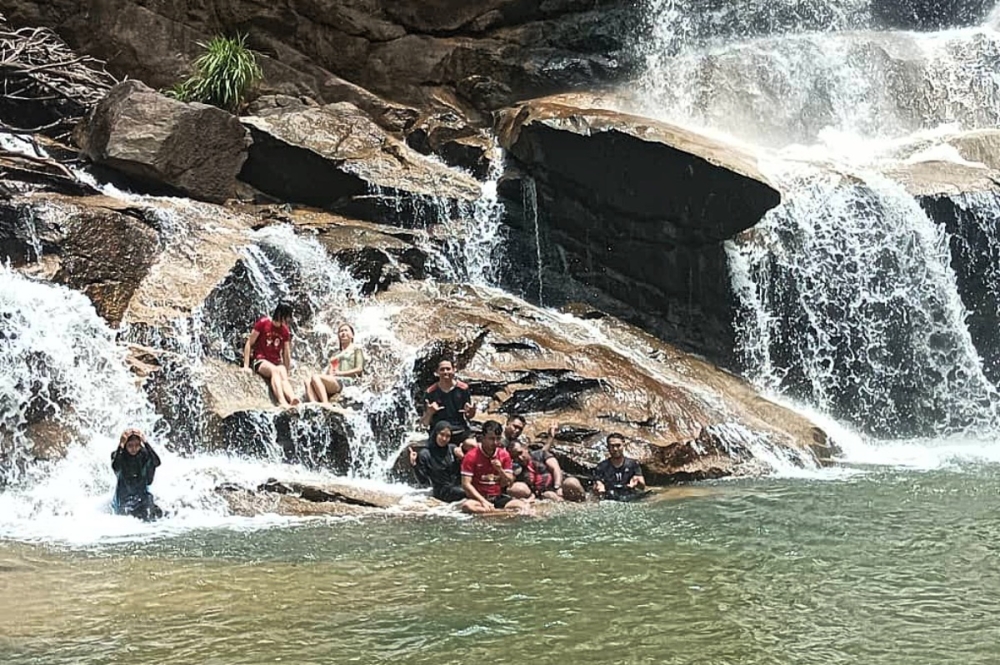
Protecting water resources today ensures Malaysians have access to safe water tomorrow. — Picture by Muhammad Yusry
Meanwhile, Piarapakaran said the misconception is often rooted in how people think about rain, rather than how water is stored and released into rivers.
“We are in a tropical rainforest climate. Our rainforest is also a huge sponge that helps to refill the groundwater as well as cool the surroundings,” he said. “When we replace forest cover with development, we remove a part of the human consumption water cycle parameter.”
Protecting raw water sources more effectively also requires better tracking of high-risk chemicals, Piarapakaran said.
“We have for over a decade suggested that the Federal Government set up a proper database system to monitor movement of chemicals in Malaysia to ensure records are available to prevent illegal dumping,” he said.
At the same time, Madani cautioned that solutions cannot rely on expanding supply alone.
“Increase the supply, build one more dam, dig a deeper well, transfer water from another location, build another desalination plant.
“This paradigm has made the situation worse because whenever you introduce a new source of water supply, your demand keeps going up,” he said.
He said “bankruptcy management” therefore also requires demand-side decisions, including cutting waste and questioning unjustified consumption.
Madani stressed that greater transparency and stronger “water accounting” are essential so stakeholders understand how natural water assets are being used.
“If you can provide daily weather forecasts, you can also share daily updates on the state of our natural reserves – how much water we have in the reservoirs, and what is the status of the aquifers,” he said, adding that this helps make people “part of the solution” before the gap becomes too wide. — Bernama