
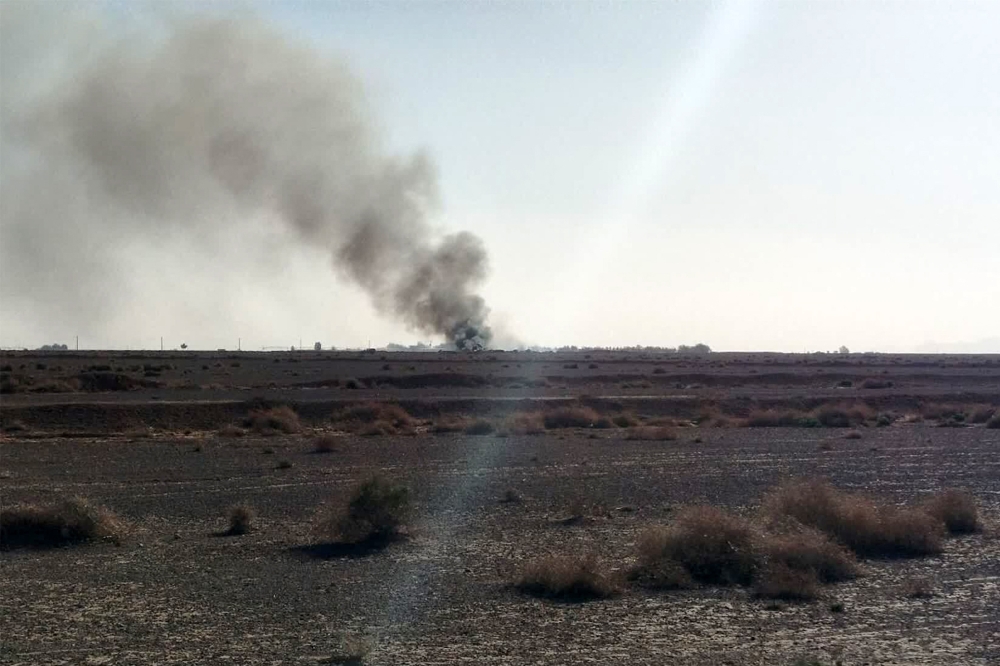
KUALA LUMPUR, April 8 — Rising petroleum import prices and disruptions to global logistics caused by the Middle East conflict, which threaten inflation rates and the country’s long-term fiscal stability, serve as a warning for Malaysia to strengthen energy sovereignty by diversifying local energy sources.
Universiti Malaysia Terengganu (UMT) vice-chancellor Prof Dr Mohd Zamri Ibrahim said diversifying local energy sources would also reduce the country’s dependence on volatile fossil fuel markets.
“By integrating green hydrogen, offshore wind, and electric vehicle (EV) infrastructure, we are pioneering a blue economy that acts as a shield for national energy self-sufficiency,” he told Bernama.
Mohd Zamri said the current crisis in the Middle East is not just a political issue but also a technical warning for Malaysia.
“Green hydrogen is no longer a ‘technology of the future’ but a present national security necessity. By leveraging maritime expertise and the wind potential along our coasts, we can turn geopolitical risks into an opportunity to lead the Blue Economy in the region,” he said.
According to Mohd Zamri, green hydrogen is no longer a “future technology” but a present national security necessity, acting as a high-energy-density carrier that can provide a stable supply to the national grid.
“With a specific energy density of about 120 megajoules per kilogram (MJ/kg) (roughly three times higher than diesel), green hydrogen is the only viable zero-emission alternative for heavy applications such as maritime vessels and public transport,” he explained.
He said China has accelerated its “Green Hydrogen Valley”, an industrial cluster that produces hydrogen onsite using dedicated renewable energy, thereby reducing its oil import dependence by 70 per cent by replacing fossil fuels with locally produced molecules.
In addition, Mohd Zamri said green hydrogen can be produced at sea by colocating proton exchange membrane (PEM) electrolysers with offshore wind farms off the coasts of Kudat, Sabah, and the East Coast of Peninsular Malaysia.
“This eliminates the need for costly onshore grid connections and allows hydrogen to be transported by specialised tanker ships or subsea pipelines,” he said.
Touching on global oil prices, he said that although Malaysia, as a petroleum exporter, might see short-term gains when oil spikes above US$130 per barrel, the situation is a “double-edged sword”.
“Increases in the cost of refined petroleum imports and disruptions to global logistics now threaten domestic inflation rates as well as the country’s long-term fiscal stability,” he said.
As of March 2026, Mohd Zamri added, the escalation of open conflict between the United States and Iran has had a major impact on the global economy, and instability in the Strait of Hormuz — a key route for nearly 20 per cent of the world’s oil and liquefied natural gas (LNG) supplies — serves as a warning for Malaysia. — Bernama