
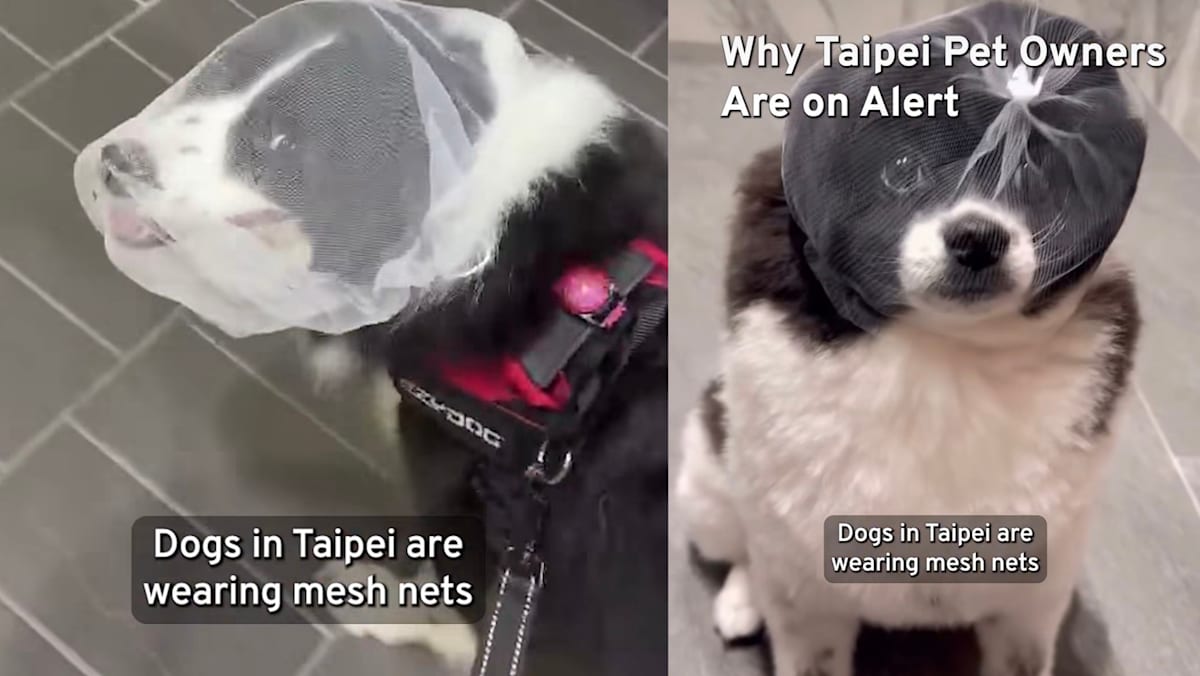
Pet owners in Taiwan are increasingly putting full-head mesh nets on their pups before heading out for their daily walks.
Yes, they look like miniature furry fencers. But no, this isn’t the latest in pet fashion.
The unusual protective gear is reportedly being used to prevent dogs from accidentally ingesting rat poison scattered around public spaces during Taiwan’s ongoing rodent crackdown.
The trend reportedly gained traction after Taiwan recorded two human cases of hantavirus, a rodent-borne disease, earlier this year.
Among them was a man in his 70s from Taipei’s Da’an District who passed away, with posthumous tests confirming the infection. Health authorities caught rodents nearby that tested positive for the virus.
In response, Taipei’s mayor reportedly launched a citywide rodent extermination campaign across all 12 districts, with environmental authorities deploying chemical rat poison in alleys, parks, and public walkways.
That is where the danger lies for local pets who are out on walks.
Most commercial rat poisons are highly toxic anticoagulants and can cause severe internal bleeding, fluid in the lungs, and fatal organ damage.
Because dogs naturally sniff, lick and scavenge during walks, some owners have decided not to take any risks, hence the mesh net masks.
The full-head mesh covers are designed to fit loosely around a dog’s head and neck, allowing them to pant, bark, and see perfectly fine.
However, not everyone agrees with how the situation is being handled.
Animal rights groups in Taiwan are criticising the government’s indiscriminate use of poison as a “lazy, highly dangerous band-aid” that risks killing beloved pets and local wildlife.
Instead, they are pushing for modern fixes, like sealing food waste, and building structures properly.
Taiwan’s Minister of Environment also appears to have acknowledged growing anxiety among pet owners, publicly ordering the immediate disclosure of the exact locations of all deployed rat poison to ease the anxiety of pet owners.
In Singapore, there are currently no publicly available official statistics on pet or community animal deaths caused by rat poison.
8days.sg has reached out to the Animal & Veterinary Service (AVS) for more info.
That said, concerns about pest control chemicals are not unfamiliar locally.
Facebook groups such as Dogs Singapore regularly feature warnings from pet owners after pest control operations treated rat burrows with chemical wax baits, and white powder near residential walkways.
If you suspect poisoning or see misplaced bait, you can contact AVS via their feedback form or the 24/7 hotline at 1800-476-1600, or report it via the OneService app.
As for hantavirus concerns locally, two Singapore residents who were exposed to a hantavirus cluster onboard cruise ship, MV Hondius, were isolated earlier this year, though both later tested negative.
Local medical experts confirmed the risk to the Singapore public is low.