
SINGAPORE – Efforts to address haze pollution, conserve natural heritage and cultivate environmental literacy have been bolstered with more than $73,000 in funding as a Singapore-based foundation expands its support to environmental causes here for the first time.
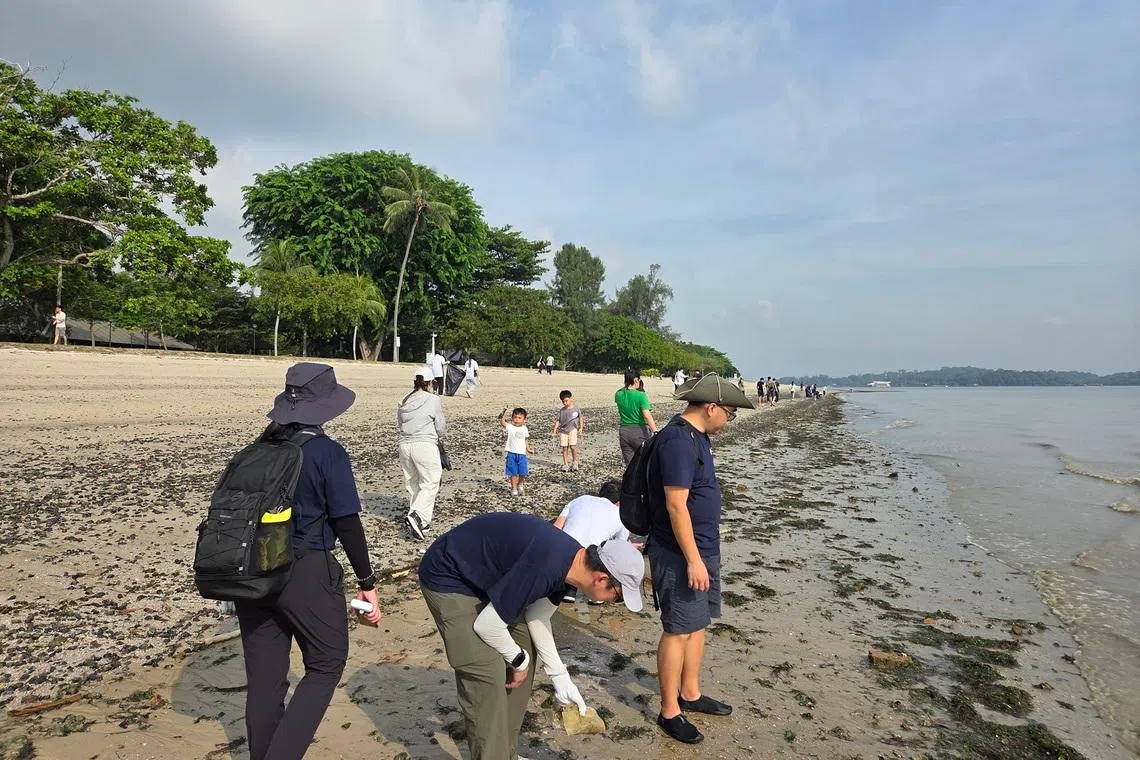
On May 22, the Pan Pacific Conservation Foundation (PPCF) announced its support for charity People’s Movement to Stop Haze (PM.Haze), Nature Society Singapore and the Institute of Technical Education during a beach clean-up at Changi Beach Park, coinciding with the International Day for Biological Diversity.
The organisations’ staff, volunteers and members, as well as co-chair of the PAP Climate Action Group Poh Li San and Pasir Ris-Changi GRC MP Valerie Lee, removed 171kg of marine debris.
The foundation’s chairperson, Mr Peter Zhu, told The Straits Times that he sees Singapore as a hub for philanthropy in South-east Asia, where there are many opportunities to take action against the accelerating pressures of climate change and environmental degradation.
South-east Asia is home to nearly 15 per cent of the world’s tropical forests and a third of coral reef species.
Noting the region’s rich biodiversity and potential for storing planet-warming carbon, the Chinese national, who sits on the board of China’s Society of Entrepreneurs and Ecology Foundation, said PPCF hopes to advance environmental and wildlife conservation, as well as integrate environmental thinking into supply chains.
He cited the foundation’s ongoing support of two peatland restoration projects in Indonesia, the Singapore-based PM.Haze and Indonesian non-governmental organisation Yayasan Gambut.
“Our philanthropy enables local partners to educate and work with indigenous communities to become stewards of these ecosystems,” said Mr Zhu.
By safeguarding and protecting these regions, the supported local communities are preserving natural carbon sequestration ecosystems, thereby contributing to climate change mitigation, he added.
“These projects are sustainable because the communities are also taught how to responsibly manage the conserved areas on their own while tapping on the land’s resources for their livelihood.”
PM.Haze’s partnerships and outreach manager, Ms Beatrice Baquero-Salah, said the funds will help cover cost of RE.Peat 2026. This expedition to the peatlands will give young people the opportunity to learn about environmental issues in Indonesia, and apply their experience to implement projects within their own communities.
Haze from forest and peatland fires typically arise from human activities such as slash-and-burn methods deployed by farmers and corporations in Indonesia to clear land for plantations.
“We are truly grateful for their (PPCF) support since it has allowed us to cover most of the programme costs and there are very few of such grants and donors willing to fund cross-regional projects and intercultural experiences such as this,” she said, adding that she hopes the foundation will continue to support for the programme beyond 2026.
Donations to environmental causes in Singapore have traditionally lagged behind areas like social service and welfare, accounting for 4 per cent of giving here in 2023. Giving to environmental causes accounted for just $510,000, or about 1.78 per cent, of grants disbursed between April 2024 and March 2025 by the Community Foundation of Singapore, which pools and facilitates donations.
Nature Society Singapore executive director Huang Ningxin said the foundation’s funds have helped its flagship citizen science and nature education programme to engage and inspire more than 1,620 students and teachers.
The programme leads participants to support advocacy and conservation of the natural environment, which includes opportunities to assist in monitoring of biodiversity islandwide.
Around the region, the foundation supports more than $500,000 grants to various environmental causes, said Mr Zhu. The first round of funding for Singapore-based programmes received grants of between $21,000 and $27,120.
He added: “We invite local environmental organisations who work with their communities for the purpose of conservation to connect with us so that we can explore collaborative partnerships.”