

KUALA LUMPUR, June 7 — The Fifa World Cup 2026 will kick off on June 12, but for Malaysians, this edition will be notably different.
For the past two decades, Malaysian football fans have followed the tournament primarily through pay-TV broadcaster Astro.
However, this year marks a shift, as the company has failed to secure the primary broadcasting rights for the global sporting event.
That, however, does not mean Malaysians will miss out on the action.
On May 13, Communications Minister Fahmi Fadzil confirmed that Malaysians will be able to watch all 104 matches of the 2026 Fifa World Cup through platforms operated by RTM and Unifi TV.
He said all matches from the expanded 48-team tournament will be made available via RTM’s television channels and streaming platform RTMKlik, alongside Unifi TV.
He also said that parallel broadcasts, delayed telecasts and video-on-demand (VOD) services will be available via the Unifi TV 2.0 platform and RTMKlik.
Meanwhile, television viewing habits in Malaysia have changed significantly in recent years.
Malaysians no longer rely solely on Astro for paid television services, with younger audiences increasingly turning to over-the-top (OTT) streaming platforms such as Netflix, Disney+ Hotstar, and other digital services for their entertainment needs.
As a result, some football fans may face uncertainty about how to access World Cup broadcasts, particularly if they are no longer subscribed to traditional television services. For many, the tournament may be easier to watch than ever — but not necessarily on the platforms they’re used to.
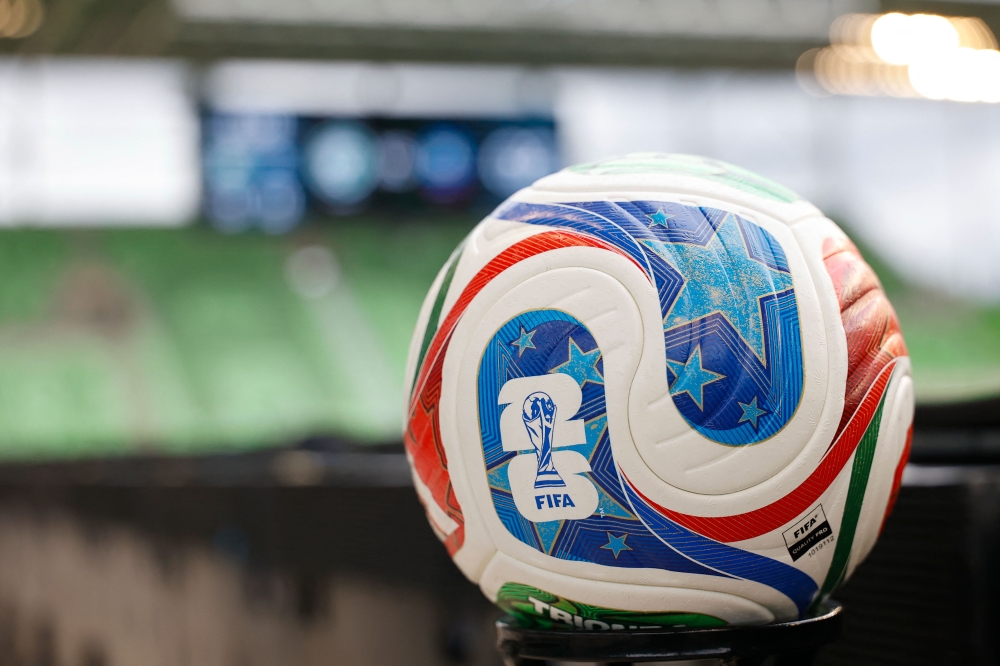
The Fifa World Cup 2026 will kick off on June 12. — AFP pic
So, how can Malaysians watch the World Cup?
Option one: MyTV — Malaysia’s free digital television (DTT) broadcasting service
For newer televisions, also known as Integrated Digital TVs (IDTVs), viewers simply need to connect a UHF antenna directly to their TV.
Those using older analogue televisions, however, will need to purchase a certified DVB-T2 decoder, commonly known as a MyTV box, to access the service.
Once the channels are scanned, Malaysians will be able to access free-to-air stations, including RTM’s TV1, TV2, TV Okey, RTM Sports, and Berita RTM — where World Cup matches are expected to be broadcast.
Astro subscribers are also encouraged to consider using MyTV, as RTM will cease broadcasting its television channels on Astro’s platform beginning July 1, 2026.
Option two: RTMKlik
RTMKlik is a free application that can be downloaded on smartphones and Android TV devices.
The platform is expected to stream all 104 World Cup matches live, and viewers can access the service using any internet provider.
Option three: MyGOV Malaysia app
The MyGOV Malaysia app is a free application that offers 51 services from 19 government agencies, including checks on travel restrictions, searches for unclaimed money, and access to the PriceCatcher price comparison tool.
On June 5, Digital Minister Gobind Singh Deo announced that Malaysians can watch World Cup matches via the government’s MyGOV Malaysia app.
However, users need to register with MyDigital ID in order to access RTM’s live World Cup broadcasts through the app’s streaming feature, which carries content from TV1, TV2, and Okey TV.
Option four: Unifi TV
Unifi TV’s Fifa World Cup 2026 offering will be available to both Unifi TV subscribers and non-subscribers.
Unifi TV, in a statement, said the full season pass is priced at RM60, while existing Unifi TV customers can enjoy an exclusive discounted rate of RM50. New customers can also qualify for the special rate by subscribing to a Unifi TV pack from as low as RM12 per month.
Fans may also opt for a daily pass priced at RM20, which will be available from June 12, 2026.
Option five: YouTube
While these are currently the main options available for Malaysians to watch World Cup matches, those who miss the live games can still catch match highlights and updates through Fifa’s official YouTube channel.
However, Malaysians are unlikely to be able to watch live streams on YouTube, as only selected regions have been granted broadcasting rights through Fifa’s official media partners.
Streaming and casting options:
Android/Google Cast
RTMKlik comes with built-in Google Chromecast support. Viewers simply need to tap the cast icon within the RTMKlik video player to stream content directly to Chromecast-enabled devices, Android TVs, or Google TV.
Apple AirPlay/Screen Mirroring
Although AirPlay is not natively integrated into the RTMKlik player, iPhone and iPad users can still cast content using iOS Screen Mirroring through the Control Centre to an Apple TV or AirPlay-compatible smart TV.
Smart TV app
RTMKlik also offers a dedicated Android TV application, allowing viewers to stream live television directly on their smart TV without needing to cast content from a smartphone.
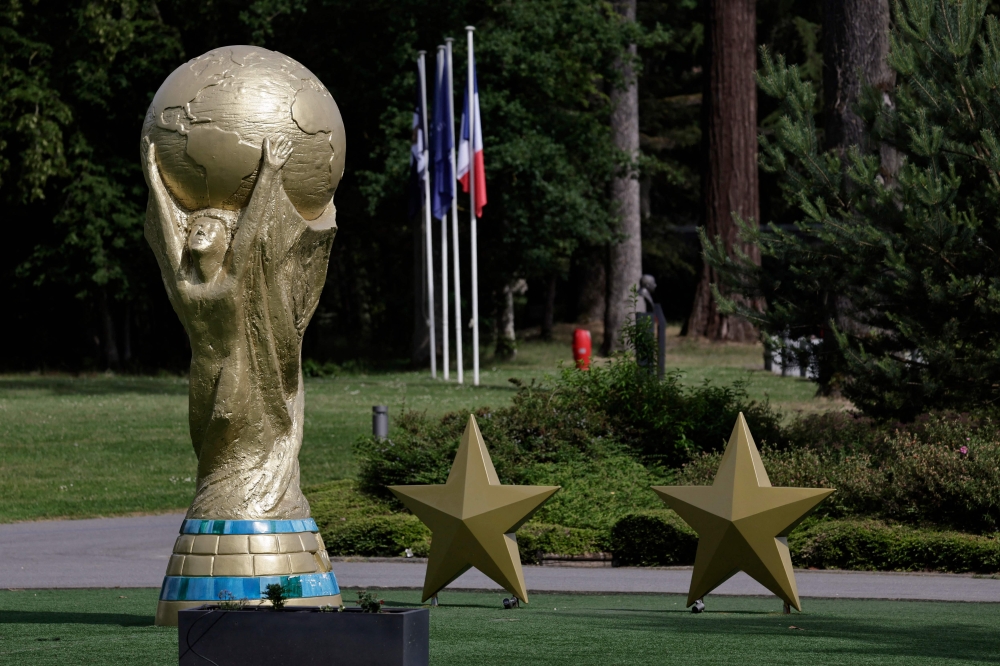
A replica of the Fifa World Cup Trophy stands at the entrance to the French football federation’s Clairefontaine training base, southwest of Paris. — AFP pic
Top teams to watch in World Cup 2026
Now that the live broadcasts and streaming options have been sorted, here are some of the teams worth keeping an eye on at the tournament.
France – Les Bleus arguably boast one of the deepest squads in the competition, packed with world-class talent across every position.
Led by stars such as Kylian Mbappe, Michael Olise, Rayan Cherki, William Saliba and recent Ballon d’Or winner Ousmane Dembele, France possess the quality and depth to challenge for the title once again.
Spain – La Roja are among the favourites to lift the trophy, with the team widely regarded as one of the most technically gifted sides in world football.
Their strength lies not only in individual brilliance, but also in their ability to function as a cohesive unit, built around excellent ball retention and possession-based football. The squad features standout names such as Lamine Yamal, Rodri, Fabian Ruiz and David Raya.
Argentina – The defending champions combine technical quality with aggression, passion and match-winning individual brilliance.
While veteran player Lionel Messi remains the focal point, players like Julian Alvarez, Giuliano Simeone, Nico Paz and Enzo Fernandez are expected to play key roles as Argentina look to defend their crown.
England – Known for their balance of physicality, attacking firepower, tactical organisation and squad depth, the Three Lions are among the strongest contenders in this year’s tournament.
With key players such as Harry Kane, Jude Bellingham, Bukayo Saka, and Jordan Pickford, the Three Lions possess the quality to go deep into the competition.
Brazil – The Selecao enter a new era under coach Carlo Ancelotti, widely regarded as a specialist in knockout football.
Brazil will be hoping to rediscover their trademark flair, with key players including Casemiro, Vinicius Junior, Raphinha, Neymar, Matheus Cunha and Bruno Guimaraes expected to lead the charge.
Portugal – The Navigators’ greatest strength arguably lies in midfield, where players such as Bruno Fernandes, Vitinha and Bernardo Silva can dominate possession, dictate the tempo and create chances.
However, much attention will still fall on veteran superstar Cristiano Ronaldo, who despite turning 41, continues to offer leadership, clinical finishing and a winning mentality.
Germany – Under coach Julian Nagelsmann, Die Mannschaft have evolved into a more dynamic, aggressive and tactically modern side, blending experienced leaders with exciting young talent.
Key players such as Antonio Rudiger, Joshua Kimmich, Jamal Musiala, Florian Wirtz, Angelo Stiller and Kai Havertz are expected to spearhead the team’s resurgence on the international stage.
Top Asian teams to watch
Japan – One of Asia’s most balanced and technically strong teams. They are known for having depth across Europe-based players, making them consistent contenders to reach the knockout stages in 2026.
Key players include Takefusa Kubo, Keito Nakamura, Daichi Kamada, and Wataru Endo, providing creativity and control in midfield and attack.
South Korea – The team remains heavily dependent on their captain Son Heung-min, who leads the attack with pace, clinical finishing, and leadership. They also have emerging talents like Lee Kang-in, who adds creativity in midfield and experienced Kim Min-Jae in the defence.
Their style is high-energy, built on aggressive pressing and quick attacking transitions. Defensively, they are disciplined but can struggle against elite attacking sides when put under sustained pressure.
Iran – One of Asia’s most physical and defensively solid teams. Their attack is led by Mehdi Taremi, an experienced forward playing in Europe.
They are structured, compact, and dangerous on the counterattack. Their biggest strength is tactical discipline, but they can sometimes lack creativity against top-tier opponents.
Australia – The Socceroos play a direct and physical style built around high work rate and aerial strength. Key players include Mohamed Toure, Alessandro Circati and Harry Souttar, who provide leadership and stability.
They are often strong in tournaments due to their mentality, discipline, and organisation.
Saudi Arabia – The team focuses on technical, possession-based football with quick passing in midfield. Their historic win over Argentina in 2022 boosted their confidence and global reputation, and with their domestic league strengthened by high-profile arrivals such as Cristiano Ronaldo, football in the country has improved significantly.
Key players include Salem Al-Dawsari, their main attacking threat, along with several Al-Hilal-based players forming the core. They are tactically improving but can still be inconsistent defensively.
Qatar – The team is built around players from their domestic league system, particularly those developed through the Aspire Academy. They rely more on structured team play rather than individual stars.
Their strength lies in cohesion and familiarity, but they lack depth compared to stronger Asian sides. They are disciplined, but often struggle against faster and more physical opponents.
Jordan – The squad is known for strong teamwork and defensive organisation. Their recent progress in Asian competitions has raised expectations significantly.
Key players include Mousa Al-Taamari, who provides pace and attacking threat. The team also features Mohammad Abualnadi and Noor Al-Rawabdeh, who currently plays for Selangor in the Malaysian league. The team is competitive, but is still developing consistency at the highest international level.
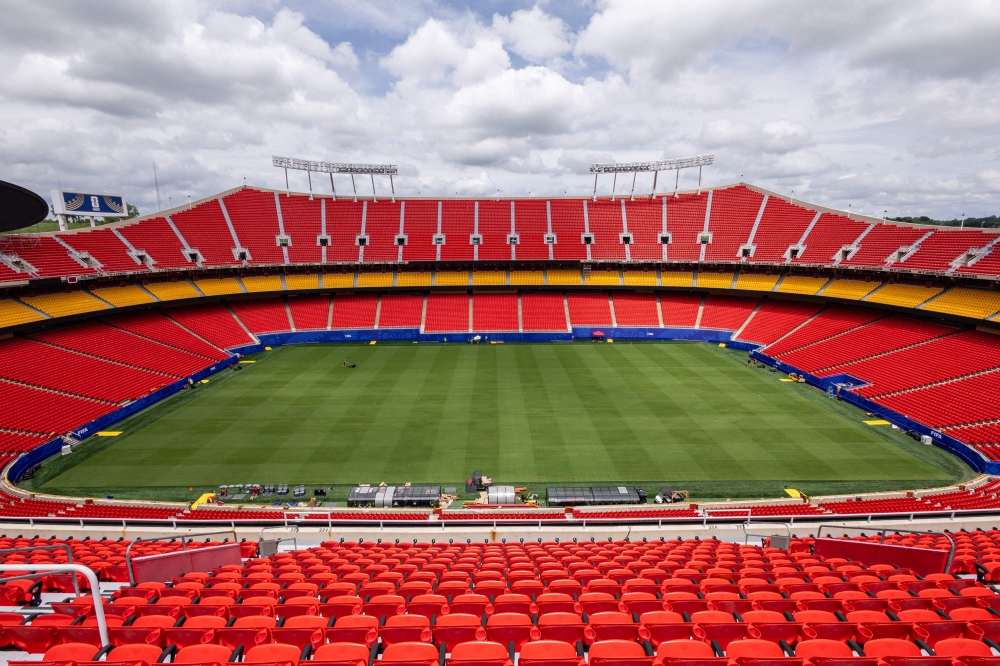
The pitch at Kansas City Stadium — temporarily renamed from Arrowhead for the 2026 FIFA World Cup — awaits final touches in Kansas City, Missouri, May 29, 2026. — AFP pic
Fifa World Cup 2026 — Group Stage fixtures
Friday, June 12
Group A – Mexico v South Africa – 3am
Group A – South Korea v Czechia – 10am
Saturday, June 13
Group B – Canada v Bosnia and Herzegovina – 3am
Group D – USA v Paraguay – 9am
Sunday, June 14
Group B – Qatar v Switzerland – 3am
Group C – Brazil v Morocco – 6am
Group C – Haiti v Scotland – 9am
Group D – Australia v Türkiye – 12pm
Monday, June 15
Group E – Germany v Curaçao – 1am
Group F – Netherlands v Japan – 4am
Group E – Côte d’Ivoire v Ecuador – 7am
Group F – Sweden v Tunisia – 10am
Tuesday, June 16
Group H – Spain v Cape Verde – 12am
Group G – Belgium v Egypt – 3am
Group H – Saudi Arabia v Uruguay – 6am
Group G – Iran v New Zealand – 9am
Wednesday, June 17
Group I – France v Senegal – 3am
Group I – Iraq v Norway – 6am
Group J – Argentina v Algeria – 9am
Group J – Austria v Jordan – 12pm
Thursday, June 18
Group K – Portugal v Congo DR – 1am
Group L – England v Croatia – 4am
Group L – Ghana v Panama – 7am
Group K – Uzbekistan v Colombia – 10am
Friday, June 19
Group A – Czechia v South Africa – 12am
Group B – Switzerland v Bosnia and Herzegovina – 3am
Group B – Canada v Qatar – 6am
Group A – Mexico v South Korea – 9am
Saturday, June 20
Group D – USA v Australia – 3am
Group C – Scotland v Morocco – 6am
Group C – Brazil v Haiti – 8.30am
Group D – Türkiye v Paraguay – 11am
Sunday, June 21
Group F – Netherlands v Sweden – 1am
Group E – Germany v Côte d’Ivoire – 4am
Group E – Ecuador v Curaçao – 8am
Group F – Tunisia v Japan – 12pm
Monday, June 22
Group H – Spain v Saudi Arabia – 12am
Group G- Belgium v IR Iran – 3am
Group H – Uruguay v Cape Verde – 6am
Group G – New Zealand v Egypt – 9am
Tuesday, June 23
Group J – Argentina v Austria – 1am
Group I France v Iraq – 5am
Group I – Norway v Senegal – 8am
Group J – Jordan v Algeria – 11am
Wednesday, June 24
Group K – Portugal v Uzbekistan – 1am
Group L – England v Ghana – 4am
Group L – Panama v Croatia – 7am
Group K – Colombia v Congo DR – 10am
Thursday, June 25
Group B – Switzerland v Canada – 3am
Group B – Bosnia and Herzegovina v Qatar – 3am
Group C – Scotland v Brazil – 6am
Group C – Morocco v Haiti – 6am
Group A – Czechia v Mexico – 9am
Group A – South Africa v Korea Republic – 9am
Friday, June 26
Group E – Curaçao v Côte d’Ivoire – 4am
Group E – Ecuador v Germany – 4am
Group F – Japan v Sweden – 7am
Group G – Tunisia v Netherlands – 7am
Group D – Türkiye v USA – 10am
Group D – Paraguay v Australia – 10am
Saturday, June 27
Group I – Norway v France – 3am
Group I – Senegal v Iraq – 3am
Group H – Cape Verde v Saudi Arabia – 8am
Group H – Uruguay v Spain – 8am
Group G – Egypt v IR Iran – 11am
Group G – New Zealand v Belgium – 11am
Sunday, June 28
Group L – Panama v England – 5am
Group L – Croatia v Ghana – 5am
Group K – Colombia v Portugal – 7.30am
Group K – Congo DR v Uzbekistan – 7.30am
Group J – Algeria v Austria – 10am
Group J – Jordan v Argentina – 10am
Knockout Stage Fixtures:
Round of 32
Monday, June 29 – 3am
Tuesday, June 30 – 1am, 4.30am and 9am
Wednesday, July 1 – 1am, 5am and 9am
Thursday, July 2 – 12am, 4am and 8am
Friday, July 3 – 3am, 7am and 11am
Saturday, July 4 – 2am, 6am and 9.30am
Round of 16
Sunday, July 5 – 1am and 5am
Monday, July 6 – 4am and 8am
Tuesday, July 7 – 3am and 8am
Wednesday, July 8 – 12am and 4am
Quarter-Finals
Friday, July 10 – 4am
Saturday, July 11 – 3am
Sunday, July 12 – 5am and 9am
Semi-Finals
Wednesday, July 15 – 3am
Thursday, July 16 – 3am
Third place play-off
Sunday, July 19 – 5am
FINAL
Monday, July 20 – 3am
* Schedules may change — check official updates