
SINGAPORE – As rivalry between the US and China intensified to levels not seen since the Cold War, South-east Asia found itself under growing pressure from both powers. Yet the region is not merely a battleground for superpower rivalry.
With reporting from across the region, “How South-east Asia navigates the minefields of big-power rivalry” is a three-part story that explores how countries, businesses and communities are responding to these pressures while charting their own course.
Straits Times regional correspondent Philip Wen said: “The reporting from the team included travelling to speak to furniture makers in Muar and textile factories in Bandung, and to a planned Trump golf resort in Hung Yen, as well as riding the China-built high-speed rail across the length of Laos.
“The teamwork involved in the series of stories really helped broaden the scope of the reporting.”
Other correspondents and editors in Indonesia, Malaysia and Singapore also contributed to the story.
The project received the Excellence in Explanatory Reporting award at the Society of Publishers in Asia (SOPA) Awards 2026.
The judges described the entry as having “solid on-the-ground reporting and insights”, saying that it shed light on the increased complex business and trade landscape in the midst of big-power rivalry.
ST editor Jaime Ho said: “I’m incredibly proud of our journalists’ achievements on top of what was an extremely busy year for us. These wins are not just personal accolades for the journalists recognised; they represent the collective spirit of a newsroom committed to public service.
“They prove that rigorous, empathetic journalism remains our greatest strength in an era of rapid change.”
Established in 1999, the highly coveted annual awards recognise and reward excellence in journalism. The SOPA Awards were held on June 18 at JW Marriott Hotel Hong Kong.
This year, there were more than 700 entries from 21 countries. ST bagged three awards across 21 categories. Its two other winning works are:

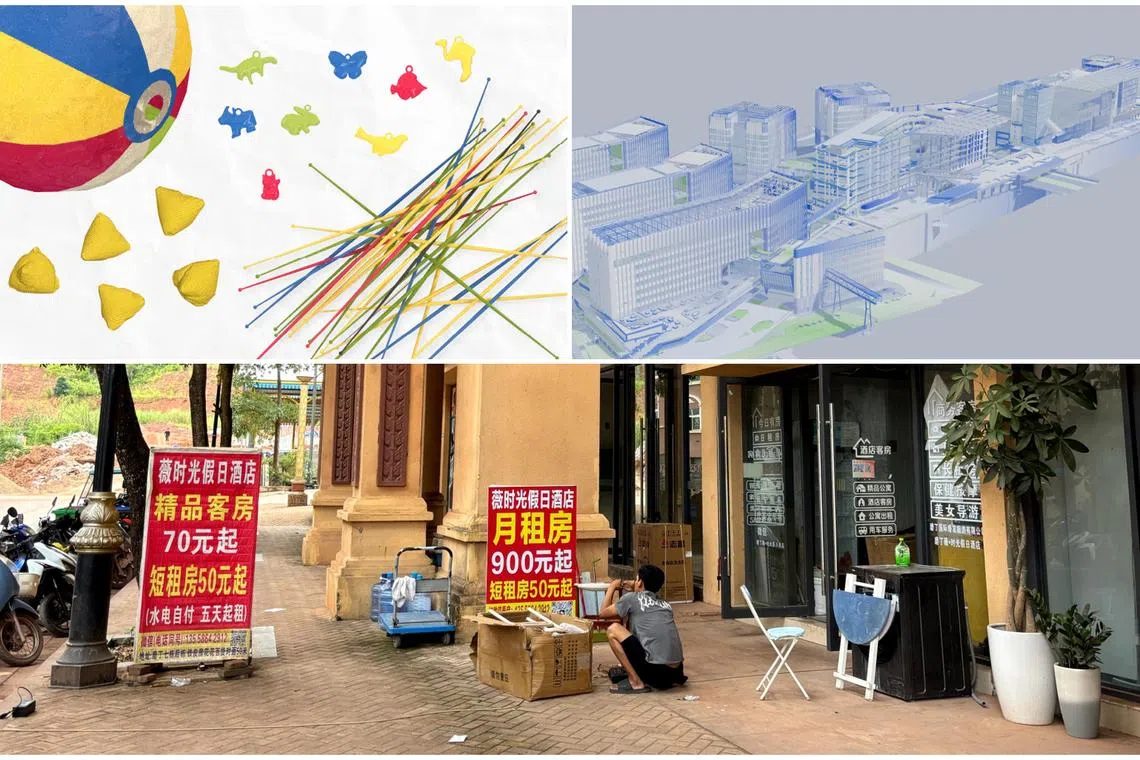
A challenge for the team was translating physical actions, such as kicking shuttlecocks and catching stones, into a digital format while combining 3D exploration with simple gameplay.
PHOTO: ST GRAPHICS
Mention chapteh, kuti kuti, five stones or pick-up sticks – traditional games once commonly played by Singaporean children – and most Singaporeans will be transported back to their school days. Younger Singaporeans, however, may struggle to recognise the names.
The idea of preserving cultural memory through play inspired this interactive 3D feature that aimed to preserve the four traditional games, said ST senior data visualisation developer Youjin Shin.
Shin said: “Rather than simply explaining the traditional games, we wanted people to experience them in a way that felt tactile, nostalgic and accessible.
“It was rewarding to use interactive storytelling not just as a technical experiment, but as a way to keep these shared memories alive and connect younger Singaporeans with a disappearing part of everyday culture.”
A challenge for the team was translating physical actions, such as kicking shuttlecocks and catching stones, into a digital format while combining 3D exploration with simple gameplay that worked smoothly across desktop and mobile platforms, she added.
The project received an honourable mention for Excellence in Journalistic Innovation.
READ MORE HERE

Before the district opened to the public, the team used a 3D model and “scrollytelling” to give readers a glimpse of what was to come.
PHOTO: ST GRAPHICS
Punggol Digital District is Singapore’s answer to Silicon Valley and will be home to major technology companies.
At the time that the piece was conceptualised, the district was not yet open to the public, so the team created a 3D model combined with “scrollytelling” to walk readers through the district.
“What was special about this project was visualising something that wasn’t accessible to the public yet. Using 3D renders as a medium helped us to bring people into that space, giving readers a glimpse of what’s to come,” said ST digital graphics journalist Charlene Chua, who led this piece.
She added: “Things like digital twins and the Open Digital Platform (the digital backbone connecting buildings, systems and devices) can be fairly dry. So we decided to use two robots to explain how the ODP would work, with examples most people could relate to, like food delivery robots.”
The story won an honourable mention in the Excellence in Technology Reporting category.
READ MORE HERE