
It’s 2026, and you’d think migrant domestic helpers and foreign workers in Singapore would enjoy the same access and privileges as everyone else who lives and works here. Apparently, not quite.
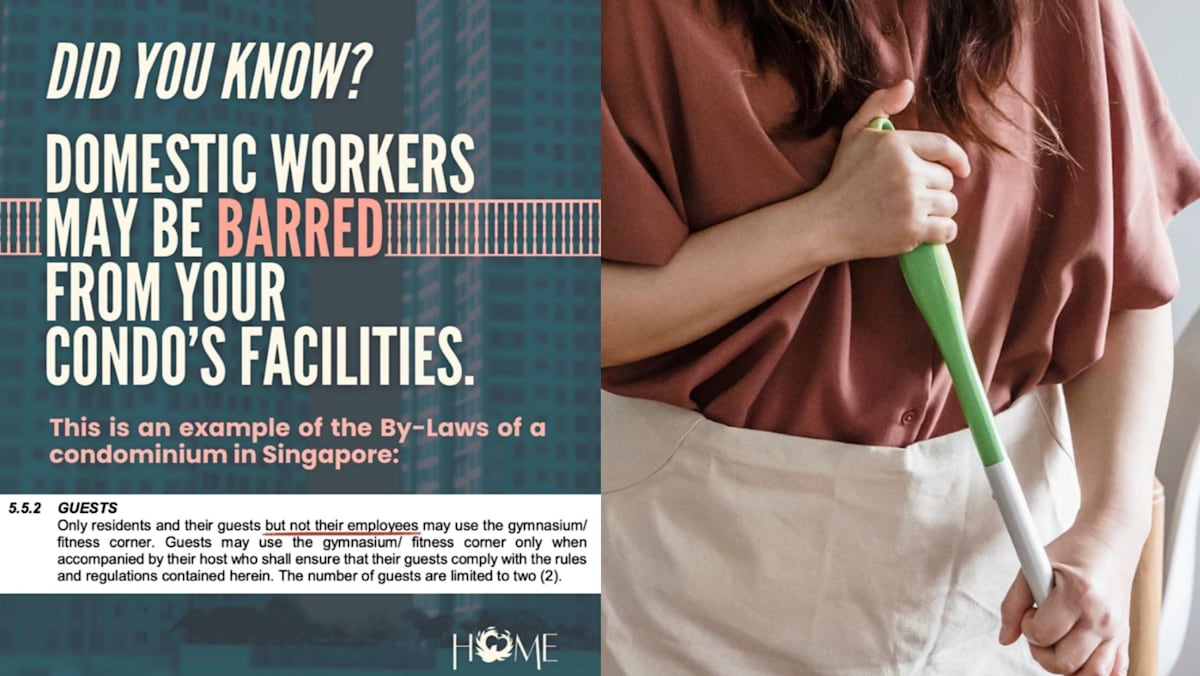
The Humanitarian Organisation for Migration Economics (HOME) took to Instagram on June 22 to share that a migrant domestic worker in Singapore was barred from using facilities in the very condominium where she lives and works.
“Did you know that Migrant Domestic Workers (MDWs) can be excluded from using communal facilities in the very condos they live in?” the non-profit organisation wrote.
HOME said that an employer had e-mailed them, recounting an incident where their domestic helper (known by the pseudonym Angie) was not allowed to use their condo’s gym.
“In April this year, Angie, a migrant domestic worker, was confronted in her condo’s gym by a cleaner, who told her she was not allowed to use the facilities. The cleaner called down a member of the Management to confirm this, and they stood over her as she packed her things,” shared Angie’s employer.
According to the account, Angie left “shaken and upset”, prompting her employer to look into the condo’s by-laws.
It was then that Angie’s employer discovered the estate’s by-laws explicitly barred domestic workers from using its recreational facilities.
One clause stated: “Only residents and their guests but not their employees may use the gymnasium/fitness corner.”
In other words, while guests were allowed to use the facilities as long as they followed the rules and were accompanied by a resident, domestic workers were strictly prohibited from doing the same.
Another line defined an occupier as the tenant and members of the occupier’s family, but added that “member of the family” does not include “guests, servants, or agents of the occupier”.
In short, despite living in the condo, Angie is treated as an employee rather than part of the household under the estate’s rules, leaving her barred from using the gym.
The employer described the incident as an example of “intimidating conduct” and the way it was handled was concerning, to say the least.
They added: “Angie was shaken and distressed. I found this deeply troubling, both because of the existence of the rule and the manner in which it was enforced. I am bringing this to HOME’s attention because I understand this reflects a broader pattern affecting domestic workers across Singapore’s private estates.”
According to HOME, condominium policies vary across Singapore and are set by the estate owner. While some estates allow domestic workers to use facilities as residents, others only permit access under specific circumstances, such as when supervising children. Some, however, prohibit domestic workers from using the facilities altogether.
“A condo can set rules on overcrowding, safety, noise and cleanliness. But banning someone based on their work permit status or occupation is discriminatory,” said HOME.
The situation has led HOME to share that such discriminatory cases are not isolated, with other reports of domestic workers being barred from using condo facilities such as swimming pools.
While condominiums are self-governed through democratically passed by-laws, the orgnisation has called for change in cases like Angie’s. They are urging residents to review their estate rules, support fair access for all who live in the property, and propose amendments at future meetings.
The news left many netizens shocked, with some arguing that a live-in migrant domestic worker should, without question, also be considered a resident of the condo.
“So it’s okay to trust your child’s caregiving with a helper, but not when it comes to condo facilities? How convenient,” one commenter wrote.
Others bluntly called it “modern slavery” and “appalling in this day and age”.
8days.sg has reached out to HOME for more details on Angie’s case, but has not received a reply as of press time.