
GEORGE TOWN, July 6 — Between the 17th and early 19th centuries, many Germans left their homeland in search of better opportunities, and one of the places they eventually settled was Penang.
In the early 1800s, German traders, missionaries, engineers, photographers and writers arrived on the island. Some settled and built businesses, while others left their mark through landmarks that still stand today.
This lesser-known chapter of Penang’s history is now highlighted through the German Heritage Trail, which maps out sites linked to the community, said Malaysian German Society committee member Clement Liang.
“We conduct the German Heritage Trail tour a few times a year, especially for students and large groups, depending on demand,” he said.
Liang said that while Penang’s colonial history is often associated with the British, Chinese, Indians and other established communities, German contributions are also woven into the island’s historical landscape.
“Many people walk past these buildings every day without realising there is a German story behind them. The heritage trail gives people a chance to discover another layer of Penang’s history,” he said.
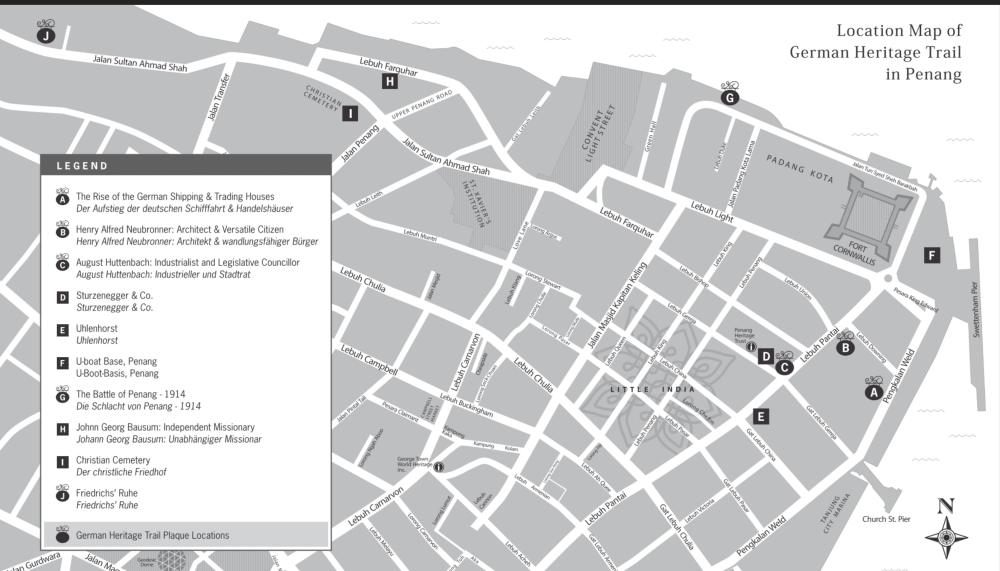
A map of the German Heritage Trail in Penang courtesy of a booklet prepared by the Penang Heritage Trust. — Pictures by Opalyn Mok
The guided walk traces the footsteps of a community that first arrived in Penang in the 19th century.
It begins at Weld Quay, where many German business premises were once located, including import-export firms dealing in European goods, agricultural commodities and refined tin.
Heritage buildings along Weld Quay — numbers 2, 3, 4 and 5 — once housed German trading houses.
One of the earliest import-export companies in Penang was Schmidt, Küstermann & Co at Number 2 Weld Quay, a branch of Rautenberg, Schmidt & Co.
Next door at Number 3 was Behn Meyer & Co Ltd, founded in Singapore. It set up its Penang branch in 1891 and later expanded from Beach Street to Weld Quay in 1911.
However, the company was expelled from the Penang Chamber of Commerce in 1915 over allegations of supporting German war interests, and its assets were seized as enemy property.
Another firm, Shiffman, Army & Co — known as the only importer of Straits Dollar safes — was founded in 1891 and based at Number 4 Weld Quay. Next to it, at Number 65, was Behr & Co, a branch of Behr Brothers in London, which imported European goods including Elephant Brand Pilsener beer.
Liang said two streets in Penang are also named after Germans — Katz Street and Gottlieb Road.
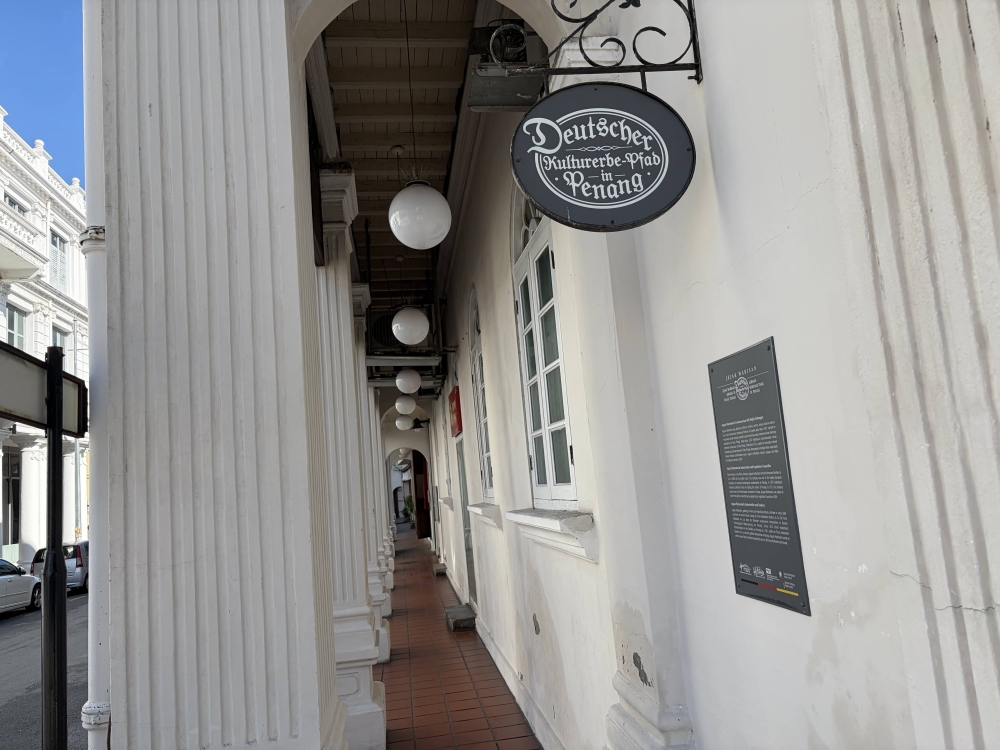
The German heritage trail in George Town is marked by these signs with information on the buildings. Shown here is the Bank of China building in Beach Street.
Katz Street was named after the Katz brothers. One of them, Herman Katz, founded Katz Brothers Ltd in 1864, with operations in Penang beginning in 1870. The company imported a wide range of European consumer goods into Southeast Asia.
Beyond merchants and traders, German writers also passed through Penang.
Karl May, known for adventure novels, wrote about his travels in Und Friede Auf Erden (And Peace on Earth), in which Penang was mentioned.
Nobel Prize winner Hermann Hesse visited Penang in 1911 and stayed at the Eastern & Oriental Hotel, which he described as having a “charming garden by the sea”.
He also noted the close-knit German-speaking mercantile community in Penang, particularly along the Weld Quay waterfront.
“There is also a German photographer who pioneered Penang postcards, Ernst August Kaulfuss,” Liang said.
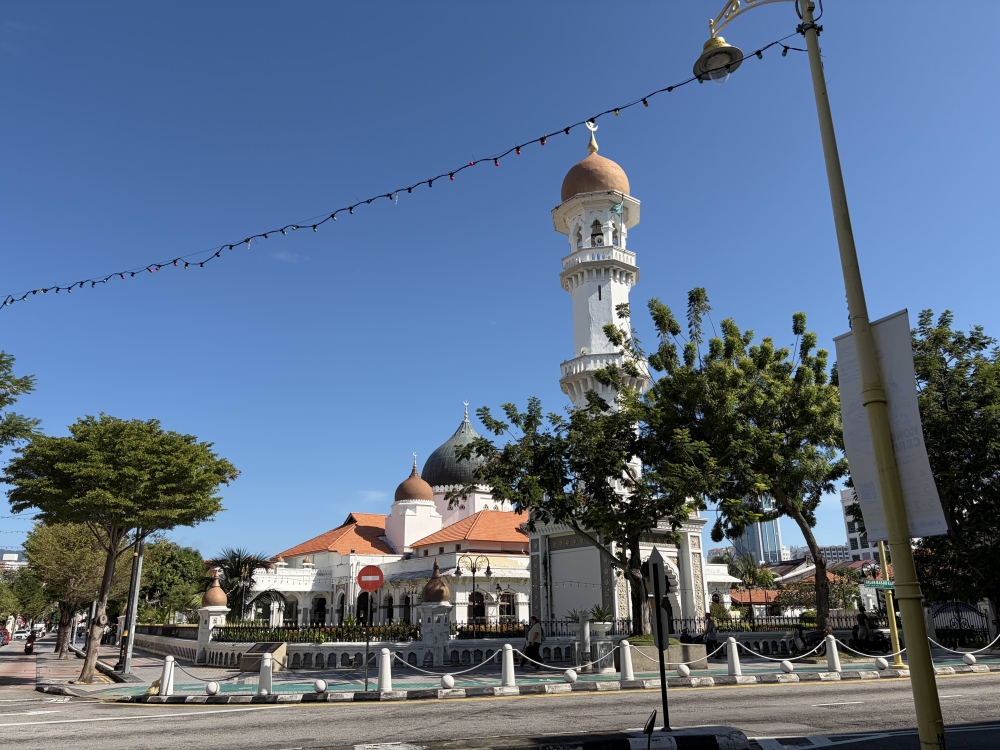
The architecture of the Masjid Kapitan Keling shows influences from German architect Neubronner.
Kaulfuss arrived in Penang in 1883 and worked as a travelling photographer. His works featured in Twentieth Century Impressions of British Malaya, documenting “Penang and district”.
He later operated the A. Kaulfuss Photographic Art Studio on Farquhar Street, selling photographs and postcards of Penang’s landscapes.
Kaulfuss died in 1908 and was buried at Western Road Cemetery.
One of the most enduring German influences can be seen in the work of architect Henry Alfred Neubronner.
Among his best-known works was the former HSBC Bank building on Beach Street, completed around 1905 in a Neoclassical style with a domed tower, before it was destroyed during World War II bombings.
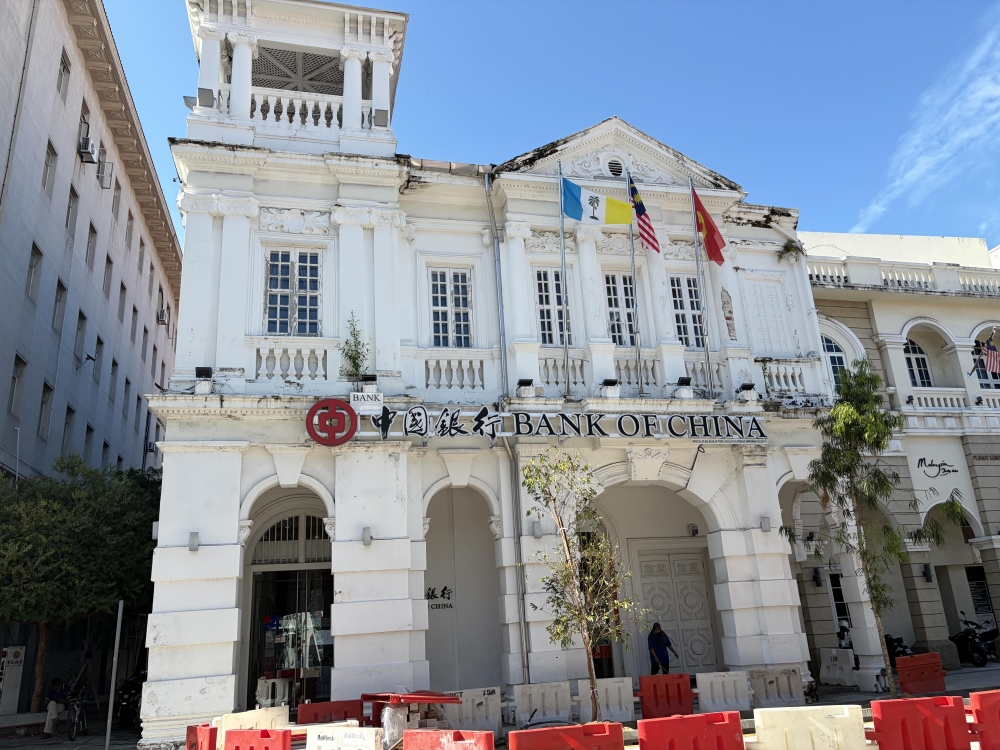
The neighbouring building, now the Bank of China, was also designed by Neubronner. It was built in 1905 for the Bank of the Netherlands Trading Society.
“There is also Neubronner’s influence in the Masjid Kapitan Keling architecture, the 1909–1910 version and its minaret built in 1916,” Liang said.
Beyond commerce and architecture, the German community also established institutions that continue to serve Penang today.
The German-speaking Protestant congregation founded St John’s Church in Jalan Bagan Jermal in 1912 to serve the growing expatriate community.
Although services are now conducted in English, the church remains a reminder of the community’s religious roots.
Liang said another lasting symbol of the German presence is the Malaysian German Society, established in 1962 to foster cultural and educational ties between Malaysia and Germany.
The German Heritage Trail, details of which are available on the MGS website, covers more than 20 heritage sites across George Town, offering a window into the lives of merchants, architects, writers, photographers and missionaries who helped shape Penang’s cosmopolitan identity.