
JOHOR BAHRU, July 11 — Johor voters head to the polls today in what analysts say will be a closely watched test not only of Barisan Nasional’s (BN) grip on the state, but also of voter enthusiasm ahead of a series of elections expected over the coming years.
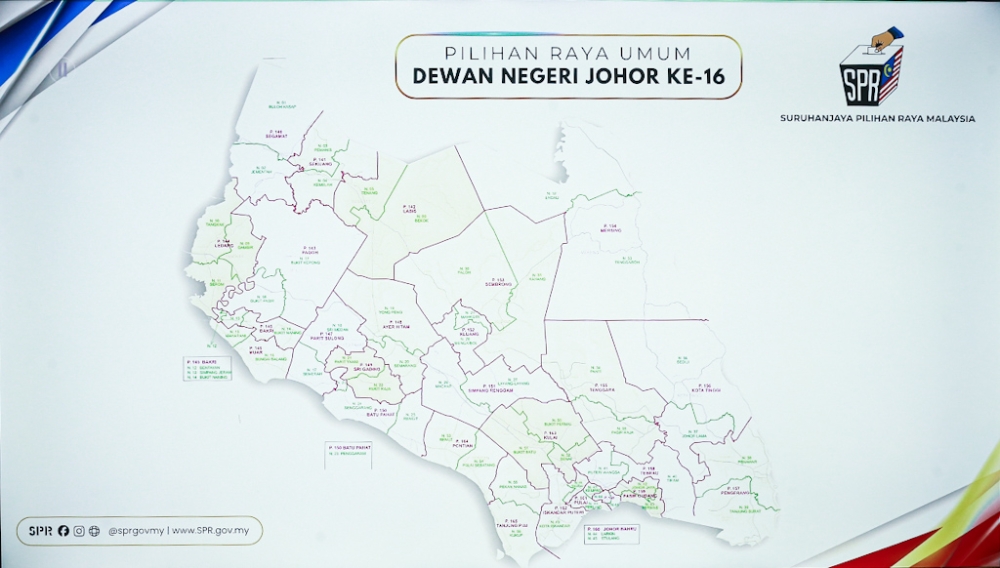
A total of 2,727,926 voters are eligible to cast their ballots across 1,140 polling centres to elect representatives for the 56-seat Johor Legislative Assembly.
While BN is widely expected to retain the state government, analysts say the coalition’s margin of victory, voter turnout and the performances of smaller parties could shape the political narrative long after the ballots are counted.
Turnout remains the biggest question
Political analysts agree that voter turnout will be the single most important factor to watch as polling unfolds.
Senior fellow at the Nusantara Academy for Strategic Research Azmi Hassan said Monday’s strong early voting turnout suggested Johoreans were keen to participate.
More than 92 per cent of the state’s 20,607 early voters had cast their ballots by Monday afternoon, according to the Election Commission.
”Based on the early voting turnout, I think there’s huge interest among Johor voters to come out this Saturday,” Azmi told Malay Mail.
”So it will be a very huge turnout, I think more than 80 percent,” he added.
He argued that a high turnout would likely favour the incumbent BN, saying the coalition’s election machinery remained its biggest strength.
International Islamic University Malaysia political scientist Syaza Shukri also believes turnout will determine the outcome.
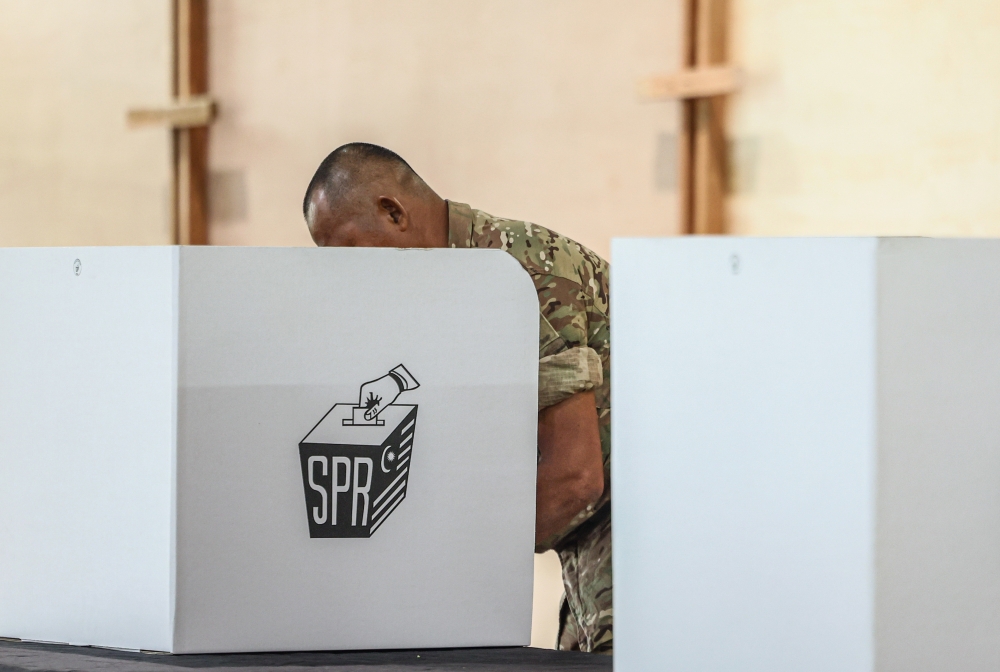
The Johor election is being closely watched as one of the first major electoral tests ahead of several expected polls. — Bernama pic
She said many expectations of a comfortable BN victory were based on assumptions that turnout would mirror the 54 per cent recorded in the 2022 Johor election.
“All the talk about BN possibly retaining the state is due to expectations of relatively low turnout. But I think it’s a mistake to assume that turnout will be as low as 2022.
“I think there’s a chance we can see turnout go above 60 per cent because people are excited this is the first in a series of elections to come,” she said.
According to Syaza, higher participation — particularly from Johoreans returning from Kuala Lumpur and Singapore, as well as stronger Chinese voter turnout — could narrow BN’s advantage and allow Pakatan Harapan (PH) to gain additional seats.
BN still favoured to retain Johor
Despite differing turnout projections, both analysts believe BN remains the clear favourite to retain Johor.
Azmi expects BN to secure enough seats to govern on its own without relying on coalition partners.
”My prediction is that Barisan Nasional will retain the right to form the state government without any help,” he said.
He added that PH would likely emerge as the loser if it failed to wrest control of the state after campaigning aggressively throughout the election.
Syaza similarly expects BN to remain in power, but said the coalition may not repeat the commanding dominance it enjoyed previously.

The Election Commission has opened 1,140 polling centres statewide for voters to elect representatives to the 56-seat Johor Legislative Assembly. — Picture by Sayuti Zainudin
She pointed to criticism surrounding Menteri Besar Datuk Onn Hafiz Ghazi and the controversy involving former Umno leader Datuk Puad Zarkashi as factors that could dent BN’s performance.
Even so, she said support from PAS voters in seats where the Islamist party is not contesting could still help BN hold on comfortably.
”The question now is if PH can mount a challenge. If voters go back to vote and if Chinese voters go out to vote, PH might have a good chance to add seats, but not to win a majority,” she said.
Their assessments broadly align with independent pollster Merdeka Center, which recently projected BN to win between 40 and 42 of the 56 state seats.
Programme director Ibrahim Suffian attributed BN’s advantage to a rebound in Malay support for Umno, estimating backing among Malay voters at between 55 and 60 per cent, up from about 45 per cent during the 15th general election.
PAS could claim influence regardless
Although PAS is contesting fewer direct contests against BN, Azmi believes the party could still emerge politically strengthened.
He said PAS would likely argue that its supporters had backed BN candidates in straight fights against PH, strengthening the coalition’s electoral performance compared to previous elections.
That, he said, could bolster PAS’ bargaining position in future electoral negotiations, particularly for the next Negeri Sembilan state election where cooperation between the parties may again come under discussion.
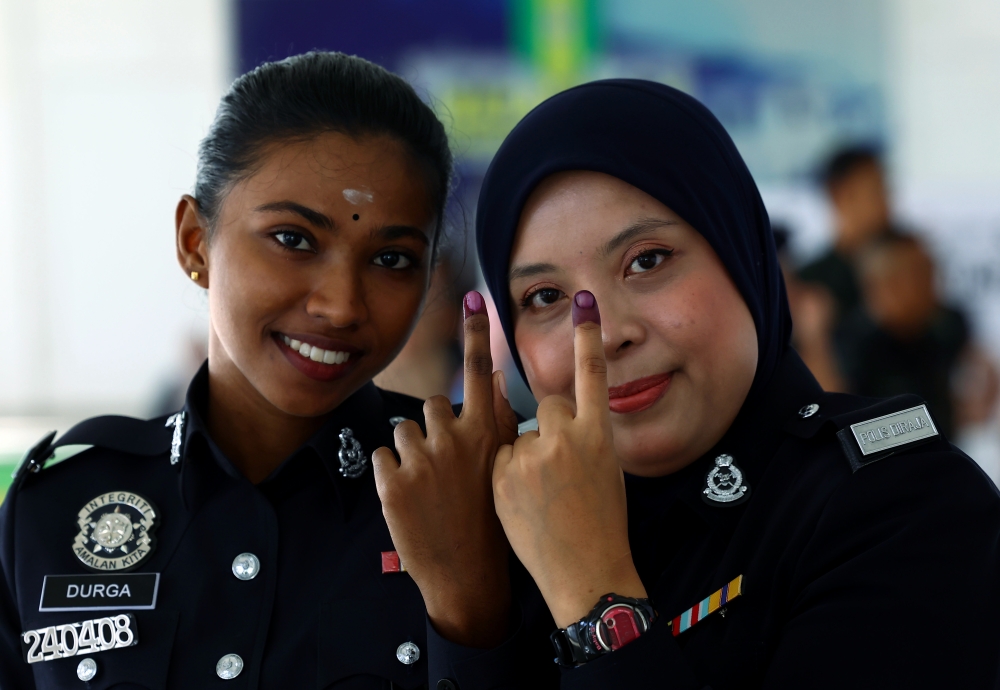
Corporal Masnoor Muzaryi Suzila Rosli and Constable M. Durgashini (left) show their inked fingers after casting their early votes in the 16th Johor state election at the General Operations Force Battalion 5 camp in Simpang Renggam, Kluang, on July 7. — Bernama pic
Eyes on Bersama’s debut
Beyond the battle between BN and PH, analysts say another point of interest is the electoral debut of Parti Bersama Malaysia.
The party, which is contesting 15 seats after being taken over by former PKR leaders Datuk Seri Rafizi Ramli and Nik Nazmi Nik Ahmad, has set a modest target of retaining its election deposits.
Neither analyst expects Bersama to win seats.
‘Bersama will fare badly. I don’t think they will win any seat in this particular case,” Azmi said.
However, he believes the party may still claim some success if it draws votes away from PH in constituencies where all three blocs are contesting.
Syaza likewise said Bersama’s support appeared limited and questioned whether the party had established a meaningful grassroots presence in Johor.
She also noted the absence of nationally recognised candidates capable of generating momentum similar to former Muda president Syed Saddiq Syed Abdul Rahman during previous elections.
As polling gets under way, analysts say today’s contest is unlikely to produce a surprise change of government.
Instead, attention will be fixed on how many voters turn up, whether PH can narrow BN’s advantage, and whether emerging political players can carve out enough support to influence Malaysia’s next electoral contests.