
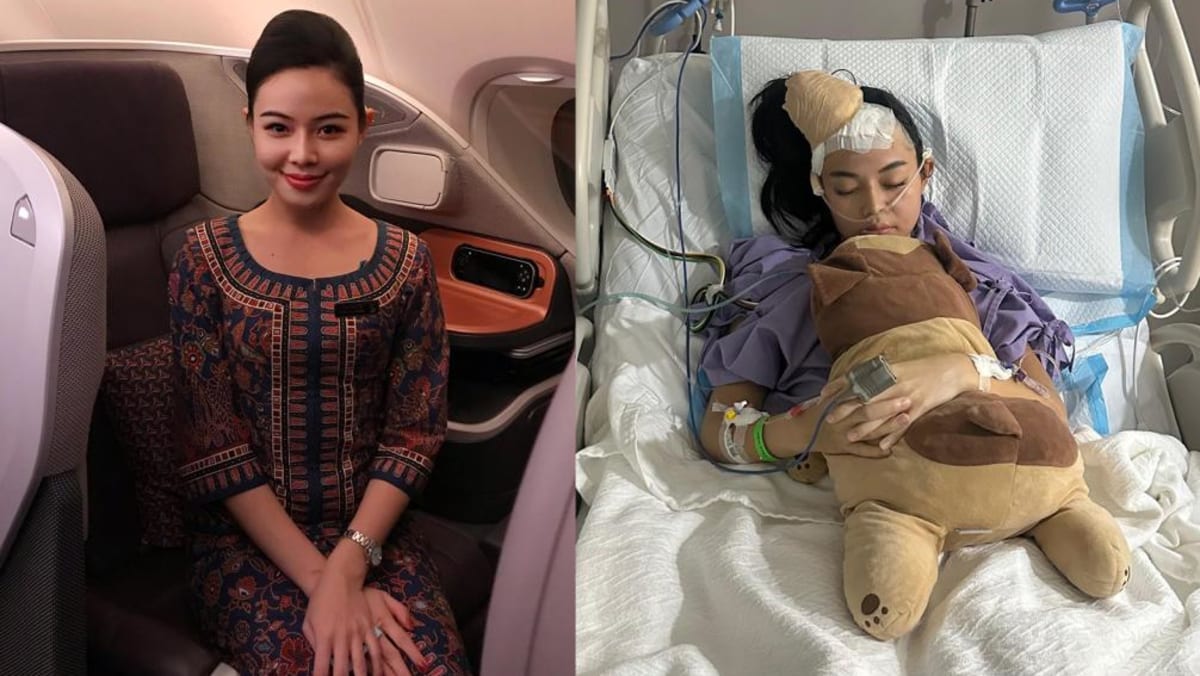
Teresa Hon’s oncologist Dr Valerie Yang Shiwen from OncoCare Cancer Centre explains.
Rare and highly aggressive: It is a rare cancer – approximately only 100 cases of glioblastoma are diagnosed in Singapore each year.
Causes: There is no known cause for glioblastoma, though some inherited genes may predispose a small percentage of patients to the disease.
Symptoms: These include persistent headaches, seizures, and progressive neurological deficits such as weakness, speech difficulties, vision problems, memory loss or personality changes.
Treatment: Surgery is usually performed to remove as much of the tumour as safely possible, followed by radiation therapy and chemotherapy.
Often, complete removal of the tumour is not possible without compromising critical structures in the brain, which can cause weakness, paralysis, loss of speech or vision, personality shifts, loss of inhibition, profound drowsiness or a coma, and affect breathing, swallowing, and heart and lung function.
However, even in cases where the entire visible tumour can be removed, microscopic cancer cells that have spread into surrounding brain tissue often remain. Radiation therapy, chemotherapy and other drug treatments usually cannot eliminate all these remaining cancer cells.
People diagnosed with glioblastoma typically survive 12 to 18 months.