
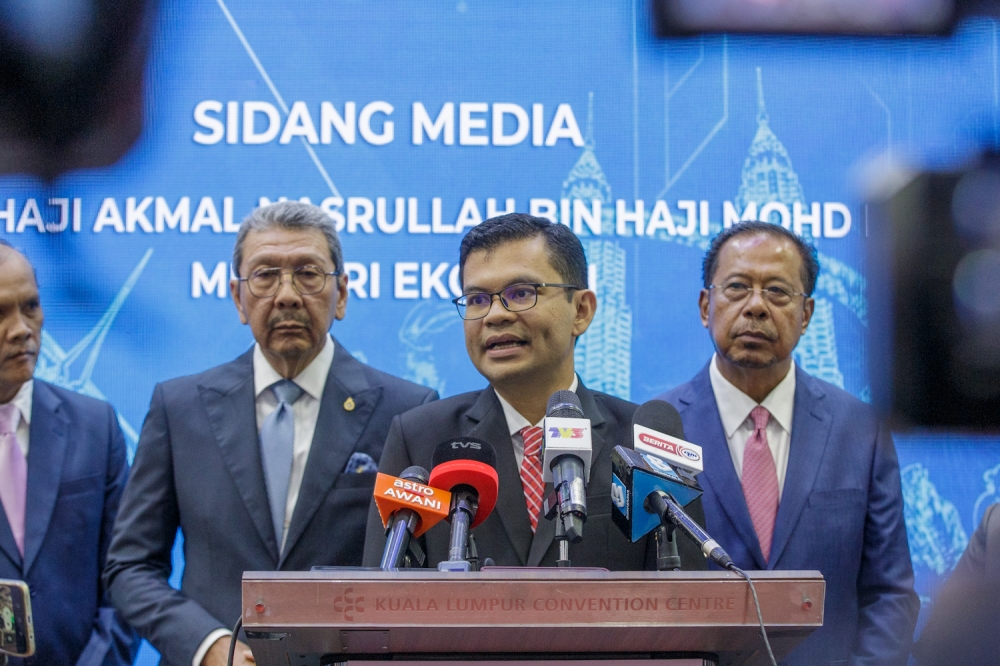
KUALA LUMPUR, Aug 11 — Malaysia’s renewable energy transition is expected to catalyse about RM4.3 billion in investments and create approximately 7,738 indirect employment opportunities through 42 projects approved under the 2026 Feed-in Tariff (FiT) e-bidding exercise, Economy Minister Akmal Nasrullah Mohd Nasir said today.
He said the projects, involving biogas, biomass and small hydropower, would also generate about RM617 million in demand for locally manufactured gas engines and boilers.
“This is the outcome we seek: more renewable energy, stronger domestic supply chains, greater investment and tangible economic value for the country.
“Every ringgit invested in the transition should strengthen Malaysian capabilities. It should deepen local supply chains, create skilled employment, support innovation and build Malaysian enterprises that can compete across ASEAN,” he said.
Akmal said the Sustainable Energy Development Authority (SEDA) Malaysia had received 48 applications under the 2026 FiT e-bidding exercise, with 42 successfully awarded a combined approved net export capacity of 331.355 megawatts.
The successful projects comprise 16 biogas projects totalling 26.185MW, 11 biomass projects totalling 135.94MW and 15 small hydropower projects totalling 169.23MW.
Speaking at the 7th International Sustainable Energy Summit (ISES) 2026 here, Akmal said the approved projects were expected to enter the system between 2029 and 2030, taking into account construction and other project delivery requirements.
He later clarified to reporters that the electricity generated by the projects would be for domestic use rather than export.
Akmal said the FiT mechanism would also help Malaysia diversify its renewable energy sources by incorporating biomass, biogas and small hydropower into the country’s energy mix.
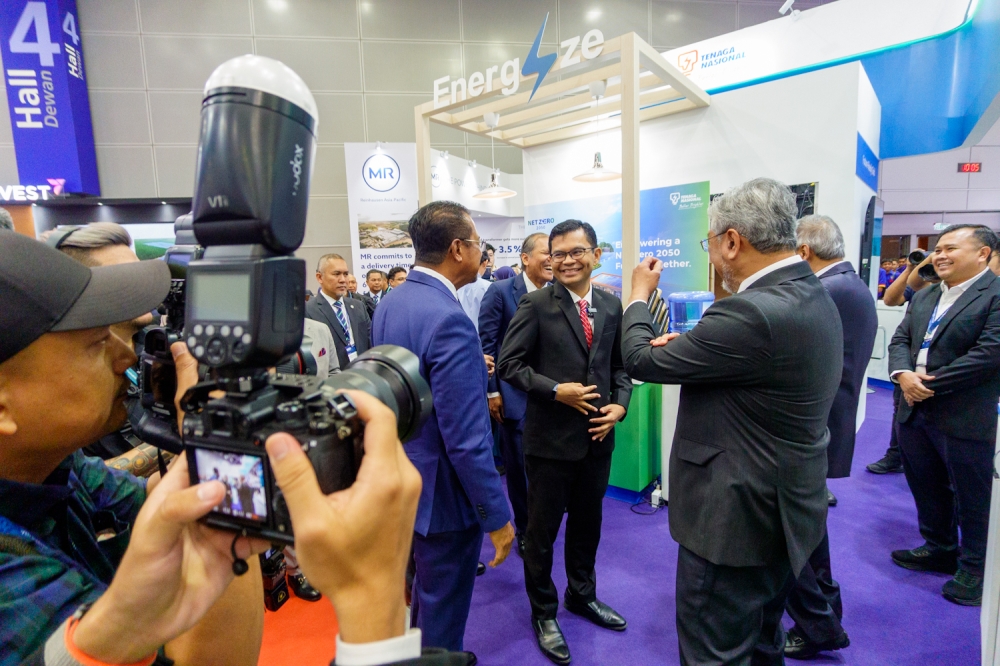
Economy Minister Akmal Nasrullah Mohd Nasir (center) interacts with exhibitors while visiting the Tenaga Nasional Berhad (TNB) booth during the 7th International Sustainable Energy Summit (ISES) 2026. — Picture by Raymond Manuel
“For Malaysia, energy transition is economic policy. It shapes where companies invest, how industries compete, the quality of jobs we create and the resilience of our households,” he said.
He said Malaysia’s economy was estimated to have expanded by 5.8 per cent in the second quarter of 2026, bringing first-half growth to 5.6 per cent.
Akmal said this provided a strong foundation for implementation of the 13th Malaysia Plan, which targets annual gross domestic product growth of between 4.5 and 5.5 per cent from 2026 to 2030.
Under the National Energy Transition Roadmap, Malaysia is targeting renewable energy to account for 70 per cent of installed capacity by 2050, with an interim target of 35 per cent by 2030.
Akmal said achieving the targets would require investment in renewable energy generation, the electricity grid, energy storage, technology and skills.
He said the government’s approach must ensure sufficient and reliable energy, support a competitive and lower-carbon economy, and ensure the benefits and costs of the transition were shared fairly.
The two-day ISES 2026, themed “Envisioning Sustainable Energy Beyond Borders”, brings together policymakers, industry leaders, investors, financial institutions, researchers and energy experts to discuss regional energy cooperation, grid flexibility, energy storage, sustainable finance, energy efficiency and renewable energy.