
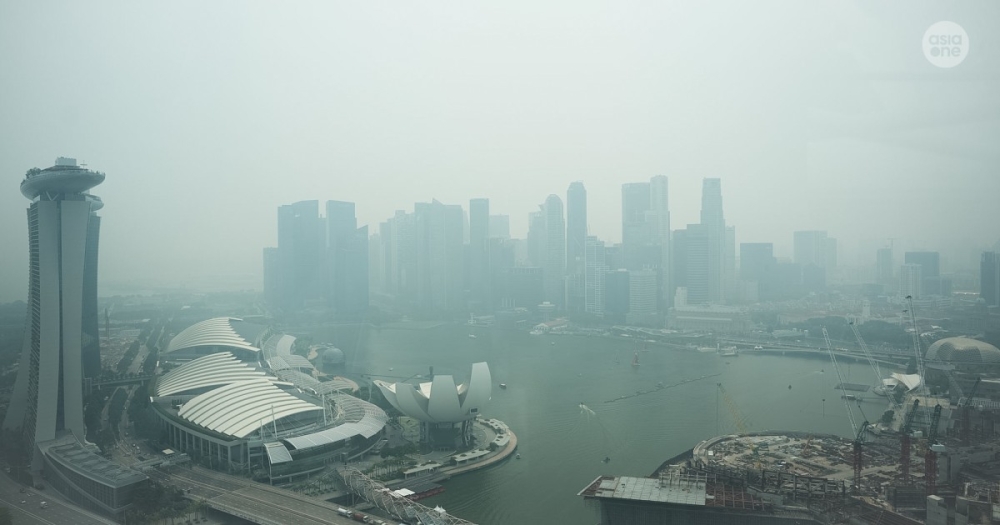
SINGAPORE, Oct 9 — Air quality in the Republic is deteriorating towards the very unhealthy range, with the 24-hour Pollutant Standards Index (PSI) in central Singapore rising to 191 by 4pm this afternoon, up from 181 at noon.
The latest reading marks a new high for 2026, surpassing the record of 181 set earlier in the day and placing air quality just 10 points away from the very unhealthy range.
At 4pm, PSI in all five regions remain in the unhealthy range, with the next highest reading of 183 recorded in western Singapore.
Readings of 201 to 300 denote the very unhealthy range.
Meanwhile, one-hour PM2.5 concentrations remained in the elevated band in all five regions.
The highest concentration reading of 148 was recorded in western Singapore, followed by 145 in central Singapore.
Concentration readings between 56 to 150µg/m3 fall within the elevated band, while readings between 151 and 250 are in the high band.
When one-hour PM2.5 concentration readings are in the high band, healthy persons should avoid strenuous outdoor activity for the next hour, while vulnerable persons should avoid all outdoor activity for the next hour.
Data from the Asean Specialised Meteorological Centre showed 162 hotspots in Kalimantan on Oct 8, while there were 314 hotspots detected in Sumatra.
What happens if PSI is ‘very unhealthy’?
Preschools and schools have measures in place to safeguard the wellbeing of students. This includes adjusting outdoor activities and the use of air purifiers.
According to the Ministry of Education (MOE), it will consider closing schools when the air quality forecast for the next day is in the hazardous range. This occurs when PSI exceeds 300.
Any school closure will be announced at around the same time as the daily haze situation update in the evening, and schools will inform parents accordingly.
For now, with air quality in the unhealthy range, workplace safety remains a focus, and employers are urged to reduce the duration of prolonged or strenuous work for healthy employees.
For vulnerable workers, especially the elderly and pregnant women, they should minimise prolonged or strenuous outdoor work, while those with chronic heart and lung conditions should avoid such work.
Employers should also provide suitable protective equipment, considering pollutants present in the work environment.
Members of the public should check the latest one-hour PM2.5 concentration readings before participating in outdoor activities. — AsiaOne