
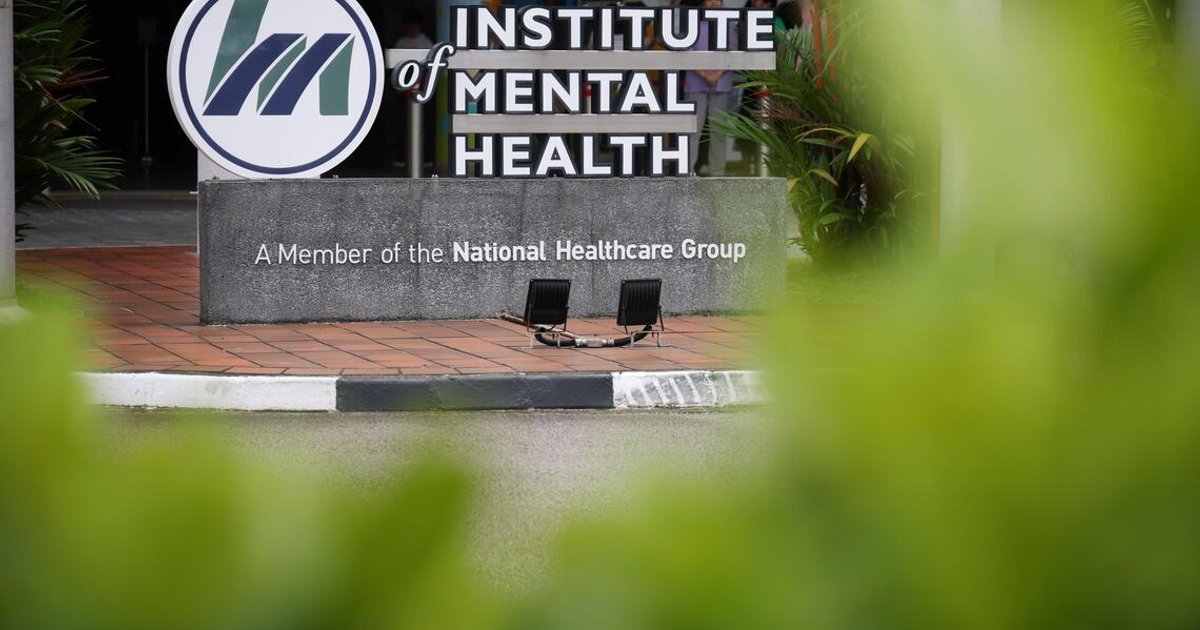
SINGAPORE – Singapore’s sole psychiatric hospital, the Institute of Mental Health (IMH), will be renamed the National Centre for Mental Health Singapore in 2027, reflecting a broader shift in how the country approaches psychiatric care.
Highlighting a steady rise in mental health challenges in Singapore, Health Minister Ong Ye Kung outlined an overhaul of psychiatric care, which includes rebranding and expanding the Institute of Mental Health, as well as revising parental consent rules to ensure youth are not deterred from seeking help.
“Like our other national specialty centres for cancer, heart or eye, it will lead research, coordinate psychiatric care across hospitals and build sector-wide capabilities,” he said, speaking on Oct 10, which is World Mental Health Day.
The name change, which comes as long-term care is increasingly shifted to community facilities, will mark a major move away from IMH operating as a long-stay asylum or “forever home” for many psychiatric patients.
As part of a broader strategy to handle rising mental health cases across the country, the Government will redevelop and expand IMH at its present site in Buangkok, turning it into a bigger and more modern hospital by 2040, Ong said.
Furthermore, three regional hospitals – Changi General Hospital, Woodlands Hospital and Alexandra Hospital – are strengthening their psychiatric capabilities to complement the central hub.
Beyond expanding facilities, the long-term answer to the mounting mental health challenge is prevention and early intervention, he stressed.
Lowering barriers to youth mental healthcare
Meanwhile, the government will seek public views on parental consent requirements for various service providers in the coming weeks, Ong said in his message.
The Ministry of Health (MOH) is developing guidelines on parental consent, while the Singapore Medical Council is revising its ethical guidelines to provide doctors with clearer guidance on parental consent so that they can proceed with treatment that is in the best interests of the patient, Ong said.
“Mental health challenges are rising around the world, especially among young people. Hospitals and specialist clinics are seeing more patients, including many who are still in school,” said Ong.
More youths are also being attended to in the community, he added.
Mental health advocates here have pushed for the lowering of the age of consent for mental health services. This is to help youth who might otherwise face parental resistance to mental health treatment due to stigma or worry about burdening their parents.
Currently, callers to national mindline 1771 can stay anonymous while community-based providers generally do not insist on parental consent before offering counselling and support. However, schools are more likely to require it before formal counselling begins given its philosophy of strong partnership with families, Ong said.
He stressed that across-the-board requirement for parental consent should not become a barrier to seeking help because sometimes, a young person is simply not ready to speak to their parents yet.
“The right system is one that lets a young person enter through a safe door, and then involve the family appropriately as the care journey progresses,” Ong said.
“At every stage, we must act in the young person’s best interests and safeguard his or her well-being.”
Ong also pointed to stigma as the key barrier to seeking help.
“Often, they are afraid. They fear being judged by family members, friends, teachers or employers. They worry that seeking mental health support will leave a permanent record that will later disadvantage them in future education opportunities, scholarship or job applications, or when buying insurance,” Ong said.
Government agencies must work together to eliminate these fears.
“Seeking mental health support should not, by itself, become a mark against a person,” said Ong. “Where disclosure is genuinely necessary, it should be limited to relevant circumstances and handled fairly. This is something various Government agencies will have to work on.”