
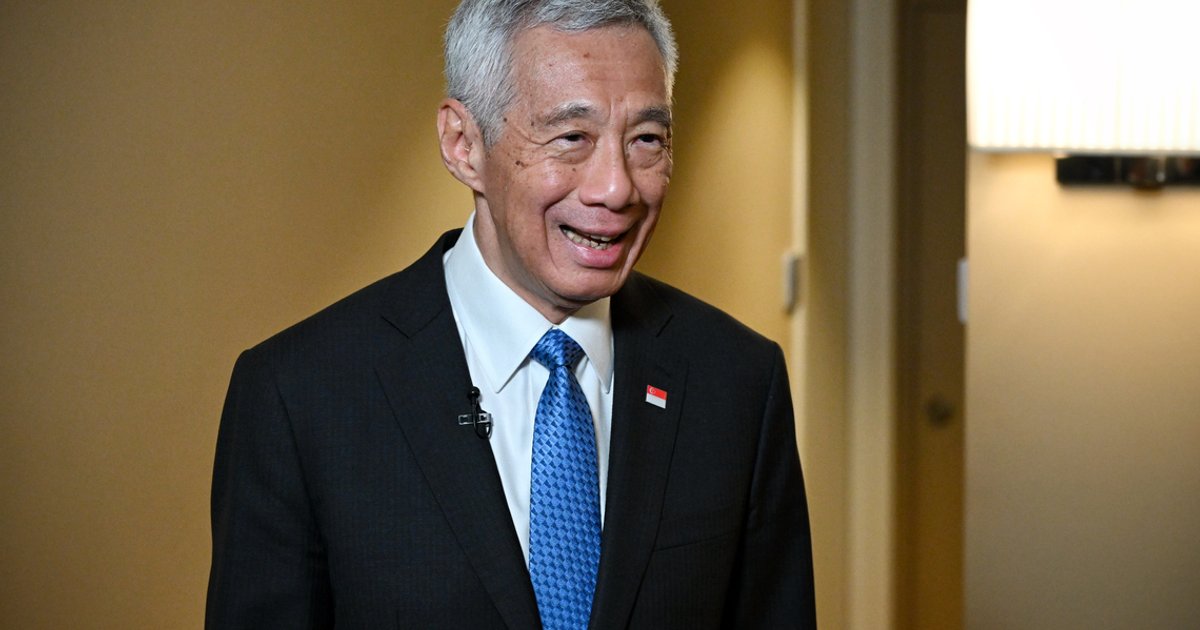
SINGAPORE — Australia should deepen its relationships with Asian countries, particularly those in South-east Asia, by investing more in the region and keeping up its defence presence, Senior Minister Lee Hsien Loong said.
This will also give Australia more room to pursue its own interests amid intensifying rivalry between the United States and China, he added.
“The deeper your relationships are across Asia, the more space you will have to pursue your own interests,” Lee said in the fourth and final instalment of the 2026 Boyer Lectures, which began broadcasting on ABC radio and online on Nov 8.
He pointed to “abundant opportunities” for cooperation in areas such as the digital and green economies, public health and counterterrorism, which would help countries “see each other as partners in development, and not solely through the prism of US-China rivalry”.
“Australia is not a South-east Asian country, but it should be a very close partner of ASEAN, especially in an age where small and medium-sized powers need to work together more than ever,” he said.
His remarks come as the US reassesses its role in the world and expects its allies to take greater responsibility for their own defence.
While countries in the region still want the US to remain engaged, many are seeking to become more self-reliant while protecting their strategic interests, Lee said.
Australia is a treaty ally of the US and a partner in Aukus, a security partnership with the US and Britain under which it plans to acquire nuclear-powered submarines.
Yet even in Australia, there are calls for greater self-reliance, Lee noted. He cited former Australian prime minister Malcolm Turnbull, who had urged Australians to chart their own future, recognising that their interests may not always align with that of the US.
But greater self-reliance needs to be complemented by partnerships, Lee said, warning against turning inward in response to a more contested region. Such networks could be a source of resilience during crises, he said.
“Neither does geography change,” he added. “Countries must stay invested in their near abroad. They neglect their neighbourhood at their cost,” he said.
Singapore prefers an open and inclusive region, rather than one dominated by a single power or divided into opposing camps, said Lee.
He described how ASEAN countries maintain “overlapping circles of friends”, cooperating on economic integration, food and energy resilience, and regional security despite their different relationships with the major powers.
“Your circle may not coincide with mine, but that should not prevent us from being friends with each other,” he said.
Such an approach would give countries more reasons to cooperate and more channels to manage disagreements, rather than forcing them to choose sides, he added.
Room for greater investment
In his lecture, Lee outlined three areas where Australia could deepen its engagement with Asia: expanding economic ties, strengthening defence and security partnerships, and nurturing people-to-people ties.
Australia has considerable scope to invest more in South-east Asia, where its investment footprint remains relatively modest despite substantial and growing trade with the region, Lee said.
ASEAN is the world’s fifth-largest economy, with a market of 700 million people and a growing middle class. Yet Australia invests no more in ASEAN than it does in New Zealand, SM Lee noted.
Australia has strengths in critical minerals, agribusiness, renewable energy and digital and deep technology, while South-east Asian companies could complement such projects as suppliers or buyers, Lee said.
Greater investment would help Australian businesses strengthen their competitiveness and supply chains, he added, welcoming Australian Prime Minister Anthony Albanese’s South-east Asia 2040 strategy to deepen two-way trade and investment.
He also cited a recently concluded agreement between Singapore and Australia to keep essential supplies, including diesel, petrol and natural gas, flowing in both directions during crises and disruptions.
Similar arrangements could benefit food supplies, he added.
“Staying open and connected can actually make Australia more resilient,” he said.
Lee also urged countries not to give up on the multilateral trading system, even as global consensus becomes harder to achieve.
Where such consensus is not possible, countries should make better use of existing trade agreements and strengthen links with other major economic groupings, including the European Union, he said.
Keeping the region stable
On defence and security, Lee urged Australia to maintain its presence in Asia and strengthen longstanding valued partnerships with like-minded countries.
He cited the Five Power Defence Arrangements, which Australia joined in 1971 to strengthen the security of Singapore and Malaysia following Britain’s military withdrawal from the region.
More than five decades later, the Royal Australian Air Force continues to deploy fighter jets and maritime patrol aircraft regularly to Singapore and Malaysia, he noted.
Singaporean and Australian troops have also served alongside each other in international operations, including in East Timor, Afghanistan and the Middle East.
Australia should also maintain contact and pragmatic working arrangements with countries where ties are more complicated, Lee said.
Both sides should seek to understand each other better and keep relations stable, he said, stressing the importance of maintaining communication between armed forces, particularly in the event of an incident.
“It is impossible to keep major power rivalries entirely out of the region. But it is possible for countries to work together to manage the rivalries and avoid miscalculations and mishaps,” he said.
Lee also urged Australia to build on its strengths in bringing countries together, citing its role in establishing the Asia-Pacific Economic Cooperation forum and the Comprehensive and Progressive Agreement for Trans-Pacific Partnership.
Such efforts would become even more valuable in building practical arrangements on trade, pandemic preparedness and climate change, he said.
People-to-people ties
Beyond trade and security, Lee called for Australia to nurture its people-to-people ties with Asia, pointing to its large Asian community and longstanding educational exchanges as sources of goodwill and personal connections.
People born overseas now make up a third of Australia’s residents, including 70,000 who came from Singapore, he noted.
But immigration requires sensitive political handling, Lee cautioned, citing Singapore’s own experience.
Governments need to carefully manage the pace and composition of immigration, as well as newcomers’ commitment to national ideals and integration into society, he said.
“Above all, citizens need to feel that their interests are being looked after, and that they continue to have a stake in their own society. Otherwise, public support can quickly erode,” he said.
Australia’s regional relationships will be stronger when Asian tourists feel welcome, Asian students feel safe and at home, and Australians of different origins live harmoniously together, he added.
Lee also pointed to Singapore’s six decades of close relations with Australia as an example of how countries with different backgrounds and social norms could build mutual understanding and trust.
He recalled that when Singapore and Australia were negotiating their Comprehensive Strategic Partnership in 2016, Australia proposed work-holiday visas to allow young people to experience life in each other’s countries.
Singapore officials were concerned that boisterous Australian youths, unfamiliar with Singapore’s strict rules, might get into trouble, he said.
“But I overruled the reservations and we proceeded,” he recalled. “The scheme has worked well; youthful exuberance has not proved a problem.”
Singapore’s successful partnership with Australia points the way for its broader regional engagement, said Lee.
“You will find many willing partners keen to work with you to build a stable, peaceful and prosperous Asia for all.”