
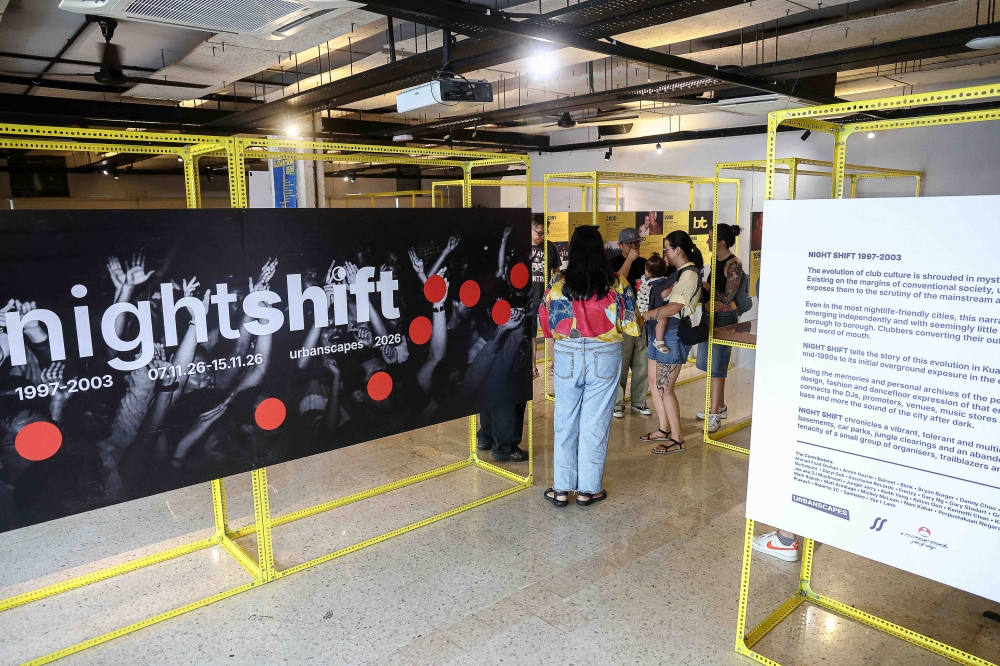
KUALA LUMPUR, Nov 13 – Long before rooftop cocktail lounges and commercial megaclubs defined the capital’s entertainment circuit, Kuala Lumpur’s underground dance subculture thrived in the most unexpected corners of the urban landscape, from prison cellblocks and airport runways to rainforest valleys.
Those formative, boundary-pushing years are being brought back to life at Night Shift: When KL Went Out, an archival exhibition hosted inside the industrial grounds of APW Bangsar.
Curated by DJ and music producer Roshan Menon alongside veteran promoter and selector Callen Tham, the retrospective chronicles how the city’s early electronic music community responded to a strict 1am entertainment curfew imposed in 1997, an official restriction that forced organisers and revellers to colonize alternative public and industrial spaces to keep the music playing.
The project took root when 33-year-old Roshan, founder of creative agency and underground music platform Saturday Selects, began collecting vintage Malaysian rave flyers before teaming up with urban arts festival Urbanscapes to map the scene’s history. Recognising the urgency of recording oral histories before they fade, he reached out to Tham, an early scene pioneer, to gather artefacts from the period’s original architects.
“I don’t know if it’s the perfect time but I feel like this should have been done maybe a while back, when there were still a lot more of the people who were involved are still around like the late DJ Gabriel (Gabriel Chong) or Mickey Mclean whose no longer with us
“I wish we could’ve gotten their stories and their experiences of the scene. But it’s never too late,” Roshan told Malay Mail.
For 59-year-old Tham, piecing together six months of scattered flyers, personal snapshots, press clippings, and hand-drawn posters proved to be only the opening challenge.
“After getting all those things, the hard work is looking back at the materials we had and creating a narrative for the exhibition.
“Because it’s all broken, how could we make a story, make it interesting enough for people to see,” Tham said.
The pair eventually focused the retrospective on the years between 1997 and 2003, showing how local youth culture turned administrative closures into a catalyst for guerrilla creativity.
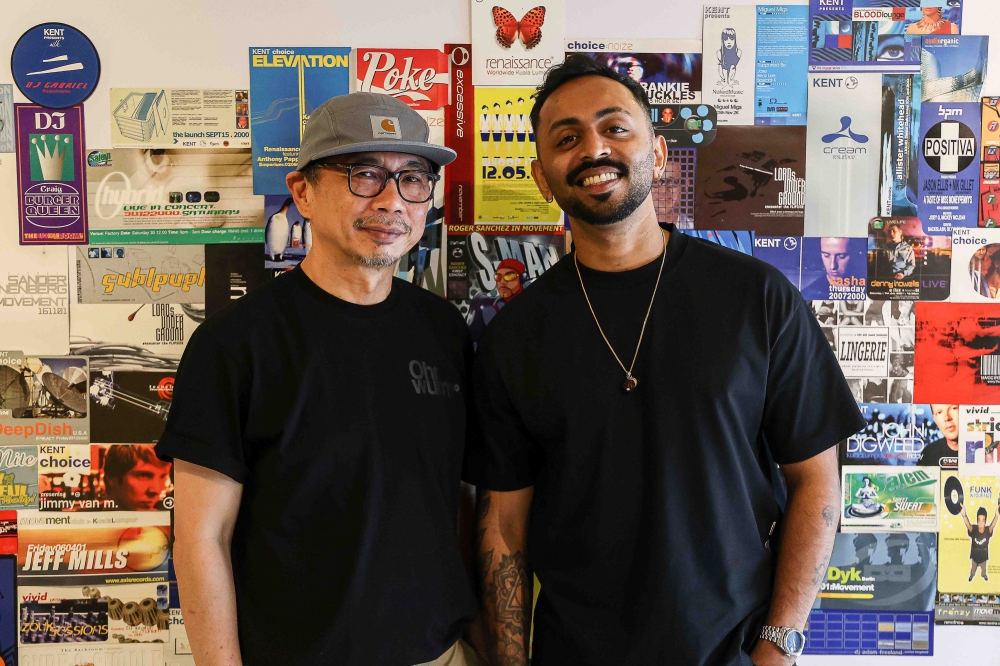
Night Shift curators, local DJ and producer Roshan Menon (right) and local promoter, organiser and DJ Callen Tham (left) pose for a picture. — Picture by Sayuti Zainudin
The centrepiece of the showcase revisits Blue Sky, an audacious multi-disciplinary arts and music gathering held inside the historic Pudu Prison complex on Oct 18, 1997, which drew approximately 2,500 urban youths.
Organised by urban design and cultural collective labDNA just nine days after authorities announced the century-old penitentiary would close its doors ahead of redevelopment, the event transformed two prison wings into cultural spaces featuring 70 installations, performance art, experimental films, and two electronic dancefloors.
The event also incorporated an open-mic platform and a speakers’ corner on custodial rights, mounted by cultural activists Joe Kidd, Hishamuddin Rais, The Republic of Brickfields, and former Pudu inmates. For labDNA, the gathering offered a rare opportunity to confront the landmark’s historical weight while giving young Malaysians a creative stake in its urban memory.
The exhibition also documents the millennium countdown at the close of 1999, when rival event promoters took over active aviation gateways. At Sultan Abdul Aziz Shah Airport in Subang, the Salem-backed Zero 2000 party took over the Terminal 1 apron with a lineup of 15 international guest DJs.
Simultaneously, Kent’s Gate 2K converted the top deck of the main car park at Kuala Lumpur International Airport into a three-room dance complex hosting 17 international selectors, including Deejay Punk-Roc and drum and bass innovator DJ Fabio, paired with an official Christian Dior runway showcase.
As Tham explained, statutory bans on direct cigarette advertising led tobacco conglomerates to pivot toward experiential marketing, with Kent framing its promotions around aviation and travel.
“Kent was always associated with travelling through its ‘Kent Travels’ branding. If you look through the flyers, they were always centred around travel and what better place to host a party with that kind of branding than at an airport?
“The rooftop was a fantastic venue. It has since been converted into a prayer room, but back then, it was a garden where transit passengers could relax and spend time before their flights.
“There were many airlines flying into Malaysia at the time, so KLIA saw plenty of transit passengers. We decided to use that space for the event,” he said.
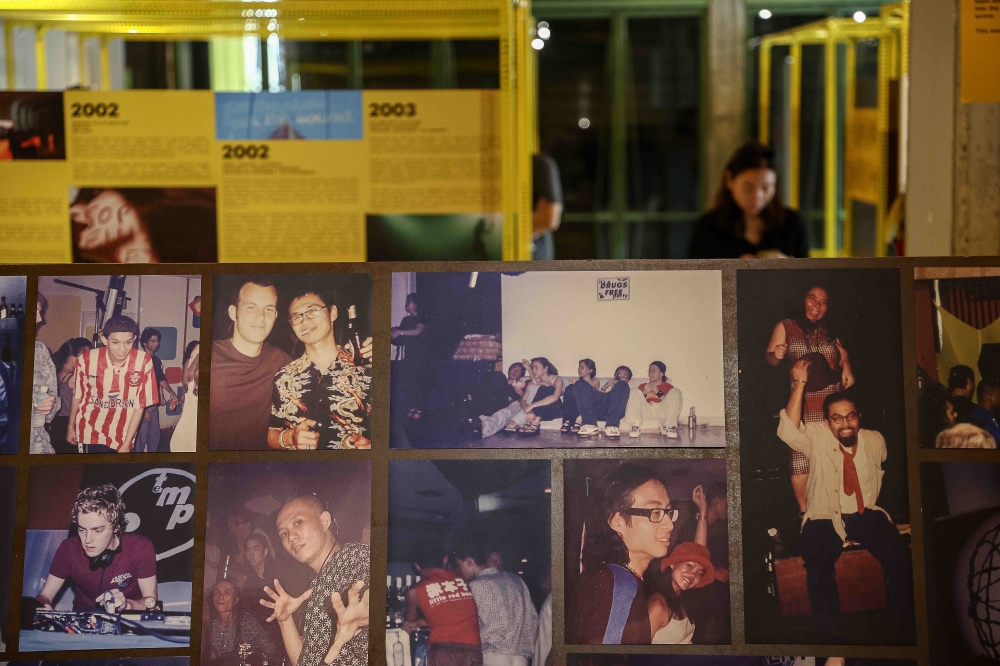
Photographs from Kuala Lumpur parties are displayed at the Night Shift exhibition. — Picture by Sayuti Zainudin
The dawn of the millennium also pushed dance culture deeper into nature, notably through the Frenzy gatherings staged at Kem Bina Semangat Ghafar Baba in the forested foothills of Kemensah, Hulu Klang. Its opening gathering on Jan 29, 2000, saw German techno maestro Sven Väth deliver a legendary 14-hour marathon set. A follow-up party on April 1 drew 500 partygoers before an unpermitted raid by police thrust the event onto national front pages.
“For the first Kemensah party, they brought in German DJ Sven Väth, who was already a huge name in the electronic music scene and remains highly regarded today.
“Despite his stature, he played for us for almost nothing and went on to deliver a 14-hour set.
“I think that’s what made the Kemensah parties so legendary. These internationally renowned DJs were coming all the way to Malaysia to play marathon sets, not in a conventional nightclub, but right in the middle of the jungle,” Tham said.
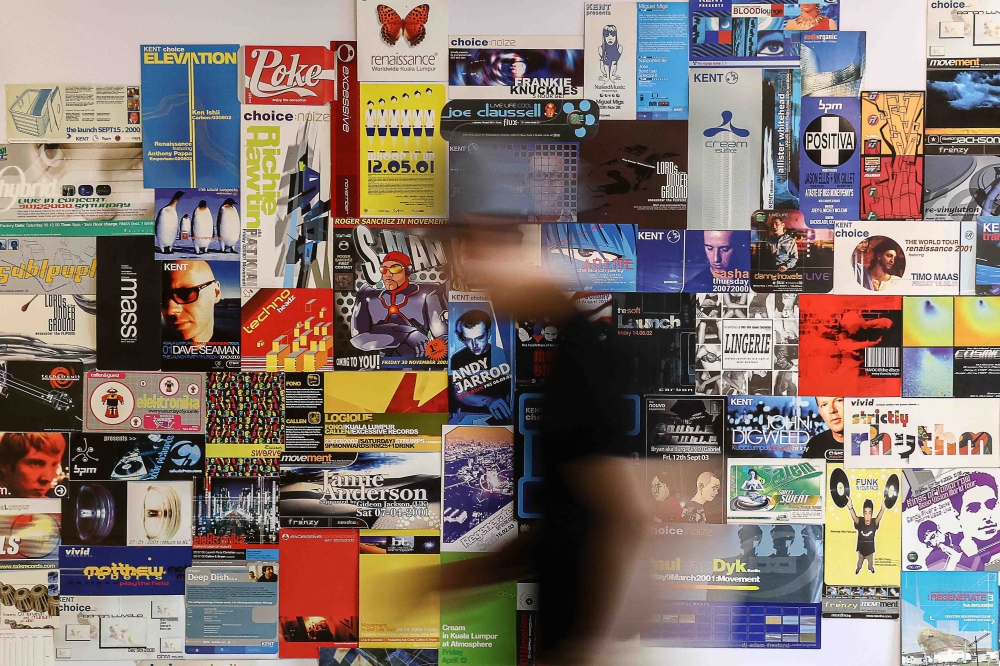
Memorabilia and artefacts from the old Kuala Lumpur rave scene are displayed at the Night Shift exhibition. — Picture by Sayuti Zainudin
For older attendees who came of age during the movement, revisiting the vintage ephemera stirs a deeply personal sense of nostalgia. Raf Margiana, now in his fifties and working as a corporate affairs director in the telecommunications sector, stumbled across the exhibition on social media and felt compelled to visit.
“When this exhibition appeared on my Threads feed, it brought back so many beautiful memories.
“I’m a father of four and in my fifties now, so seeing something like this really struck a chord with me.
“I think we belonged to a generation of clubbers who really believed in an acronym called PLUR, which stands for Peace, Love, Unity and Respect. It was essentially the fundamental philosophy we lived by,” he told Malay Mail.
Reflecting on the handmade posters and the ethos of early Malaysian clubbing, Raf noted that while the scene has shifted beyond recognition, preserving its archive remains vital for the country’s cultural memory.
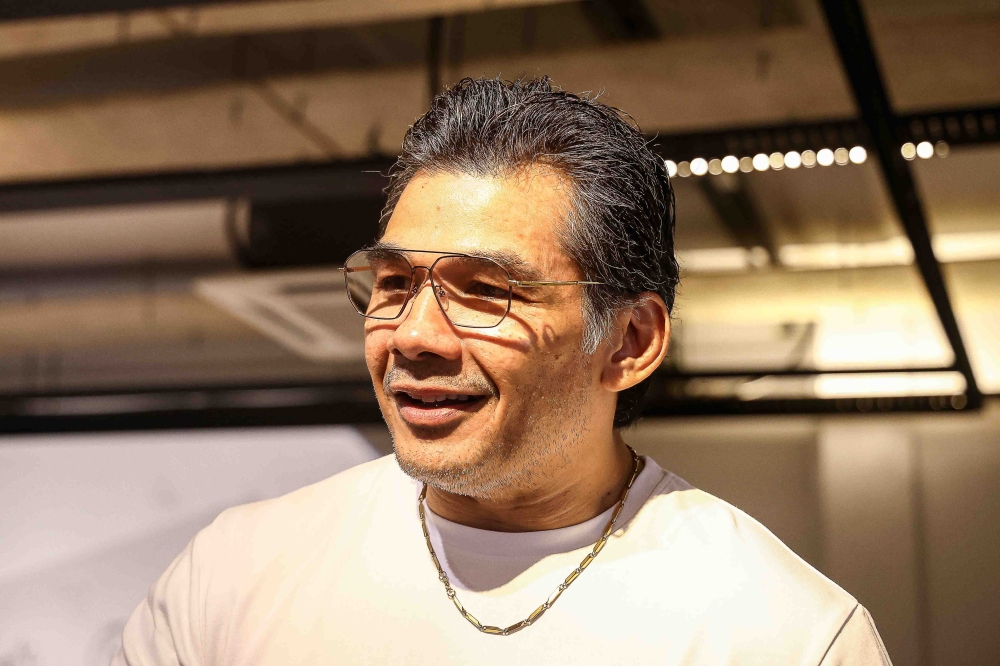
Exhibition-goer Raf Margiana visits the exhibition with his four children while reminiscing about his early days as a raver. — Picture by Sayuti Zainudin
“The clubbing scene and the atmosphere are very different today.
“I don’t think we can recreate what we had back then, nor do I think we should. That was our time, and it should remain part of our generation’s story but exhibitions like this are incredibly important,” he said.
Night Shift: When KL Went Out is open daily from 10.00am to 10.00pm at APW Bangsar until Nov 17. The exhibition forms part of the return of Urbanscapes, which has revived its multidisciplinary arts programming following a seven-year hiatus with exhibitions, installations, and performances across APW, Tun Razak Exchange (TRX), and Bangunan Sultan Abdul Samad.