
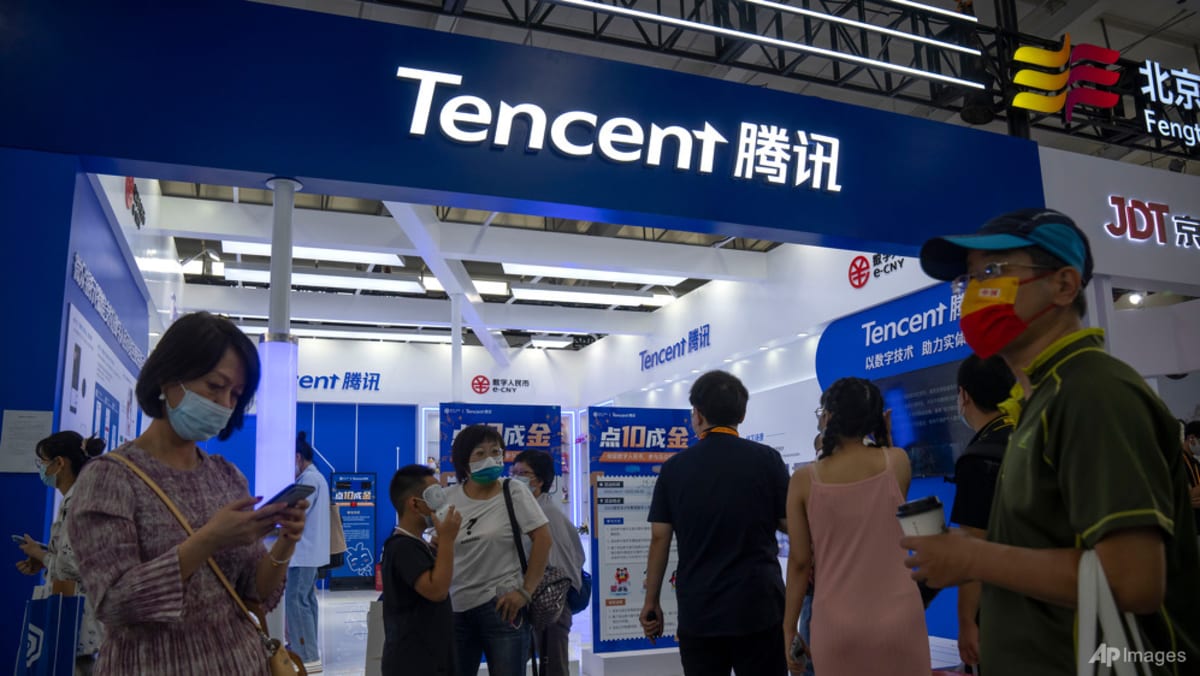
US CHIP CURB “SETS EVERYONE BACK IN CHINA”: TENCENT
Chinese tech giant Tencent on Wednesday said the new US rule on chip access “sets everyone back in China”.
“Everyone is actually having less compute, advanced compute, to work with, no matter when you actually started leasing or building capacities outside of China,” Tencent President Martin Lau said on an earnings call. Training timelines for Tencent’s next versions of its AI models would probably be impacted, he said.
“Chinese AI firms are still heavily dependent on the most frontier Nvidia chips,” said James Chai, a researcher at the ISEAS – Yusof Ishak Institute in Singapore, with new US rules on remote access cutting off a huge portion of Chinese firms’ access to compute.
A study released in October by the Institute for Progress, a US think tank, estimated that remote access to AI chips through overseas data centres could account for roughly one-third of China’s AI compute by the end of 2027.
Nvidia, meanwhile, said it is now “no longer shipping” chips including the H200, one of its more powerful chips, though not the most advanced, although the Trump administration greenlighted some sales to China, reflecting how Nvidia has toughened its stance on China following Huang’s ouster.
Analysts expect the US will step up its chip export control policies against China after Huang’s relationship with Alice Huang, a former senior executive of Singapore-based cloud computing company Megaspeed, raised US national security concerns. Earlier reporting by The New York Times suggested that US officials suspected Alice Huang was a Chinese spy recruited in part to potentially influence Nvidia to make its most advanced chips more available to Chinese companies.
Beijing has rejected claims that Alice Huang was a Chinese spy, and has called the new US rules blocking Chinese companies’ remote access to computing power overseas “economic coercion”.
Analysts and industry leaders in China say the US’s tightening of chip export control measures would ultimately accelerate China’s push to make its domestic chip industry self-sufficient.
“Over the longer run, we believe all Chinese players would actually have to rely on domestic supply chains and domestic chips, which we actually see the industry is actually progressing very fast,” said Tencent’s Lau.