
SINGAPORE – A one-two punch delivered by the authorities – the extension of a critical sales deadline for developers of large collective sale sites, along with the proposed lowering of the consent threshold for older properties – could break the current stalemate in the collective sales market.
The en bloc market has remained largely tepid since the boom cycle of 2018, with developments – especially older and bigger ones – failing multiple times in their collective sale attempts.
These policy changes could help elderly owners of ageing properties, whose wealth is often tied up in their homes, to cash out their assets.
It could also solve the problems of mounting maintenance costs and depleting sinking funds that make it harder for owners to keep their homes liveable.
But for collective sales to gain traction, development costs, financing conditions and a reasonable reserve price remain key considerations for developers, which can still landbank via state land tenders.
This is why the latest measures could provide a much needed shot in the arm to draw more collective sale sites to market, and encourage developers to bid.
First, the extension of the additional buyer’s stamp duty (ABSD) remission timelines for large redevelopment projects gives developers greater confidence to acquire bigger sites.
Large sites – those that yield at least 700 residential units but fewer than 1,400 residential units – will have their completion and sale timeline extended to six years, up from the current 5½ years.
Mega sites – those that yield at least 1,400 residential units – will have an extended completion and sale timeline of seven years.
Second, proposed lower consent thresholds for older developments could make it easier for owners to secure the mandate to proceed with an en bloc sale.
Projects between 40 years and 59 years old are set to have the current 80 per cent threshold lowered to 70 per cent, with the threshold for those 60 years and older to be lowered to 65 per cent.
If the reforms succeed in reviving collective sales and the redevelopment of ageing private developments, that would help reduce the reliance on the government land sales programme for housing supply.
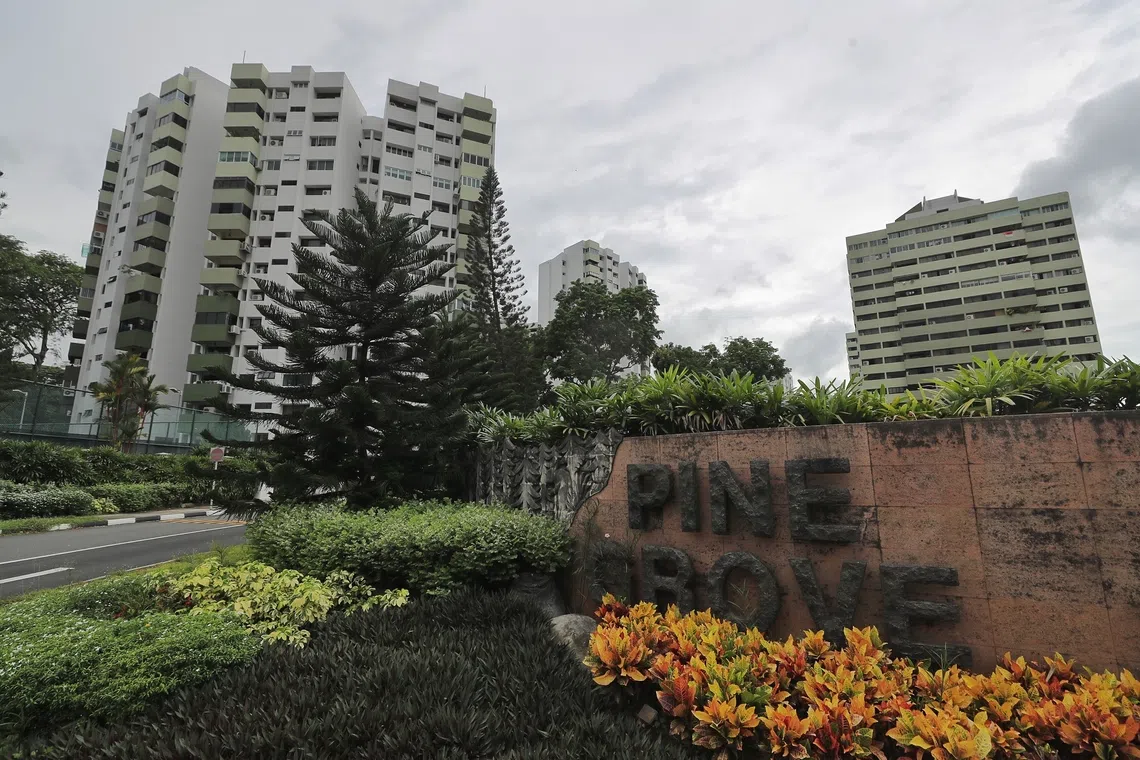
This would also help recycle and optimise land use in land-scarce Singapore. For instance, the 660-unit Pine Grove has the potential to yield 2,000 new units, while the 918-unit Braddell View could offer some 2,600 new homes if redeveloped.
Realistic pricing is key
While some hurdles in the collective sale market have been addressed, sellers still need to be realistic about pricing for developers to bite.
“Developers will continue to base their bids on residual land value, construction costs, financing costs and expected selling prices. They won’t pay more just because the rules have become more favourable,” said Terence Lian, head of investment sales at Huttons.
He added: “Unrealistic reserve prices have caused more collective sale attempts to fail than a lack of developer interest.”
Lian, who was a marketing agent for Pine Grove in its 2018 attempt, noted that a small group of owners held out for a higher reserve price of $1.86 billion, after 78 per cent had consented to $1.72 billion. This contributed to the failed effort, he said.
This especially after mega sites lost their allure following the July 6, 2018 cooling measures that significantly hiked up residential land acquisition costs for developers, and higher additional buyer’s stamp duty (ABSD) rates and lower loan-to-value limits dampened home buying.
“In many en bloc exercises, the critical last few percentage points to making the consent threshold can become swing votes. Those owners know their consent is crucial and may hold out for a higher reserve price before signing,” Lian said.
But with the lower consent thresholds for developments aged 40 to 59 years, as well as for those aged 60 years and above, collective sale committees today are “less likely to be held hostage by the last few percentage points,” he added.
This should help preserve pricing discipline and improve the chances of successful collective sales, he noted.
Fencesitters’ concerns
Getting buy-in from home owners who may be fencesitters because of higher replacement home costs will also be critical.
Leasehold property owners, who may be deterred from going en bloc by the prospect of smaller windfalls, have to realise that these could shrink the longer they hold out. This is partly because the lease upgrading premium, which developers have to pay to bring an ageing lease back to a fresh 99-year tenure, will only get higher as the lease decays.
More clarity in the reforms is also needed in cases where an ongoing collective sale attempt has secured the 80 per cent mandate but receives a bid below its reserve price, Nicholas Ng, head of land and collective sales at JLL Singapore, noted.
“In this scenario, will owners then need to obtain 70 per cent or 80 per cent support for a supplementary agreement to accept the lower price?” he said.
Some owners of larger sites are also fretting over the shorter time line of six months to obtain the consent threshold, down from 12 months. They say a shorter window could lead to more failed attempts, wasted legal and marketing costs and seller fatigue.
Instead of a blanket six-month timeline for all projects to get signatures, some proposed that projects with more than 200 units, or projects over 30 years old, should get a longer timeline of nine months to 12 months.
While the proposed policy changes make it easier to initiate an en bloc, sellers still need to weigh the trade-offs against their desire for a hefty windfall.
This is because the collective sale process can be lengthy and complex while ABSD penalties remain hefty even with the extended ABSD remission timelines for large projects.
Legislative changes alone are unlikely to determine the pace of collective sale activity. Development costs, financing conditions and developers’ confidence will continue to play a crucial role, said Terry Wong, head of capital markets and investment services, Colliers Singapore.
At the end of the day, for the policy changes to work, the reserve price must still make sense, especially as state land supply is still being released and this remains the preferred landbanking route.
Taking all this into consideration, the reforms could kickstart another en bloc cycle, but this will likely be a more disciplined one in terms of how projects are valued and how developers bid.