
SINGAPORE – Food and beverage outlets participating in the Beverage Container Return Scheme (BCRS) are
gearing up for its rollout on April 1
by updating their processes to collect used bottles and cans.
This includes integrating the new return process into existing recycling systems, and training staff to identify the BCRS logo and support the new procedures, restaurants and hotels told The Straits Times.
Under the scheme, administered by the National Environmental Agency (NEA), customers will pay an additional 10 cents for bottled and canned drinks ranging from 150ml to 3 litres.
They will receive a full refund after returning the containers with the scheme’s deposit mark at reverse vending machines.
The Ministry of Sustainability and the Environment
announced on March 3
that some restaurants and F&B establishments with dine-in services will not charge customers the 10-cent deposit for beverage containers.
The establishments can either serve drinks in cups or glasses without the containers, or collect the containers after customers have finished the drinks, said Senior Minister of State for Sustainability and the Environment Janil Puthucheary.
Such establishments are known as “Return Right F&B outlets” under the Return Right F&B Scheme (RRFS). They will receive signs and decals to help customers identify them.
Non-participating F&B outlets will pass the 10-cent charge to customers, who can then collect their refund at reverse vending machines.
A spokesperson for the Restaurant Association of Singapore (RAS) said it is currently in discussions with NEA to organise industry town hall sessions for its members.
She added that RAS is preparing for the launch on April 1 by exploring “no-crush” storage solutions to ensure barcodes remain intact and training staff to identify the BCRS logo.
“RAS is also refining the ‘off-peak’ recouping process, where staff may consolidate and return containers during quieter hours to recover deposits without disrupting peak-hour service,” the spokesperson said.
The hotels and restaurants under Accor Group will also be participating in the RRFS. The group manages hotels such as Fairmont Singapore, Pullman Singapore Orchard and Mercure.
The group said it expects some operational adjustments, such as updating recycling processes, temporarily storing returned beverage containers in back-of-house areas, and training staff to support the new procedures.
“In practice, containers will likely be collected through existing stewarding and table clearing processes and returned in batches through the scheme’s system,” said a spokesperson, adding that operations would depend on factors such as container volumes, storage capacity and proximity to return points.
Pullman Singapore Orchard said its restaurants do not intend to pass the 10-cent deposit to consumers, and the hotel will absorb the cost as part of its sustainability commitment.
“As Pullman Singapore Orchard already has an established can recycling workflow in place, we do not anticipate major changes to day-to-day operations,” said hotel manager Jessie Lim. “Our aim is to integrate the return process into existing routines as efficiently as possible.”
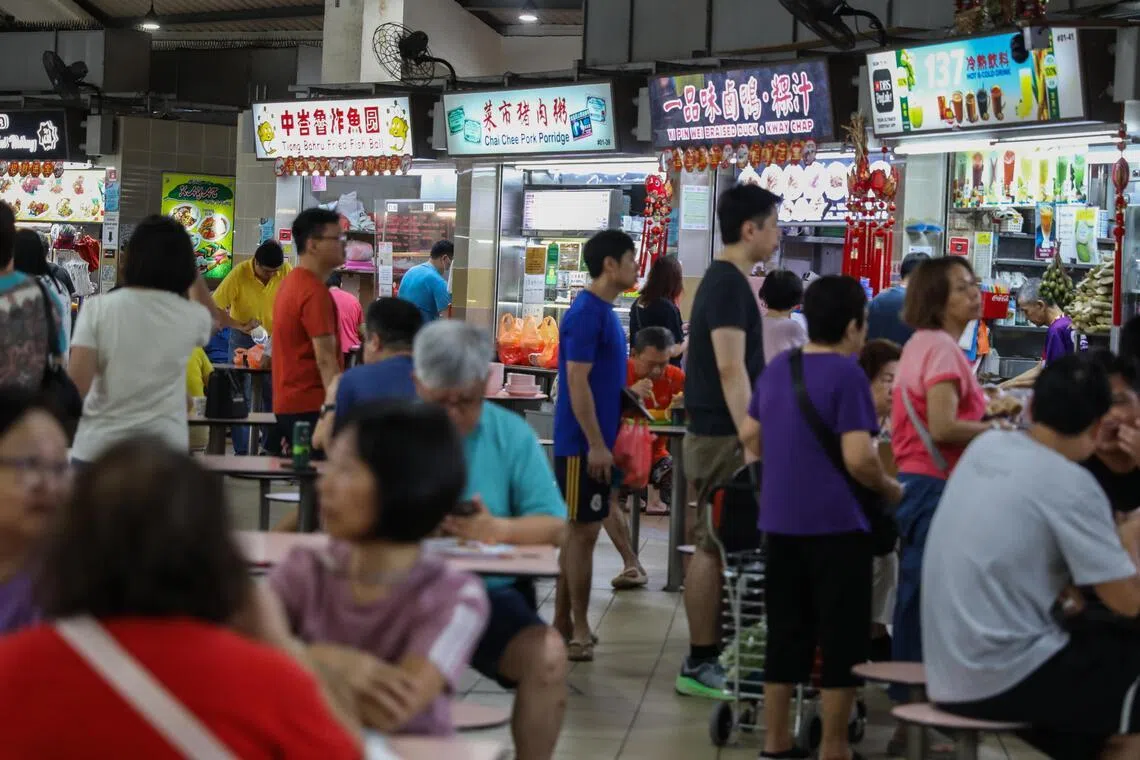
Meanwhile, some coffee shop and hawker centre operators told ST that they have not decided whether to join the scheme.
Yak Hong Coffeeshop owner Raymond Chew said that the operator is open to participating in RRFS, but better understanding of the operational requirements is needed before making a final decision.
“Space constraints and operational efficiency are key considerations for us,” said Mr Chew. “If we participate, we will likely integrate the collection of returnable beverage containers into our existing tray-return and cleaning processes and try to minimise any significant increase in manpower requirements.”
He added that although the one-time $500 grant for establishments that sign up for the scheme may be helpful, it may not fully cover the long-term costs of implementing the scheme.
Meanwhile, managing director of FoodHub Paul Kok said its coffee shops will not participate in RRFS, citing difficulties in managing the collection process as the outlets are not enclosed spaces.
Scheme operator BCRS Limited stated on its online FAQ page that it plans to offer collection services for RRFS F&B outlets that collect at least 500 containers.
However, Mr Milton Wee, owner of Wee’s Family Coffee Shop, said the accumulation of sweet drink containers may attract pests and take up significant space in smaller stores.
“100 cans is already a lot to store in the shop”, he said, noting that his store is only around 55 sq m. “On top of that, my staff will have to do extra administrative work.”
Mr Wee added that he has yet to decide whether to absorb the cost, pointing out that if many shops pass the costs to consumers, it could become an industry norm.