
SINGAPORE – Energy-saving air-conditioners, cool paint and heatwave warning systems are among measures that the United Nations wants countries to roll out to protect people in a rapidly warming world.
But the most widespread cooling technologies now tend to be energy-guzzling air-conditioners, as they are cheaper.
This is why the roll-out of alternative solutions needs financing not just from governments, but also the private sector, said Martin Krause, the United Nations Environment Programme’s (UNEP) climate change division director.
“The inefficient equipment, unfortunately, often is cheaper, and that is why the uptake from the market is higher. But we need to find a way to turn that around,” he said in an interview with The Straits Times on Sept 18.
“The scarcity of funding is maybe the biggest challenge we have when it comes to putting in place (cooling) measures that we know are working,” Krause added.
He noted that in South-east Asia, the share of less efficient air-conditioners is around 75 per cent.
The technology exists, but they need ways to scale, he added.
Beyond greener air-conditioning, other solutions that require financing include heat-reflective paint and construction materials that reduce the transfer of heat to buildings, he said.
According to a 2024 report by UNEP and the International Finance Corporation, the market for cooling solutions in developing economies is expected to grow from around US$300 billion (S$383 billion) to at least US$600 billion, per year by 2050.
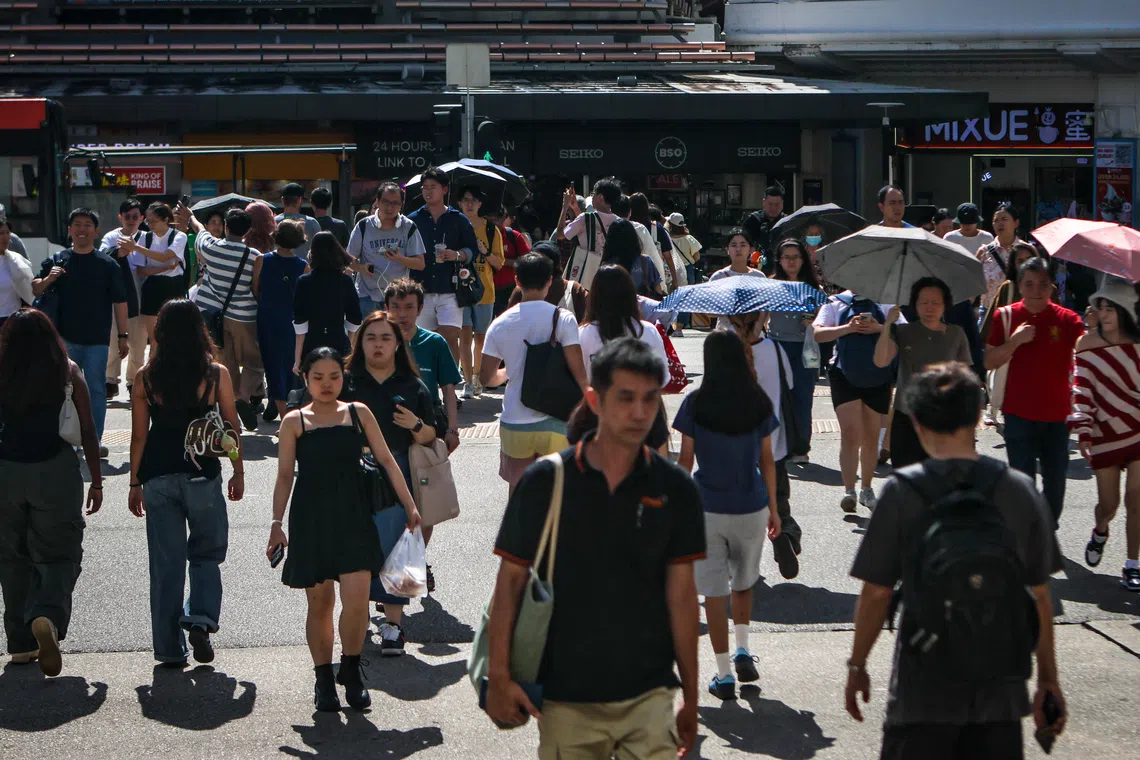
Rising temperatures due to climate change are expected to be worsened by the ongoing warming El Nino event, which is set to become one of the strongest on record, turbocharging extreme weather, heat and drought.
The Malaysian meteorological service had warned in early September that Malaysia could face extreme heat of up to 40 deg C between January and May of 2027, driven by the super El Nino.
Other than private sector involvement, Krause also pointed to the role of development banks, such as the Asian Development Bank and the World Bank, to help fund these new products that will be friendlier to the environment.
“There is always a risk with a new product line, and so companies might face higher interest if they borrow. But that is where development banks come in,” he said.
“They should take part of that risk on themselves to lower the interest rates for companies who want to borrow to establish a new product line with highly efficient (technologies).”
Krause was in Singapore to help lead the inaugural Global Cooling Pledge Assembly hosted by UNEP and the Singapore Government. It was held at the Parkroyal on Beach Road hotel from from Sept 15 to 18.

UNEP climate change division director Martin Krause speaking during the inaugural Global Cooling Pledge Assembly on Sept 17.
ST PHOTO: LIM YAOHUI
Representatives from around 60 countries, including Cambodia, Bangladesh and Japan, gathered to develop ways to cut carbon emissions from air-conditioning, while protecting populations from extreme heat risks.
Financing cooling measures, especially for vulnerable groups like rural farmers and construction workers, was a key talking point at the assembly.
At a high-level session at the assembly on Sept 18, a few novel ways to unlock finance for heat resilience and sustainable cooling were discussed.
One is the use of revenue from the sale of carbon credits.
By replacing energy-guzzling cooling technologies with more efficient ones, the reduction in emissions can be sold as carbon credits. These credits are then purchased by polluters elsewhere to offset their carbon footprint.

Financing cooling measures, especially for vulnerable groups like rural farmers and construction workers, was a key talking point at the assembly.
ST PHOTO: LIM YAOHUI
Such a scheme is being explored between Switzerland and Ghana.
Under it, the West African nation is rolling out air-conditioners that uses a green refrigerant with an ultra-low global warming potential.
The carbon “savings” are sold to Switzerland, to help the Alpine country meet its climate goals.
Singapore has set out measures to protect people from the heat. By 2030, all housing estates will be coated with cool paint that can reduce ambient temperatures by up to 2 deg C. Employers have to ensure that their outdoor workers are kept safe with shaded rest areas and acclimatisation.
From Dec 1, 2026, employers must also ensure their outdoor workers wear breathable, sweat-wicking uniforms, with ice packs or water sprays available on site in case of a heat illness scare.
Krause hopes to see more steps being taken in South-east Asia to prevent the worst impacts of heatwaves brought about by El Nino in the coming months.
These include setting up cooling shelters in advance for the more vulnerable populations in rural areas, improving early warning for heatwaves and putting a stop to outdoor work when the temperatures reach record-breaking levels.
Krause said: “Nobody has a pre-fabricated solution at this moment because this challenge with extreme heat – I wouldn’t say it’s a completely new challenge – but it is a challenge that we are now taking much more seriously than we have ever done before.”