
KUALA LUMPUR, Dec 2 — In the early days of automotive travel, safety innovations in vehicles revolved mainly around seatbelts and airbags.
With greater vehicle use and busier family routines, the hidden danger of heat buildup inside parked cars during hot weather gradually came into focus as a serious safety hazard.
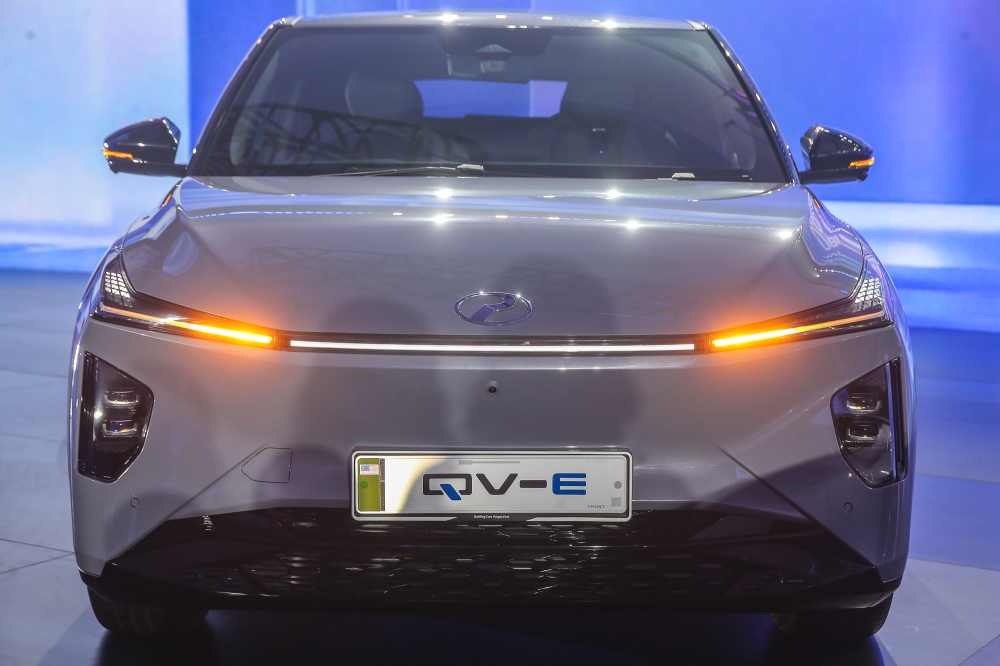
It is this very risk that the newly launched Perodua QV-E seeks to address through one of its standout advanced safety features — the built-in Child Presence Detection (CPD) system, designed as a final safeguard that could mean the difference between life and death.
In essence, the CPD serves as a critical last line of defence against pediatric vehicular heatstroke (PVH), one of the most preventable causes of child fatalities, as temperatures inside a parked car can become life-threatening to a child within minutes.
Current data shows that an average of 37 children in the United States die each year from heatstroke due to being inadvertently left in vehicles.
From 1998 to November 2025, PVH has claimed 1,040 young lives nationwide, according to obtained figures from NoHeatstroke.org.
The same study also found that at an outdoor temperature of 32 degrees Celcius, it took just 10 minutes for the inside of a car to reach 42 degrees Celcius.
Within 20 minutes, the interior temperature soared to 51 degrees Celcius.
After 30 minutes, it reached 56 degrees Celcius inside a vehicle.
Did you know that a child’s body can overheat three to five times faster than an adult’s?
At such extreme heat combined with a child’s vulnerable physiology being left inside a vehicle can quickly lead to heatstroke, potentially resulting in death within minutes.
Although current data in Malaysia remain inconclusive, at least 18 cases of fatal PVH involving unattended children — mostly infants under three-years-old — were reported nationwide between 2018 and 2025.
While fewer than crash-related fatalities, these preventable deaths are most often caused by memory lapses when a caregiver’s brain goes into “autopilot” during routine driving, leading to a child being forgotten in the back seat — a phenomenon known as the “forgotten baby syndrome.”
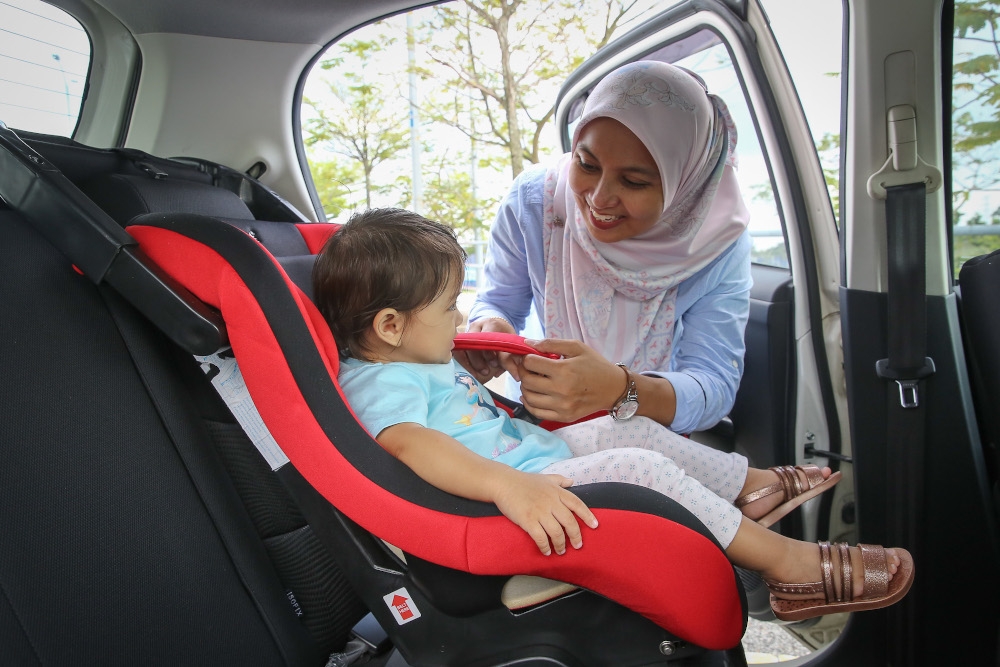
P2 — Sleep deprivation, stress, or habit memory can cause parents to follow routine drives —home to work instead of home to daycare — while a child is left in the car’s backseat, a phenomenon commonly known as ‘forgotten baby syndrome’. — Picture by Yusof Mat Isa
How does the CPD work?
For parents and caregivers juggling multiple responsibilities, the risk of accidentally leaving a child in a vehicle is very real, and the CPD system is designed to serve as an external memory aid to help prevent such oversights.
According to Perodua, the CPD system detects a child’s presence and issues an alert using a direct sensing mechanism once the vehicle is locked and the engine turned off.
The CPD device, mounted in the rear-seat headlining, emits high-frequency radio waves (millimeter wave technology) to sense the presence of a lifeform, functioning effectively in both bright daylight and fully dark interiors.
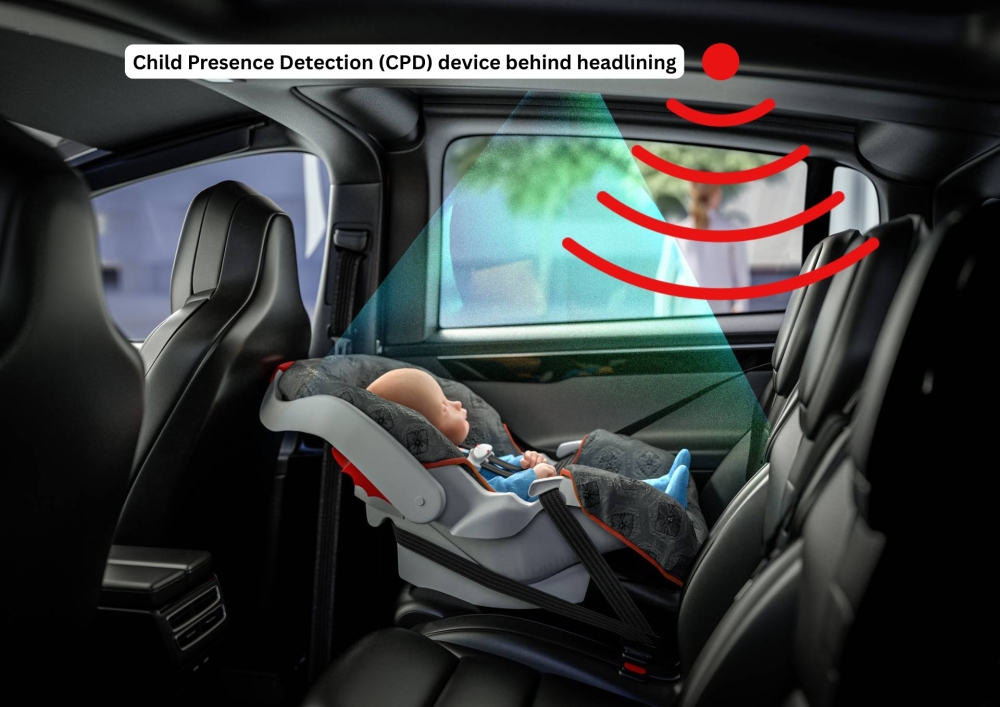
An illustration of how the CPD detects using a direct sensing system after the vehicle is locked & the engine is turned off.
The system detects subtle movement and vital signs, such as breathing, in the second-row seats and footwell area, including the ability to sense a motionless child even under fabric coverings.
It remains fully operational within a temperature range of –40 °C to 85 °C inside the cabin.
The CPD system operates in three warning stages, each with different notification types and frequencies.
In stage one, the system activates within 15 seconds of detecting a life sign, triggering the vehicle’s horn and hazard lights to alert nearby caregivers.
In stage two, if the initial warning is not acknowledged within 30 seconds, the system escalates by sending notifications to the vehicle owner’s mobile application and via SMS, while continuing to sound the horn and flash the hazard lights.
In stage three, the system continues to activate the horn, hazard lights and mobile and SMS notifications for up to 20 minutes, ensuring persistent alerts until the situation is addressed.
While these systems act as a second set of eyes — reducing human error and the risk of leaving a child in a car — parents are still strongly advised to regularly check on their children and not take their safety for granted.