
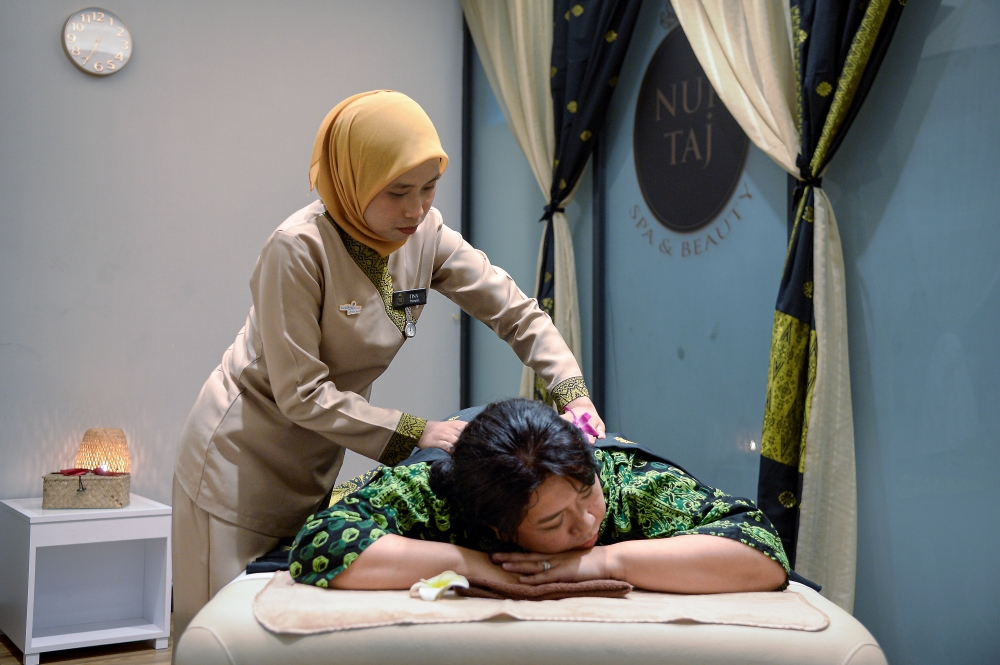
PUTRAJAYA, Aug 26 — Massage is among the preferred methods for relieving body aches, with Thai and Balinese massage being popular techniques offered by spas and wellness centres in the country.
However, many may not be aware that Malaysian massage is equally distinctive, offering a unique experience through a combination of elements from four cultural heritages in a single treatment.
Drawing inspiration from Malay, Chinese and Indian massage techniques, as well as those of the indigenous communities of Sabah and Sarawak, Malaysian massage offers more than just a way of relieving bodily aches.
Nur Taj Spa & Beauty founder Selinastein Mohd Rashid said the massage introduces local culture into the spa industry through traditional techniques, equipment and ingredients that form part of the community’s heritage.
She said the incorporation of traditional elements was not merely aimed at creating a different experience, but also at reviving practices of past generations in modern life.
“Malaysian massage begins with a foot-soaking ritual. In the past, when returning from outside, elders would usually ask us to wash our feet before entering the house. Inspired by this practice, we created the Malaysian foot soak, using traditional ingredients such as kaffir lime, betel leaves and pandan leaves.
“This is followed by Qigong breathing from the Chinese community, Indian head massage from the Indian community, as well as Malay and indigenous techniques from Sabah and Sarawak, which are highly unique and form a key part of Malaysian massage,” she told Bernama after the opening ceremony of Nur Taj Spa & Beauty Putrajaya here.
Selinastein said Malaysian massage, introduced by the Ministry of Tourism, Arts and Culture (MOTAC) as a tourism product in 2017, does not rely on machines, instead retaining hands-on massage techniques for clients, including those from South Korea, India and the Maldives.
“Even though we are now living in a digital age where people tend to rely more on machines, traditional techniques are actually gaining greater appreciation.
“Some say it is very different and relaxing because they have experienced various types of massage before, and Malaysian massage offers something unique,” she said, adding that practitioners must undergo six days of training with a MOTAC-accredited master trainer before being awarded a certificate.
Selinastein said efforts to introduce Malaysian massage internationally are also being intensified through demonstrations in several major cities around the world, including New York, the United States; London, the United Kingdom; Berlin, Germany; and Guangzhou, China.
She said that through collaboration with the Malaysian Spa Association, practitioners overseas are also being trained, paving the way for Malaysian massage to be included in international spa menus.
“We want spas overseas to have Malaysian massage on their spa menus. At present, therapists from several countries have already undergone training. With Visit Malaysia Year 2026, we are further promoting this and moving as quickly as possible,” she said.
Meanwhile, National Heritage Department Director-General Mohamad Muda Bahadin said Malaysian massage could be considered part of the country’s heritage even though it has yet to be gazetted, as the art represents skills and knowledge practised by the Malay, Chinese and Indian communities as well as those in Sabah and Sarawak.
“Not every form of heritage necessarily needs to be gazetted, but we are taking the initiative to ensure that such knowledge is preserved, passed down and practised,” he said, adding that incorporating the skills into the spa industry provides an opportunity for Malaysian massage to be promoted as a national tourism product. — Bernama