
SINGAPORE –
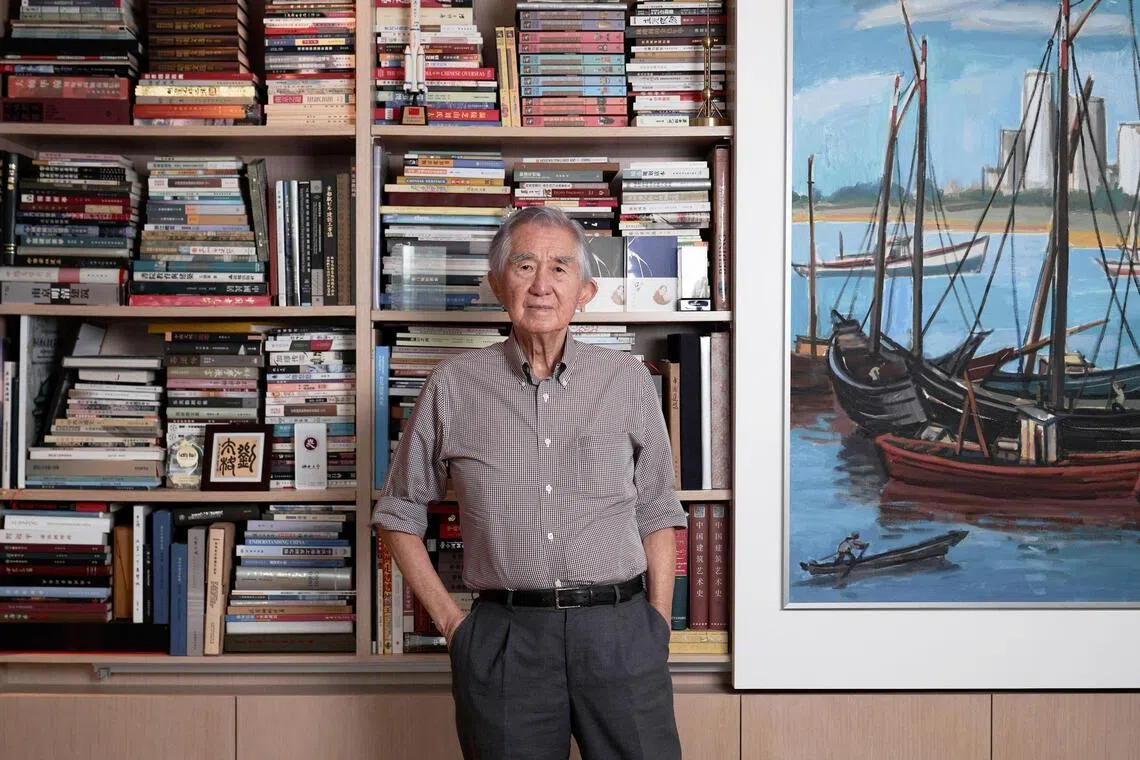
Dr Liu Thai Ker
, the would-be artist who turned his mind to architecture and shaped the face of modern Singapore, was a highly driven person with a deep interest in building liveable cities, said those who knew him.
They said his legacy will be remembered in the neighbourhoods and public housing that many Singaporeans call home.
In the wake of
his death at age 87
on Jan 18, tributes poured in from public figures and those in the architecture community.
Prime Minister Lawrence Wong said in a social media post on Jan 18 that Dr Liu – who spent 24 years in the public service – went beyond delivering new flats. He helped design and build complete new towns, with neighbourhood centres, green spaces and community facilities thoughtfully integrated from the outset.
“He often said that to build a city, one must have the heart of a humanist, the mind of a scientist, and the eye of an artist. These ideals ran through his life’s work. The buildings, homes and public spaces that Singaporeans use every day stand as a quiet testament to his dedication and vision.
“Singapore is better because of Thai Ker’s service,” PM Wong added.
President Tharman Shanmugaratnam noted in a separate post that Dr Liu was also a pioneer in conserving unique, historic districts near the downtown business and financial centre.
He said that he admired how Dr Liu remained active in his 70s and 80s, contributing to urban planning in more than 50 cities abroad, including in China, Saudi Arabia, and Russia.
“Till the end, he remained convinced that making the city better would raise the quality of life and people’s spirits. That will remain Dr Liu Thai Ker’s legacy,” Mr Tharman added.
Minister for National Development Chee Hong Tat said in a Facebook post that Dr Liu oversaw the development of about half of Singapore’s more than one million public housing apartments, holding roles like the founding chief executive of the Housing Board as well as the first chief executive of the Urban Redevelopment Authority.
Mr Chee said he last met Dr Liu about two weeks ago.
“As always, he spoke with clarity and conviction about Singapore’s urban future, generously sharing his ideas and reflections on how we can continue to dream boldly and build our city better. This is a testament to his lifelong dedication to public service and this country he cared so deeply about,” he said.
“Dr Liu Thai Ker’s legacy will live on in the beautiful neighbourhoods we call home, this dynamic garden city we are proud of, and the generations of people whom he has inspired over the years.”
Some members of the architecture community also spoke warmly of Dr Liu’s energy, convictions and the influence he had on their professional lives.
One of them was sociologist Chua Beng Huat, who recounted meeting Dr Liu in the 1980s, when the then chief executive of HDB advertised a job opening for a sociologist.
When Dr Chua asked what Dr Liu expected a sociologist to do at HDB, Dr Liu said: “I don’t know what I expect, but I know I need a sociologist.”
Dr Chua said Dr Liu was keenly aware that HDB’s work goes beyond planning housing estates and designing flats. He knew he needed to have knowledge of how residents live their daily lives to improve the design, planning and management of these estates.
Dr Liu established a social research unit to conduct field studies and translate issues into researchable questions, using the findings to develop administrative and policy solutions, Dr Chua told The Straits Times.
The work Dr Chua did as part of the social research unit sparked an abiding interest in public housing policies throughout his later academic career, which he credits to Dr Liu.
Architect and professor at the National University of Singapore Lam Khee Poh added that he first met Dr Liu in the late 1980s, when the latter offered him his first consultancy job, which Prof Lam said greatly influenced his career path.
Prof Lam said: “His constant aspirational drive towards higher ideals has never ceased. Indeed, this motivation has energised his entire life till the very end.”
As recently as last month, Dr Liu was still making public appearances.
A spokesman for the Singapore Institute of Planners said Dr Liu shared words of encouragement with industry colleagues at an event in December, reminding them that though urban planning as a profession is not yet well appreciated, they must work hard to help the world create a better environment.
But urban planning was only one of Dr Liu’s interests.
Director of home-grown architectural firm RT+Q Architects Rene Tan told ST he was immediately struck by the “completeness” of Dr Liu when they first met in the 1990s.
“He represents the consummate architect to those of our generation. I have known Thai Ker as a creative individual, an architect, a city planner – and a gentleman of culture and the arts,” he said.
“His contributions to Singapore are untold. He leaves behind a legacy that all citizens of Singapore should discover, rediscover and cherish,” Mr Tan added.
Dr Liu served as chairman of the National Arts Council from 1996 to 2005. He was born in 1938 to the pioneering artist Liu Kang and wanted to pursue art like his father, but after his mother objected, he studied architecture instead.
Singaporean jazz pianist and musician Jeremy Monteiro shared personal anecdotes about how Dr Liu often supported his performances.
“He was often at my performances, both concerts and smaller club gigs. He was always very kind to me.
“He was always steady, calm and measured but there was an underlying passion and energy for everything he did which was very apparent,” Mr Monteiro added in a Facebook post.
President of the Singapore Institute of Architects Tiah Nan Chyuan told ST that Dr Liu came across as a gentleman and was very open and humble.
“His contribution to Singapore is on public record. But what stood out for me was the fact that he started his own firm at 79. At that age he is still curious about the world and wants to contribute to the betterment of everyone.”
“That is really the measure of the man.”
-
Additional reporting by David Sun