
SINGAPORE – When the first vaping offender was caught under the temporary anti-vape laws on Sept 1, 2025, a team at the Health Sciences Authority (HSA) broke into cheers.
They were relieved their new digital system, which was developed in three weeks, did not crash.
It and the Government Technology Agency (GovTech) had raced to build the new Vaping Information System (VIS), a one-stop platform used by enforcement officers to handle vaping offences.
Today, it handles over 5,500 cases of vape offenders which includes tracking features for enforcement, information-sharing between agencies, and addicts’ rehabilitation progress.
Since vaping was banned in Singapore in 2018, it had largely been treated as a smoking issue.
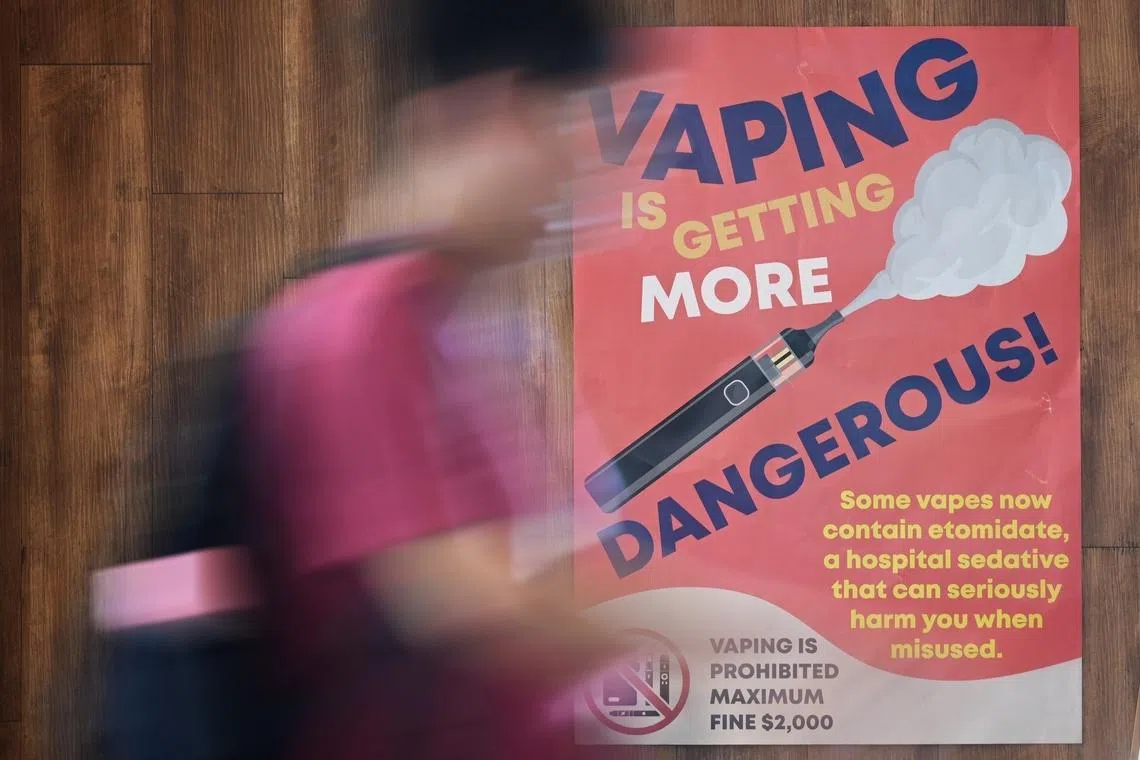
But in mid-2025, reports emerged of Kpods, which are vapes laced with the anaesthetic agent etomidate, causing users to suffer from seizures and psychotic episodes.
The Government moved to temporarily list etomidate as a Class C drug under the Misuse of Drugs Act from Sept 1, 2025, imposing tougher penalties and a rehabilitation framework.
For HSA, it meant an overnight shift in operations.
Ms Annie Tan, director of HSA’s enforcement branch, said the biggest hurdle was transitioning from primarily issuing fines to managing thousands of complex cases involving investigations and rehabilitation.
She said: “The system we previously had was solely for enforcement, and was not built to tackle the new issues brought about by vaping.
“We were now looking at rehabilitation, which we had not dealt with before. We had to build this into the new system.”
When an offender’s name is keyed into VIS, it pulls up their personal details and all past vaping records. These include how many times they have been caught, sent to rehab, investigation findings and past actions taken.
It also tells officers what action to take, that may involve issuing a fine or even an immediate arrest.
Ms Tan said: “VIS was built to reduce the harms of vaping, to take quick action and to capture more of such cases. It tracks a person from the point they are caught until they finish rehab, helping them kick the habit.”
Before VIS, HSA relied on a simpler registry rolled out in December 2023, which only facilitated the issuance of composition notices and fine payments.
Before that, officers relied on manual paper forms that had to be physically brought back to the office before a fine could even be issued.
Ms Tan added: “We have gone from that to VIS, which allows us to do it on the spot, removing a lot of manual processes and saving time.”
Building this platform fell to a team of fewer than 10 people, including HSA’s chief information officer, Mr Siva Raj Komarasamy, who was seconded to HSA from GovTech.
They faced a dauntingly short runway to deliver a system that would be used by 13,000 officers across various government agencies.
These officers include those from the Ministry of Home Affairs, Land Transport Authority, and Ministry of Manpower.

A screenshot of the Vaping Information System interface showing mock data. Since its launch in September 2025, the system has managed over 5,500 cases of vape offenders.
PHOTO: GOVTECH SINGAPORE
Instead of building from scratch, the team stitched together eight existing GovTech products.
They integrated form and case management systems, linked them with delivery systems, and wove in the Health Appointment System to handle rehabilitation scheduling.
When VIS was deployed at the stroke of midnight on Sept 1, 2025, the tech team waited anxiously.
Mr Siva Raj said: “We were monitoring it closely, knowing there were thousands of officers on the ground who would be using VIS. I was awake till about 2am to make sure everything went smoothly.”
The first case recorded in the system was a 50-year-old man who was caught with a regular vape by a police officer at 12.40am.
He was issued a $700 fine.

In the seven months since its launch, VIS has been used to log cases of over 5,500 offenders.
With new, permanent anti-vaping laws set to kick in on May 1, the system will need further updates to reflect revised fine amounts and a more robust rehabilitation regime.
The authorities also remain on high alert for other illicit substances that might be introduced into vapes in the future.
Ms Tan said: “It will be a challenge. But looking at the situation in Singapore right now, compared to other jurisdictions, I think we’ve made the right decision and taken the right stance against vaping.”