
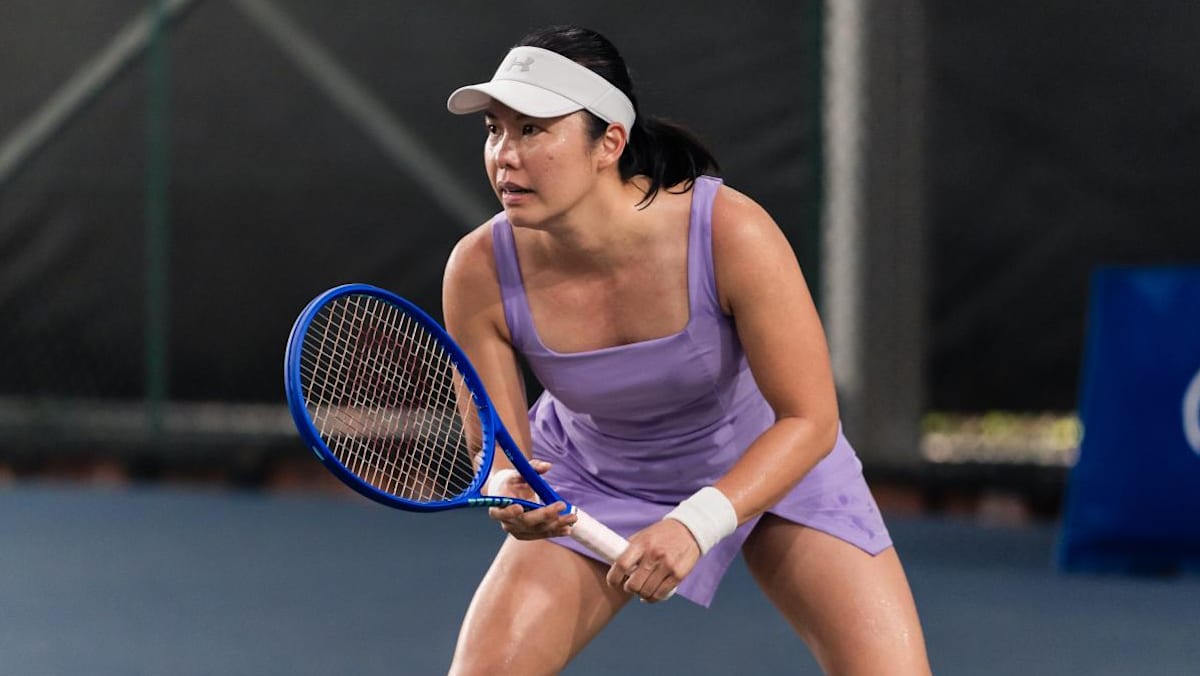
After graduating from the National University of Singapore with an English literature degree, she began pursuing tennis full-time in 2014.
She worked three jobs and took out loans to pay for a training stint at Barcelona’s Sanchez-Casal Tennis Academy, where she worked as a dormitory warden.
In her mid-20s at that point, she stuck out among the other students who were mostly aged 12 to 16. She described this chapter of her life as “very unique” and a “rare privilege”.
“I just knew that I was there to play, and I was there to try and become as much of a player as I could be,” she said.
“We fall into this trap of comparison so much in Singapore, because I think that’s the way we’ve been taught to survive, and also the way we’ve been taught to function and engage our worth.”
“GO AND CHASE YOUR DREAM”
In 2018, Pang reached one of the lowest points in her life – she had only S$1.87 in her bank account, meaning she had to cut her season short.
Raising funds to travel and compete, which can cost hundreds of thousands of dollars, was tough for her, given that it is not in Singapore’s social culture to ask for support, she said.
She recounted her anxiety over showing a fundraising campaign video to a security guard at the building she worked at. He then took out S$10 from his wallet and handed the bill to her.
“He said: ‘Girl, go and chase your dream.’ It’s moments like this that … just made me realise, wow, it’s so deeply humbling,” she added.
“When I step on court, I step on court for the pride of my flag and my colours, and I step on court for everyone who has donated, supported the journey.”
INTERNAL GROWTH
When the COVID-19 pandemic hit in 2020, Pang said she was grateful for how it forced her to grow.
The world ground to a halt – including international tennis tournaments – just a year after she made the WTA rankings.
“While COVID reset all of that work, (it) also forced perspectives of internal growth that, had I stayed on that hamster wheel, I don’t think I would have had the chance to uncover,” she said.
She added that she has a message for her future self: That the best and deepest way of service to her community is to have the courage to live authentically.