KUALA LUMPUR, April 6 — After being torn apart from their youngest sister Prasana Diksa 17 years ago, M. Indira Gandhi’s two older children just want her to know that they love her.
Karan Dinish, who will be turning 28 later this year, also wants his younger sister to know that she will always be a part of the family.
“To Prasana: I want you to know that you have always been loved and missed deeply. Not a single year has gone by without us thinking about you.
“No matter where you are or how life has been for you, you will always have a place with us.
“We are your family, and we have never given up on you. No matter what or who you choose to be, we will have your back as a family,” he said when sharing his message with Malay Mail, ahead of the police’s scheduled update today at the High Court in Ipoh on finding Prasana by tracking down her father.
On April 8, Prasana will turn 18 years old, which means the authorities will no longer be legally-bound to find and reunite her with her mother and siblings.
A missing piece, what if Prasana was with us?
Indira’s eldest daughter Tevi Darsiny, who will be turning 29 later this year, said growing up without Prasana all these years has been an “undescribable feeling and situation” for her.
While “life goes on normally” as she continued going to school, university and now work, Tevi said: “But there is always a void. A missing piece and a not complete feeling.”
“I always have the thought that ‘would it be different? Would I be a different person than I am now, if she has been with us all this while?’” she told Malay Mail.
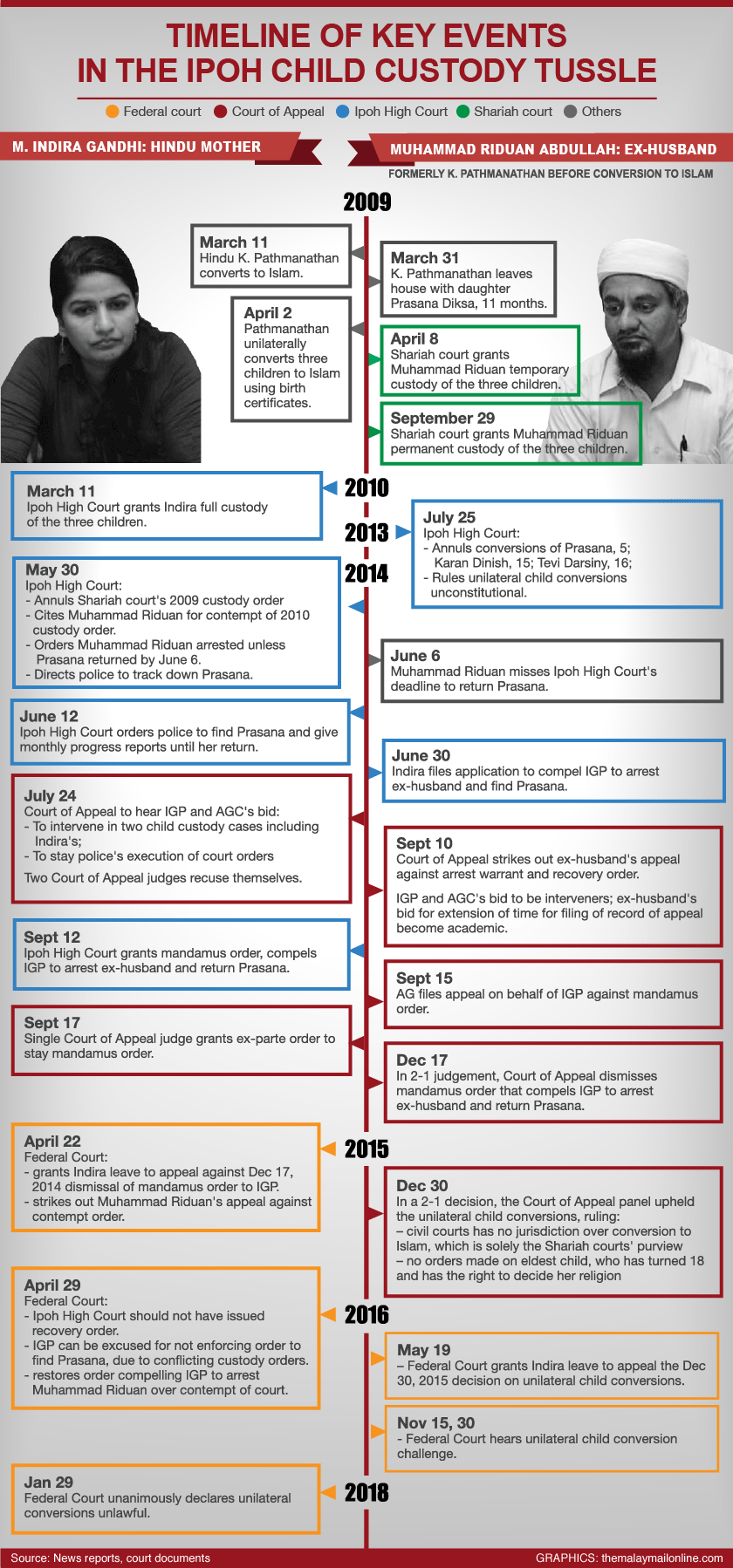
On March 31, 2009, their father K. Pathamanathan disappeared with Prasana, after snatching the 11-month-old baby from the then 12-year-old Tevi at their home.
“And there is always the guilt of how I couldn’t bring her to safety before my father snatched her from me (I was carrying her on the night my father took her away).
“There is always that nagging thought, where if I could’ve acted a little faster, she would’ve been with us now,” Tevi said.
After snatching away the youngest child, K. Pathmanathan used his three children’s birth certificates to convert them to Islam without Indira’s knowledge and consent, and went to the Syariah courts to get custody over them.
The case became one of the highest-profile fights for child custody in Malaysia, with Indira winning custody over all three children in the civil courts with a court order to track down her ex-husband and recover Prasana.
If you are wondering about the two conflicting custody orders in the Syariah courts and the civil courts:
- A Federal Court decision in a separate similar case involving S. Deepa in 2016 confirmed that it is the civil courts that have exclusive jurisdiction to grant divorces and custody orders for children born in a civil or non-Muslim marriage, and it is an abuse of process for the Muslim convert spouse to file for child custody in the Syariah courts.
- In the civil courts, custody was still granted to Indira. In other words, Indira is still the one granted custody of all three children.
Along the way, the highest court in Malaysia ruled that Pathmanathan’s unilateral conversion of the three children was illegal and invalid, as both parents’ consent are needed for religious conversions.
At the heart of all these legal battles is a mother separated from her child for 17 years even when the courts said she should be the one raising her, and also the two older siblings who never got to grow up with her.
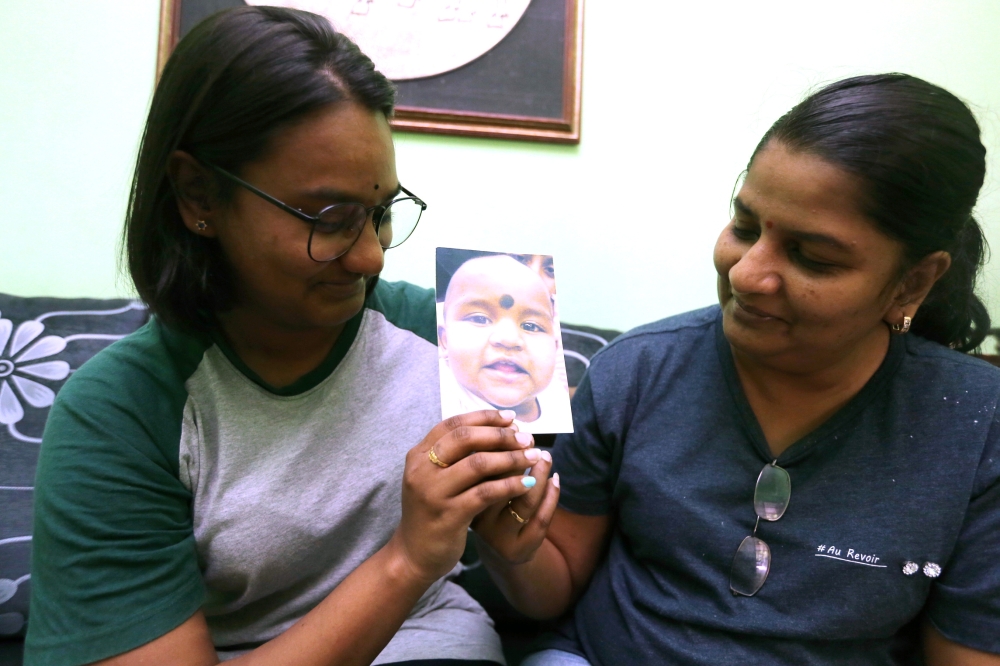
Tevi was just a child when her sister was snatched out of her hands, and has spent the last 17 years holding on to the memory of Prasana as a baby. She is seen here in 2018 with Indira and Prasana’s photo. — File picture by Farhan Najib
Tevi said going through life with the court case, court proceedings and even going to Parliament sittings has been “tough in all ways”.
“The case started when I was 12 and the teachers at school, and even some students would come to me and say ‘why don’t you follow your dad’.
“The challenges of understanding what’s happening and what would happen was tough.
“And as we grew up and had a lot of exposure to religious rights and child rights, a different challenge came on, to educate myself and the people around — all with the thought of if my sister is here, she could learn all these,” she said.
As for her message to Prasana, Tevi said: “I would start with saying I’m sorry: Sorry that you had to go through all this confusing stage, and that you are separated from us for this long time.
“Regardless of what you want to do, and who you choose to be, we will stand by you all the way.”
Prasana, we are still waiting for you
Karan said growing up without Prasana “has left a gap in our family that has never been filled”.
He added that he always thought about Prasana’s welfare and wondered what struggles she was going through.
“As a brother, she is not here with us… for me to protect my little sister,” he said.
Karan said these 17 years without Prasana have “not just been about personal loss, but also about resilience”.
“As a family, we have gone through court processes, public attention, and moments of hope and disappointment.
“Being part of efforts like the March for Justice and following the legal journey has been emotionally challenging, but it also strengthened our bond as a family,” he said, referring to their march with supporters last November to Bukit Aman.
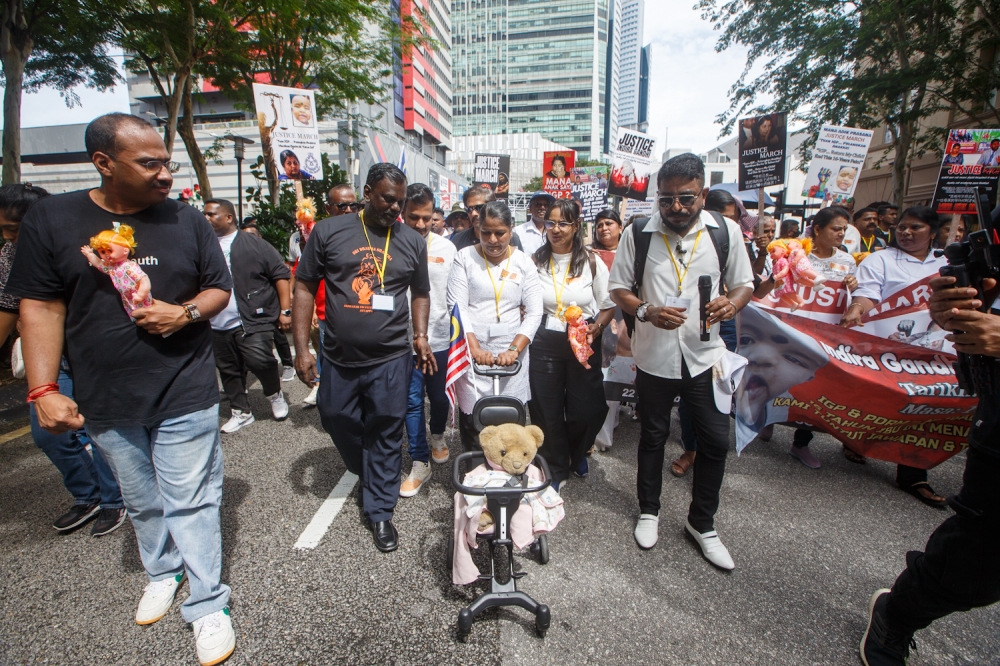
Tevi, Karan and their mother Indira, together with their supporters, walked in the “March for Justice” from Sogo Kuala Lumpur to Bukit Aman last year to get the Inspector-General of Police’s help to recover Prasana. — Picture by Raymond Manuel
“Coping has not been easy. Knowing that you would not recognise your own sibling — even if she crosses us, or even if we have met her before — is something not easy to cope up with.
“There are times of sadness, frustration, and even helplessness. But at the same time, we hold on to hope.
“Prasana is not just someone we lost, she is someone we are still waiting for,” he said.
What we wish for Prasana
“All that I have ever wished for is her safety and wellbeing, and that she has had her basic needs covered like her medical and education,” Tevi said.
Karan said his “biggest wish” while they are still separated from Prasana is for her to be “safe, healthy, and surrounded by kindness”.
“I hope she has had the opportunity to grow up with love and care, and that she knows, somehow get to know that she has a mother, an elder sister and an elder brother — whom she might not know we exist — is still waiting for her to come back at least just to see and speak a few words.
“I also wish that she had her chance at life, to complete her education and to freely do what she wants to do with her life,” he said.
What we want everyone else to know
Both siblings said they were truly and deeply grateful to all those who have helped and supported the family over the years.
Tevi’s message to the public is this: “If there’s something we learnt along the way, is that our story has had more impact in so many ways for so many people, with the case being the precedent and with the Parliament amendment and how our case has brought many families out to find justice for themselves.”
She was referring to the proposed change to Malaysia’s law — the proposed introduction of Section 88A into the Law Reform (Marriage and Divorce) Act, which she and her mother had been present in Parliament for.
Section 88A would have required both parents to agree to the child’s — from the non-Muslim marriage — conversion to Islam (subject to the child’s wishes if they are 18 years old), if one of the spouses has converted to Islam.
But Section 88A did not become law as it was withdrawn from the Bill that was passed in Parliament in 2017.
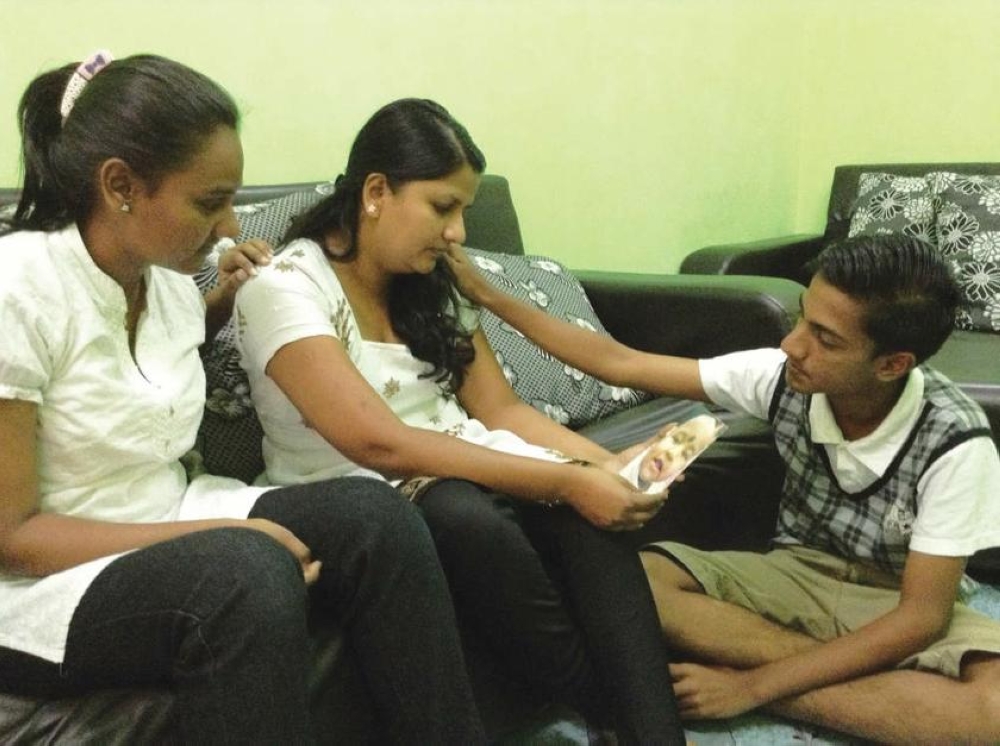
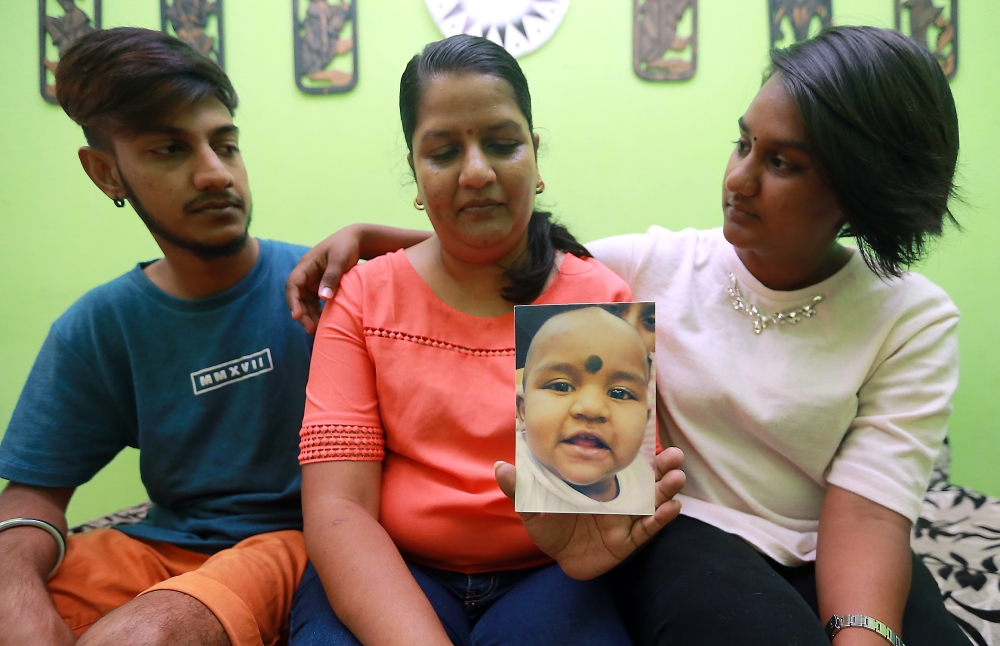
Tevi (left) and Karan comfort their mother Indira Gandhi, who is seen holding a photograph of Prasana Diksa. The last time they saw Prasana Diksa was in court when the child was one and a half years old, and they have never seen her since. — Malay Mail picture
“This is not just our family’s story, it reflects the importance of justice, compassion, and the protection of families. We are deeply grateful to everyone who has supported us over the years,” Karan said.
“At the same time, we kindly ask the public to be mindful when commenting on this matter. Without a full understanding of the situation, certain remarks can come across as insensitive.
“As family members, seeing such comments is deeply hurtful and only adds to the pain we have carried for so many years,” he said, noting some Facebook comments suggested the father had an illicit relationship with the child.
Tevi also highlighted other inappropriate comments and reactions on social media, such as those who react “haha” on social media posts.
“How is our story funny? And some of the comments are just truly saddening on how people are just ignorant.”
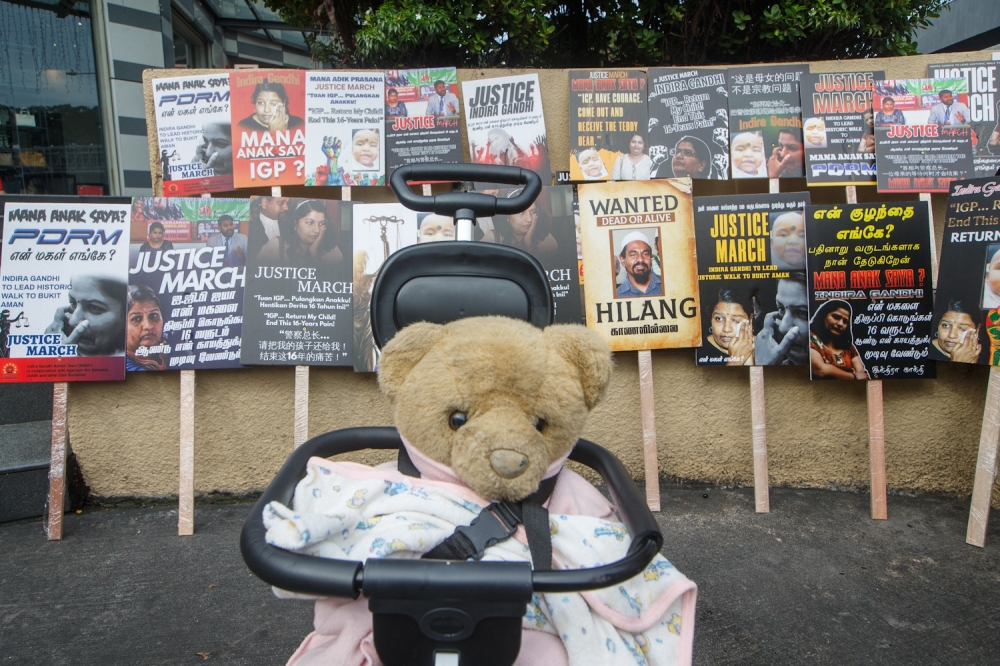
This teddy bear belonged to Prasana and has been kept by her mother and siblings, even until now, 17 years after she was snatched away at 11 months old. — Picture by Raymond Manuel
If I can meet my sister…
“If I am able to meet Prasana again, the first thing I would want to do is simply spend time with her, to get to know her as a person, to hear her story, and to rebuild the bond that was taken away from us.
“I also would like to give her anything that she has wanted for a long time, or some things that she has missed in her childhood because of this issue,” Karan said.
Tevi said she would probably look at Prasana for a good, long time if and when she meets her, after “17 years of still holding on to the memory of her as a baby.”
“And get to know her more definitely, catch up on how she’s been doing.
“And get her a bigger dress than the one we bought for her one-year-old birthday,” she said.