
SINGAPORE – For Kiara Winnepenninckx, moving overseas alone in 2026 to start university in Canada means facing everything that could trigger her greatest fears.
The 18-year-old, who has autism, can be overwhelmed by unfamiliar places, disrupted routines and meeting new people. As her departure on Aug 29 drew closer, panic attacks, emotional breakdowns and episodes of self-harm became more frequent.
Thankfully, she will not be making the journey alone.
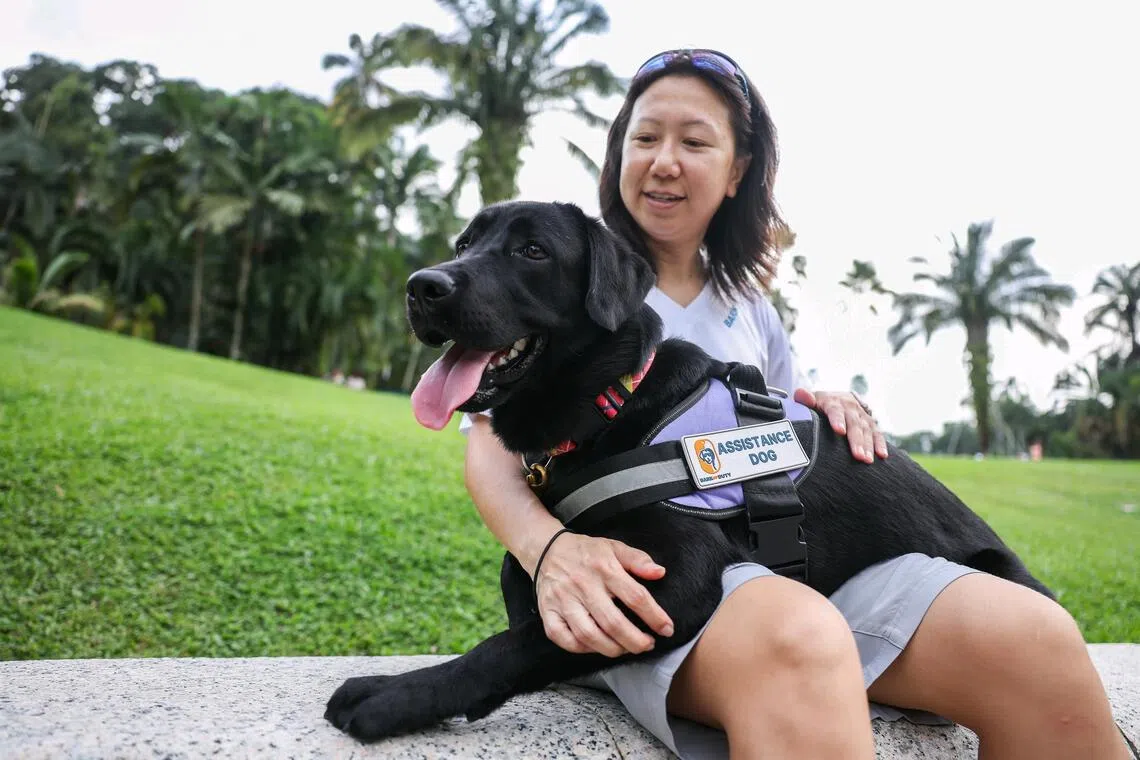
By her side is Milo, her family’s four-year-old black labrador retriever and one of the first autism assistance dogs trained in Singapore.
Milo is trained to nudge Winnepenninckx to interrupt self-harming behaviours, lean against her to provide deep pressure therapy to ease anxiety, and offer steady companionship that gives her the confidence to navigate an unfamiliar world.
The year-long training was demanding. Between formal sessions with trainer Christine Ho, Winnepenninckx’s mother reinforced Milo’s training at home while Ho provided structured coaching and adjusted the programme when challenges arose.
“I’m incredibly proud of Milo,” said Winnepenninckx, a Singapore permanent resident whose Belgian family moved here in 2007. “And honestly, I want to say I’m proud of myself too.”
Autism assistance dogs are more common in countries like the United States, Britain and Australia. Ho, founder of Bark of Duty, a social enterprise that trains assistance dogs, said many Singaporeans are unfamiliar with assistance dogs or associate them only with guide dogs for the visually impaired.
Public concerns over dogs in restaurants, on public transport and in other shared spaces, coupled with the long-term commitment required from families, continue to limit demand for such dogs, she said.
Training an autism assistance dog is also costly. Families training their own dogs typically spend $7,000 to $10,000 over one to two years, while professionally trained assistance dogs can cost from $25,000.
Not every dog makes the cut. Prospective dogs first undergo temperament assessments before their learning, which covers obedience, public access skills, confidence building and disability-specific tasks.
“Owners must manage the unavoidable reality that despite the significant investment, not every dog will meet the rigorous standards required to qualify as an assistance dog,” Ho said.
She has completed the training for two assistance dog teams in Singapore, including Winnepenninckx and Milo, who were certified in July by Bark of Duty. Ho graduated from the master dog trainer programme in the US with Highland Canine Training, a company that provides and trains pet dogs and a range of working dogs.

Kiara Winnepenninckx (second from right), 18, finds comfort in having Milo (lying on the ground), an autism assistance dog, with her.
PHOTO: COURTESY OF KIARA WINNEPENNINCKX
The dogs are trained for tasks tailored to each individual. They can interrupt harmful repetitive behaviours such as skin-picking or head-banging, prevent children prone to wandering from running into danger, and provide companionship that encourages confidence and social interaction, she said.
Researchers say the benefits are promising, though the evidence is still emerging.
Senior psychologist Bonnibel Tan from KK Women’s and Children’s Hospital said: “Although some families report benefits, it remains unclear whether autism assistance dogs provide consistent benefits beyond those that may also arise from having a well-matched companion dog.”
Given the costs and resources involved, families need to consider whether resources might be better directed towards interventions with stronger evidence, such as behavioural therapy or speech and language therapy, she said.
Families must also consider the cost and availability of specialised training, the child’s comfort and safety around dogs, their capacity to care for the animal, housing and public-access considerations, and the dog’s welfare, she added.
Still, autism assistance dogs may provide meaningful complementary support for some, she said: “They are consistently present, respond to trained cues without making complex social demands, and provide predictable sensory or emotional companionship.”
For some people with autism, interacting with a dog may feel less socially demanding than interacting with another person, she added.
Clinical psychologist Ronina Stevens, director of The Other Clinic, which supports mental wellness, said such assistance dogs are not a treatment for autism.
Research is still developing, though evidence suggests they can improve safety, emotional regulation, community participation, and quality of life, she noted.
“They do not reduce autistic traits,” she said. “Rather, they help the individual navigate an environment that is often overwhelming or unpredictable.”
Unlike therapists or teachers who interact with clients only periodically, assistance dogs are present throughout daily life and may detect subtle changes in breathing, muscle tension or movement before a person recognises they are becoming overwhelmed, she added.
“Humans inevitably communicate expectations, emotions and social demands,” she said. “Dogs offer unconditional presence, predictable responses, no criticism and no expectation to explain feelings.”
That constant presence complements, rather than replaces, human care, said M. Prakalathan Kelaver, principal of Saint Clare School. In 2025, the private special education school did a trial with autism assistance dogs for a few months with about 10 students aged seven to 14.
“Initially, the students were apprehensive, but gradually they became more relaxed and less anxious with the dogs,” he said, adding that he would consider reviving the programme if there is funding.
For Winnepenninckx, Milo’s most important job cannot be measured in tasks completed. It is simply that she is there.
“I think it’s important for people to remember that service dogs are still animals with thoughts and emotions, and can get scared, overwhelmed, or surprised, just like we do,” Winnepenninckx said.
“What makes them incredible isn’t that they’re flawless, but that they continue to work alongside us and trust us despite those moments.”