
PUTRAJAYA, Oct 26 — Malaysia’s third offer to assist Nepal in its search and rescue (SAR) operations for mud flood victims was accepted after two earlier offers were turned down, paving the way for the deployment of the Special Malaysia Disaster Assistance and Rescue Team (SMART), equipped with technical expertise and advanced detection equipment.
SMART commander Senior Fire Superintendent 1 Abdul Manaf Che Isa, who led the mission, said Malaysia initially offered to send 50 rescuers, followed by a second offer of 25 personnel with SAR equipment, but Nepal declined both offers because it already had sufficient rescue teams.
He said Nepal’s government eventually accepted Malaysia’s third offer, which involved deploying just 11 SMART personnel, nine high-capacity drones and specialised detection equipment, after several rounds of discussions.
“Our initial offer was to deploy 50 personnel for SAR operations, but Nepal had already deployed its own rescue teams and declined the offer. The Nepalese government needed specialised equipment and expertise that it lacked.
“At the same time, we did not want to travel there only to find that there was no work for us to do,” he said in a recent interview with Bernama on SMART’s humanitarian mission in Nepal.
According to Abdul Manaf, Nepal declined the first two offers not because it did not need Malaysia’s assistance, but because it had already mobilised enough rescuers, including members of the military, police and fire services, volunteers, and international SAR teams from countries including China and South Korea.
He said SMART’s strengths included high-capacity drones for aerial surveys, mapping disaster-hit areas and locating victims, as well as specialised equipment capable of detecting sounds and movement beneath mud deposits.
“Buildings may be buried beneath mud while their structures remain intact. The area may look clear from above, but this equipment enables us to detect sounds and movement. Such equipment was not available there, and the authorities saw the need for it,” he said.
Abdul Manaf said diplomatic engagement through the Malaysian Embassy in Kathmandu also played a key role in convincing the Nepalese military that SMART could provide the technical assistance needed, including SAR detection equipment, search cameras, satellite phones and specialised communication systems.
He said the Nepalese government prioritised self-sufficient international relief teams, a criterion that aligned with SMART’s capabilities recognised by the International Search and Rescue Advisory Group (INSARAG), as disaster victims need local shelter, food supplies and logistical support.
Once Nepal’s government had approved the mission, the SMART team was deployed to the Nepalese military’s tactical base in Trishuli, from where it took a helicopter to reach search areas no longer accessible by road because of infrastructure damage.
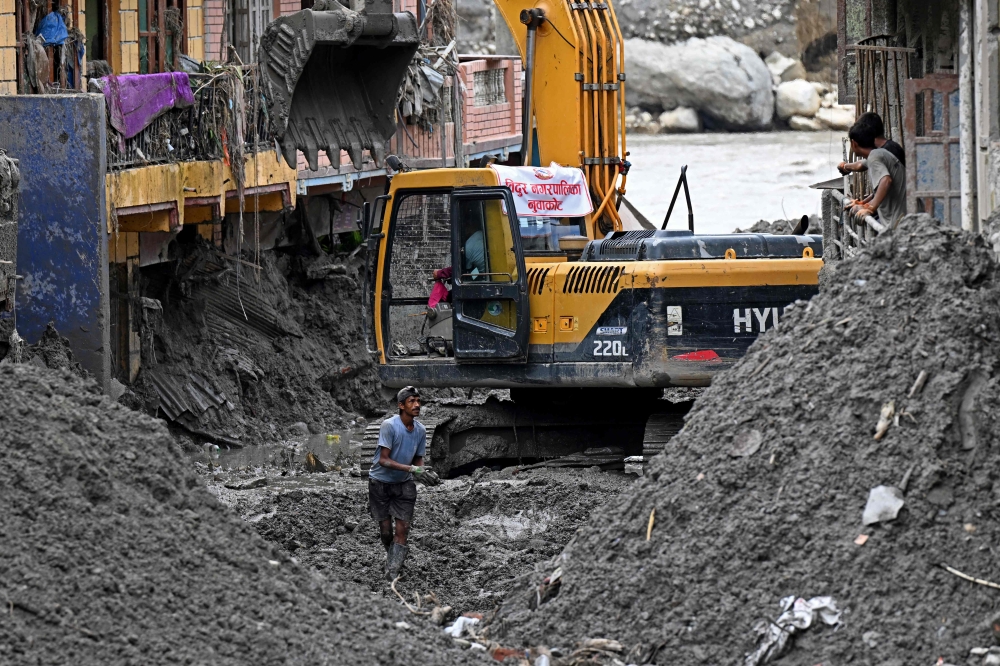
Abdul Manaf said the mud floods had drastically altered the terrain, making existing maps unreliable and forcing SMART personnel to use drones, GPS, and physical observations to determine search routes.
“For ground operations, we could not rely fully on maps as the terrain had changed significantly from what they depicted. Roads and buildings had been destroyed, leaving only rocks, sand and mud,” he said, noting that mud deposits reached depths of three to five metres, and up to eight metres in some areas.
He said heavy rain and overcast conditions also hampered helicopter operations, forcing personnel to be dropped off on hillsides before walking for more than an hour to reach the operation site, while also facing the risk of further disasters.
He said SMART personnel spent three days conducting secondary searches with Nepalese military tactical teams in designated sectors between Timure and Syabrubesi, using their expertise and specialised equipment to search the last known location of the Malaysians reported missing, but found no survivors.
SMART also shared aerial images and drone footage with the families concerned and handed over equipment and supplies to the Nepalese military to support continued search operations.
Abdul Manaf stressed that the SMART team had searched as extensively as possible amid difficult geographical, weather and safety conditions, adding that SAR operations focused first on rescuing survivors, with recovery efforts undertaken if necessary.
He also appealed to the families to remain resilient and patient while awaiting further steps by the Malaysian and Nepalese governments through coordination by the Foreign Ministry. — Bernama