
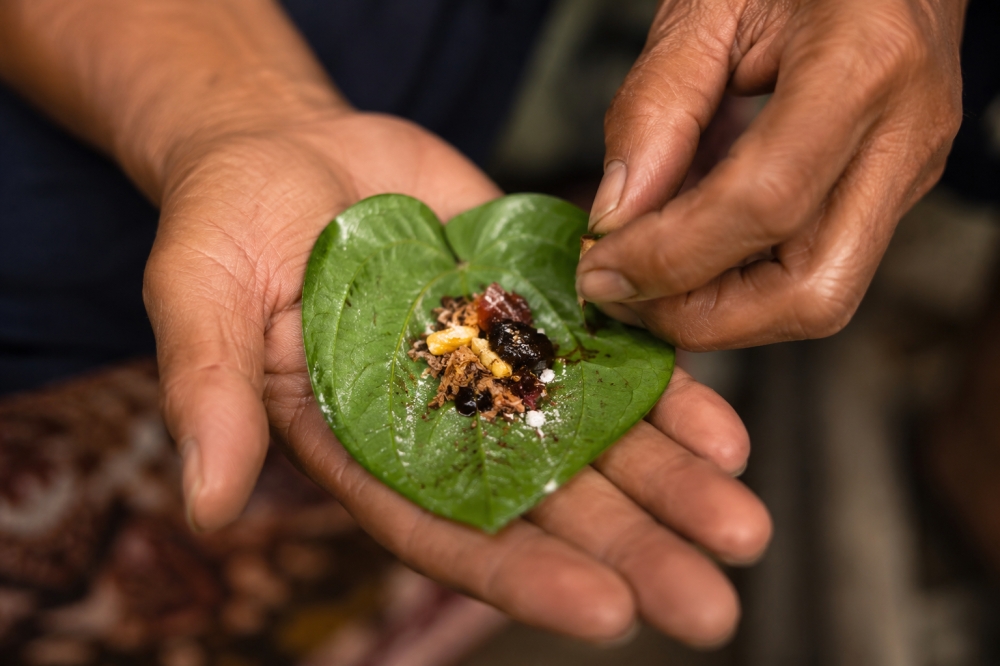
GUA MUSANG, May 24 — The traditional practice of chewing betel, once deeply rooted in the culture and identity of the Orang Asli community, is gradually fading among the young generation, particularly those living near urban areas.
Kuala Betis Block A Resettlement Scheme (RPS) village head Rodzi Asod said the practice is no longer commonly observed among the elderly in his settlement, resulting in younger generations no longer being exposed to the tradition.
“In the 1980s, the Orang Asli community widely practised betel chewing, but today there are no elderly residents in Kuala Betis who still chew betel.
“Betel chewing is usually passed down through generations. If grandparents practised it, their grandchildren would follow, but times have changed,” he told Bernama recently.
Meanwhile, Pos Gob Orang Asli Village Security and Development Committee (JPKKOA) chairman Hady Liman said residents in several interior settlements, such as Pos Gob, Pos Simpor, Pos Belatim and Pos Balar, still consume betel as part of their daily routine.
“We chew betel at least twice a day, and the taste can also be varied using natural ingredients such as snails to prepare the betel mixture,” he said, adding that sliced ‘kalog’ stems and kacu leaves are also used as additional ingredients.
According to him, betel chewing is believed to provide various benefits, including strengthening teeth and helping individuals stay alert and energised while working.
Deputy dean of student affairs and alumni at the Faculty of Applied Social Sciences, Universiti Sultan Zainal Abidin (UniSZA), Dr Mohamad Hafis Amat Simin, said the traditional practice risks disappearing if it is no longer continued by the young generations.
“The location of settlements greatly influences the continuity of betel chewing practices. For example, the community in RPS Kuala Betis interacts extensively with outside communities, while many residents have migrated elsewhere.
“There are also areas heavily affected by logging and the opening of oil palm plantations and durian orchards, making betel ingredients increasingly difficult to obtain,” he said.
He noted that in the Lojing Highlands, some members of the Temiar tribe, particularly the elderly, still practise betel chewing, unlike younger people who have largely abandoned the tradition due to lifestyle changes, employment in the tourism industry and migration to urban centres such as Kuala Lumpur.
According to Mohamad Hafis, communities living in remote interior areas still have easier access to natural betel resources because forest exploration remains limited there.
The anthropology and science researcher said efforts to pass down the practice to younger generations are important not merely to preserve a habit, but also to safeguard the community’s cultural identity, collective memory and traditional knowledge.
“The possibility of betel chewing declining certainly exists, but whether it disappears entirely or evolves into a symbol of cultural identity depends on how far the indigenous community continues to preserve and reinterpret this heritage for future generations,” he said. — Bernama