
SINGAPORE – An elderly man’s life was turned upside down when almost all his savings were wiped out by a government official impersonation scam.
He was moody, lost interest in his hobbies, and became anxious when he received phone calls and messages.
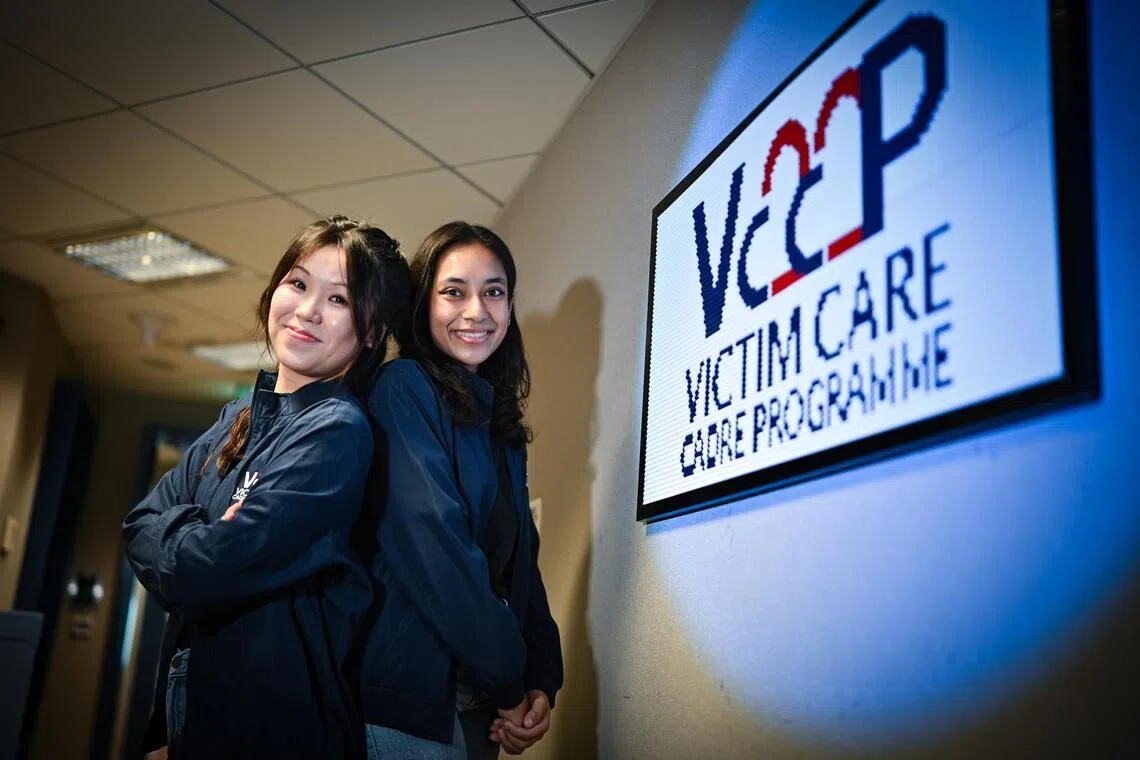
The investigation officer (IO) for his case referred him to victim care officers (VCOs), who are volunteers with the Singapore Police Force’s (SPF) Victim Care Cadre Programme.
They support victims of crime, including sexual assault, scams and other offences, through the criminal justice process.
VCO Lee Ting Yu, recalling this case that she handled with another VCO, said they told the man he had already done his best, and encouraged him to continue meeting friends.
-
National Mindline: 1771 (24 hours) / 6669-1771 (via WhatsApp)
-
Samaritans of Singapore: 1-767 (24 hours) / 9151-1767 (24 hours CareText via WhatsApp)
-
Singapore Association for Mental Health: 1800-283-7019
-
Silver Ribbon Singapore: 6386-1928
-
Chat, Centre of Excellence for Youth Mental Health: 6493-6500/1
-
Women’s Helpline (Aware): 1800-777-5555 (weekdays, 10am to 6pm)
-
The Seniors Helpline: 1800-555-5555 (weekdays, 9am to 5pm)
-
Tinkle Friend (for primary school-age children): 1800-2744-788
-
Touchline (Counselling): 1800-377-2252
-
Touch Care Line (for caregivers): 6804-6555
-
Counselling and Care Centre: 6536-6366
-
We Care Community Services: 3165-8017
-
Shan You Counselling Centre: 6741-9293
-
Clarity Singapore: 6757-7990
-
Care Corner Counselling Centre: 6353-1180
Ms Lee, 25, said: “When (scam victims) are in distress, they have tunnel vision. They see the worst outcomes and the worst in humans. But hopefully, through providing them with different perspectives, they can see there are other ways of thinking about this situation.”
There are currently more than 200 VCOs, up from just 15 volunteers when the programme started in 2014.
Speaking to The Straits Times on Jan 26 at the police headquarters within New Phoenix Park, officers involved in the programme said they are seeing more scam victims in recent years.
Ms Hong Jingmin, a psychologist with SPF, said scams used to come in the form of simple phishing links, but fraudsters are now constructing elaborate cover stories to con victims.
On the psychological impact on scam victims, she said: “They are not just losing money. They could be losing a relationship that they built (and) their sense of self. So it could be very, very damaging.”
Scam victims are usually referred by their IOs to VCOs if they sense victims need support. Victims can also request a session.
The police declined to reveal the number of scam victims VCOs help yearly, but said they have seen victims of love scams and investment ruses, among other variants.
Since 2020, scam losses in Singapore have crossed the $4 billion mark, with at least $750 million lost in the first 10 months of 2025.
In 2024,
scam victims here lost a record $1.1 billion,
with 51,510 cases recorded – the highest ever in a single year.
Ms Lee noted that scam victims sometimes find themselves in a mental rut, swirling with negative thoughts and emotions like shame, hopelessness and anger.
VCOs provide psychological first aid to such victims to try to help them to live normally, said Ms Lee, who works in a similar field at her full-time job but declined to reveal more details.
Taking the first step to seek help is often the hardest.
Ms Tanzima Rowshnya Raquib, 26, once met a man who had lost his mother’s savings, which were meant for her caregiving needs, in a government official impersonation scam. The man had a session scheduled with the VCOs, but cancelled it at first as he was unsure about seeking support.
A social worker at Lutheran Community Care Services who has been a VCO since 2020, she said: “It’s very hard to be vulnerable. In the end, he decided to come and just share and see what he could get out of the session.”
With another VCO, Ms Tanzima encouraged him to share about the guilt he was struggling with. He was then able to explore ways to move on.
She added: “He wanted a change for himself in the way that he thought, but he wasn’t able to do it until someone talked to him and helped him through that process.”
Some victims are so traumatised by scams that they contemplate ending their lives.
A coroner ruling in 2023 said a police full-time national serviceman died by suicide
after he lost about $10,000 in a scam
.
Ms Hong said VCOs are trained to observe such signs of distress during the session, and to share more about seeking help through longer-term support such as counselling and psychiatric care if required. To prevent victims from falling prey to another scam, Ms Lee said VCOs also share with victims tips to protect themselves, like the ScamShield app and banks’
money lock function
.

To be a VCO, one must be 21 years old and above, a Singaporean or permanent resident, and have a background in psychology, social work or counselling.
Ms Rebecca Samala Rajakanthan, a manager of the Victim Care Cadre Programme, said many VCOs are recruited when they are undergraduates in related fields.
She said applicants go through a selection and training process, including sessions learning about the specific needs of scam victims.

Ms Rebecca Samala Rajakanthan, a manager of the Victim Care Cadre Programme, said many victim care officers are recruited when they are undergraduates in related fields.
ST PHOTO: LIM YAOHUI
The VCOs are activated based on their availability, with some taking time to meet victims after work and even while on leave.
Ms Lee, who became a VCO in 2022, said she finds it rewarding to use her education to provide some light in the darkness that scam victims usually navigate.
She added: “It’s quite inspiring to see the strength that victims show in their most vulnerable moments, and it’s meaningful to me to help them find that strength and resilience from within.”