
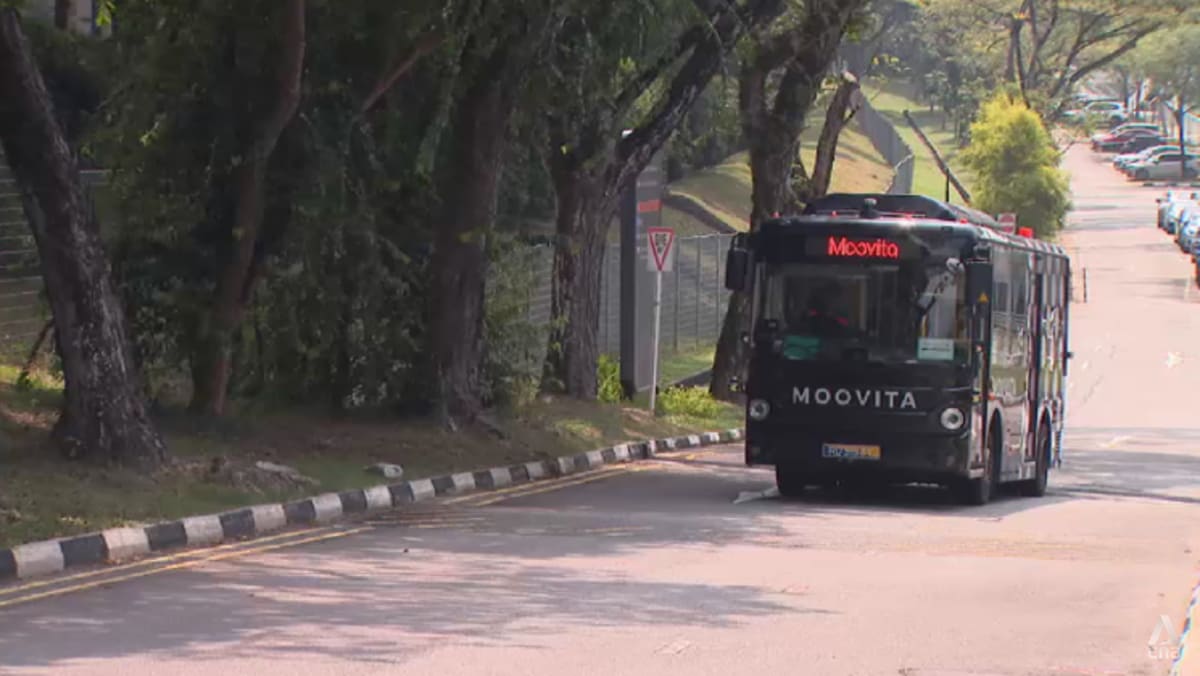
SINGAPORE: Some polytechnics are strengthening their curriculum to prepare students for roles in autonomous mobility, amid a growing demand for cross-disciplinary skills that integrate software, hardware and artificial intelligence.
A key area is autonomous vehicles, which are designed to navigate and respond to road conditions with little or no human input. They rely on technologies such as sensors, cameras and AI to decide how to steer, accelerate or brake.
The institutes are also looking to deepen industry collaborations, with Singapore’s new S$800 million (US$626 million) transport research and innovation investment expected to open more opportunities for students to work on emerging technologies.
MORE REAL-WORLD EXPERIENCE
At Ngee Ann Polytechnic (NP), students are already getting hands-on experience with autonomous vehicles through internships.
Third-year electronic and computer engineering student Shawn Lee is on a 22-week internship with autonomous vehicle operator MooVita.
His work includes mapping routes before self-driving shuttles are deployed and testing how they respond to different situations on the road.
“This project gave me a lot of practical experience that I could use in my further studies, and even after I graduate. I think that this is a growing industry – it could be what I will be heading into next,” he said.