
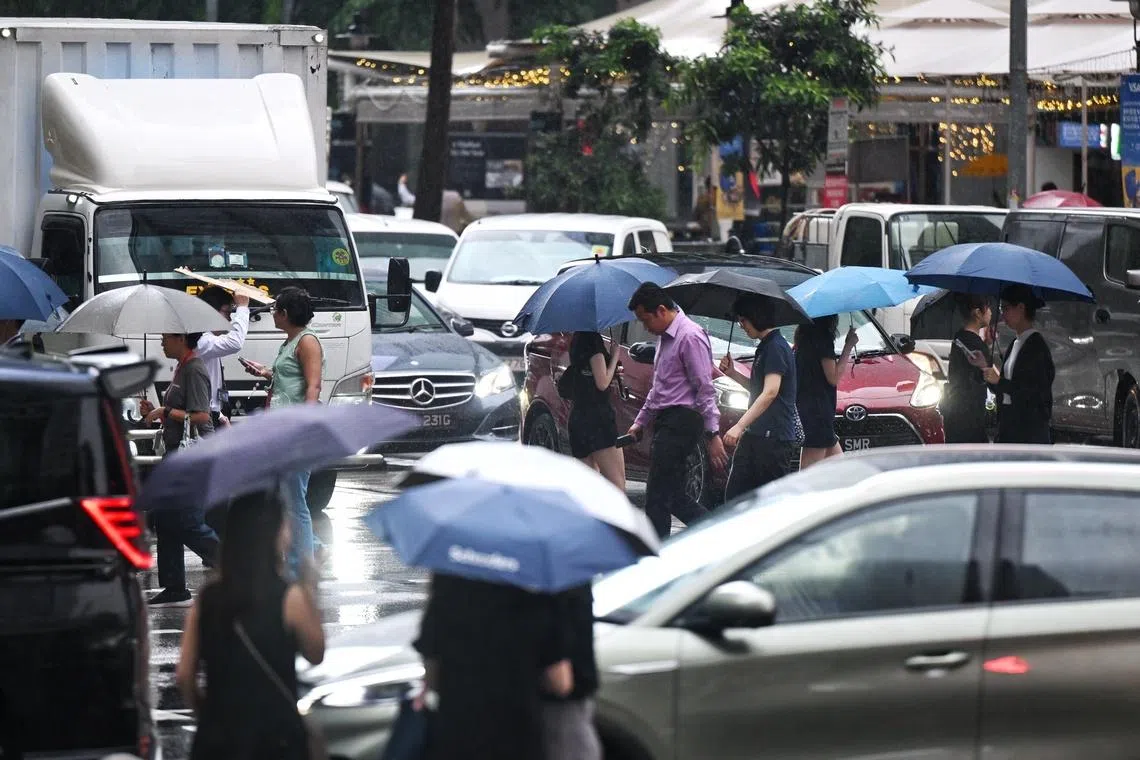
SINGAPORE – The mercury fell to a record low in 2026 on June 12, offering some a reprieve from days of sweltering heat amid the El Nino weather phenomenon.
The weather station in Newton saw a temperature of 20.1 deg C at 12.52pm on June 12, according to the Meteorological Service Singapore’s (MSS) website.
One of the lowest temperatures recorded in 2026 was 20.3 deg C in Newton, which was recorded at 9.12pm on Feb 19.
Rain fell across Singapore on the morning of June 12, with MSS stations across the island recording rainfall from 10pm to 2pm.
On June 12, national water agency PUB issued warnings about the risk of flash floods in Balestier and Paya Lebar.
The National Environment Agency also warned that heavy rain was expected over the southern, western and central areas of Singapore from 11am to 11.50am.
In an update at 11.42am, the NEA said heavy rain was expected over the southern, eastern and central areas of Singapore from 11.50am to 12.30pm.
Netizens shared photos and videos of the weather conditions on social media.
Facebook user Kenneth Ken posted a photo showing dramatic, dark clouds.

The National Environment Agency warned that heavy rain was expected over the southern, western and central areas of Singapore from 11am to 11.50am.
PHOTO: KENNETH KEN/FACEBOOK
Another Facebook user, Felicia Lee, posted a reel showing a landscape timelapse of gloomy clouds rolling across the skies above the Marina Bay area.
Social media user Doris Ong Guek Eng posted a photo of the dark clouds hanging over a housing estate.
“From July to October, a heatwave will come to South-east Asia. I don’t know if people enjoy the cooling raining days or the upcoming heatwave,” another user said in the comments.

Dark clouds hanging over a housing estate in a photo posted by social media user Doris Ong Guek Eng.
PHOTO: DORIS ONG GUEK ENG/FACEBOOK
On May 29, the MSS said that warmer and drier conditions are to be expected from June to October because of El Nino and the Indian Ocean Dipole.
El Nino is a naturally occurring climate pattern associated with changes in both the ocean and atmosphere in the equatorial Pacific Ocean, including an abnormal warming of surface waters in the eastern Pacific.
El Nino events tend to have the greatest influence on Singapore’s rainfall during the south-west monsoon season from June to September, increasing the likelihood of dry conditions. The weather phenomenon also brings warmer temperatures to Singapore.
An Indian Ocean Dipole is similar to El Nino but develops in the equatorial Indian Ocean, typically ending by December or January. A positive Indian Ocean Dipole is expected to develop in July or August, bringing drier and warmer weather to Singapore and its surrounding regions. Cooler sea surface temperatures in the eastern Indian Ocean result in less cloud formation, contributing to the drier conditions.