
Singapore – George’s seven-year-old daughter was terrified of her mother, who yelled at her almost daily for three months over mistakes both big and small after the girl started primary school.
For example, once when the girl could not spell a word, her mother hurled vulgarities, called her names and threatened to stab her in the eye. She also told the girl to kill herself.
“She loses her temper very easily and takes it out on my daughter,” George (not his real name), a businessman in his 50s, told The Straits Times.
“The scolding is extremely excessive and it affects everyone in the house. The emotional abuse is relentless.”
The shouting was so bad that neighbours once called the authorities, resulting in a social worker’s visit to the family.
Shocked by the visit, George planted an audio recording device at home to find out just how bad the scoldings were.
A psychologist he consulted warned him about the potential long-term harm such behaviour could inflict on his daughter. The psychologist also advised him to seek legal advice, which he did.
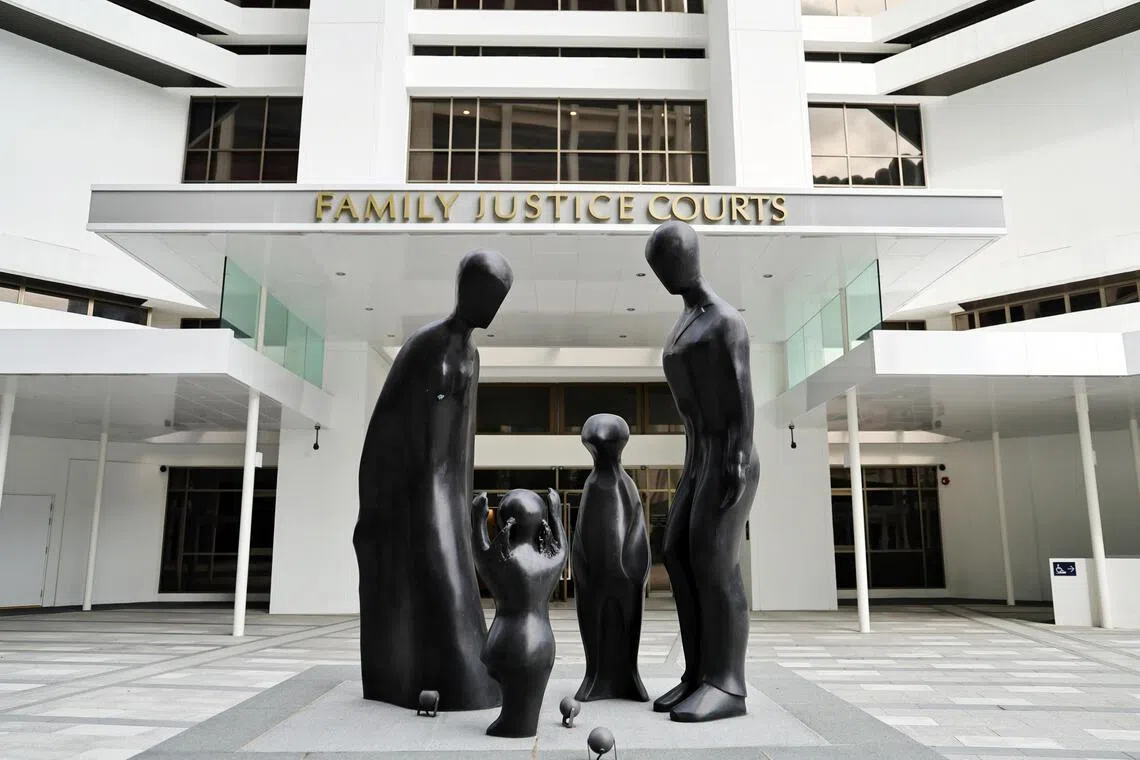
In late 2025, George, who had submitted audio recordings of his wife’s behaviour as evidence to the Family Justice Courts, was granted a personal protection order (PPO) for his daughter against his wife. This is a court order that restrains a person from committing family violence.
He applied for the PPO after the Women’s Charter (Family Violence and Other Matters) Amendment Bill was amended to expand the definition of family violence to include emotional, psychological or sexual abuse, and this took effect in January 2025.
His case is among roughly one in three, or 32 per cent, of the 1,484 PPOs issued in 2025 that cited only emotional or psychological abuse, according to data the Singapore Courts gave ST.
In one case in December 2025, a
woman’s application for a PPO was dismissed
after she failed to prove that her husband had committed family violence.
In that case, District Judge Janice Chia noted that not every action causing distress amounts to emotional abuse.
The central issue, she said, is how emotional and psychological abuse under the Women’s Charter should be interpreted as this can be subjective.
She referred to examples cited during the second reading of the Amendment Bill in 2023 by then Minister of State for Social and Family Development Sun Xueling. These included threatening to withhold monthly allowances, constantly monitoring a victim’s whereabouts, and isolating the victim from family and friends.
The common thread among these examples, Judge Chia said, is coercive control – behaviour aimed at dominating or controlling another person and instilling fear.
In another judgment released in June 2025, Magistrate Soh Kian Peng granted a PPO to a man after finding that his ex-wife’s conduct had taken a toll on him and affected both his personal life and professional relationships.
Among the incidents of abuse cited was a false allegation the ex-wife made. She told her ex-husband’s former boss that her ex-husband and his mother cast black magic on the boss’ wife, causing her to be bedridden.
The boss’ wife later died.
Magistrate Soh found that the allegation was part of a consistent pattern of abusive behaviour over several years.
Singapore is not alone in recognising emotional and psychological abuse as domestic violence.
For example, France criminalised psychological violence in intimate relationships in 2010. In 2015, coercive control became a crime in England.
Ms Sugidha Nithiananthan, director of advocacy and research at Aware, said coercive control is not widely understood, both in Singapore or globally. Aware is currently conducting research to shed more light on the issue here.
Mr Martin Chok, deputy director of family and community services at Care Corner Singapore, said coercive control often involves a pattern of demeaning, belittling and threatening behaviour that makes the victim fearful and compliant.
In some cases, physical violence accompanies such behaviour.
Mr Chok said that emotional and psychological abuse can have a severe impact on victims, adding that a victim can plunge into depression or become unable to work or function in serious cases.
But one challenge is proving that such abuse has taken place, lawyers say.
Ms Chong Xin Yi, head of dispute resolution at Gloria James-Civetta & Co, said: “Such conduct typically occurs in private, without independent witnesses, and rarely leaves immediate or tangible physical markers.
“As a result, there is often little or no contemporaneous documentary, audio, or visual evidence, and the court is left to assess competing narratives, particularly where the alleged perpetrator denied that the acts complained of occurred at all.
And even when the conduct under complaint is proven, applicants must still show that it crosses the legal threshold for emotional or psychological abuse, that the behaviour is not merely poor parenting, isolated lapses or conflict within the family, Ms Chong added.
Lawyers say evidence such as text messages, and audio and video recordings can support applications for PPOs.
Expert or medical evidence documenting the harm caused by the emotional and psychological abuse can also help applications, lawyers add.
For George, getting the PPO was not a magic pill in stopping the abuse. He said his wife’s behaviour has not changed much, and he is still figuring out what to do next.
Lawyers say George could file a police report for a breach of the PPO, which is a criminal offence that is punishable with a fine or a jail term, or both.